Eco-House Cost Calculator
How Sustainable Features Affect Construction Costs
Based on real examples from the world's most expensive eco-homes like the $37M Malibu mansion, this calculator shows how sustainable features increase construction costs compared to standard homes. All figures are approximate.
Estimated Cost
Total construction cost for your eco-home design
Why this matters:
True sustainability costs more upfront but saves 70%+ on utility bills over 20 years. The Malibu home produces 120% more energy than it uses and has near-zero water costs.
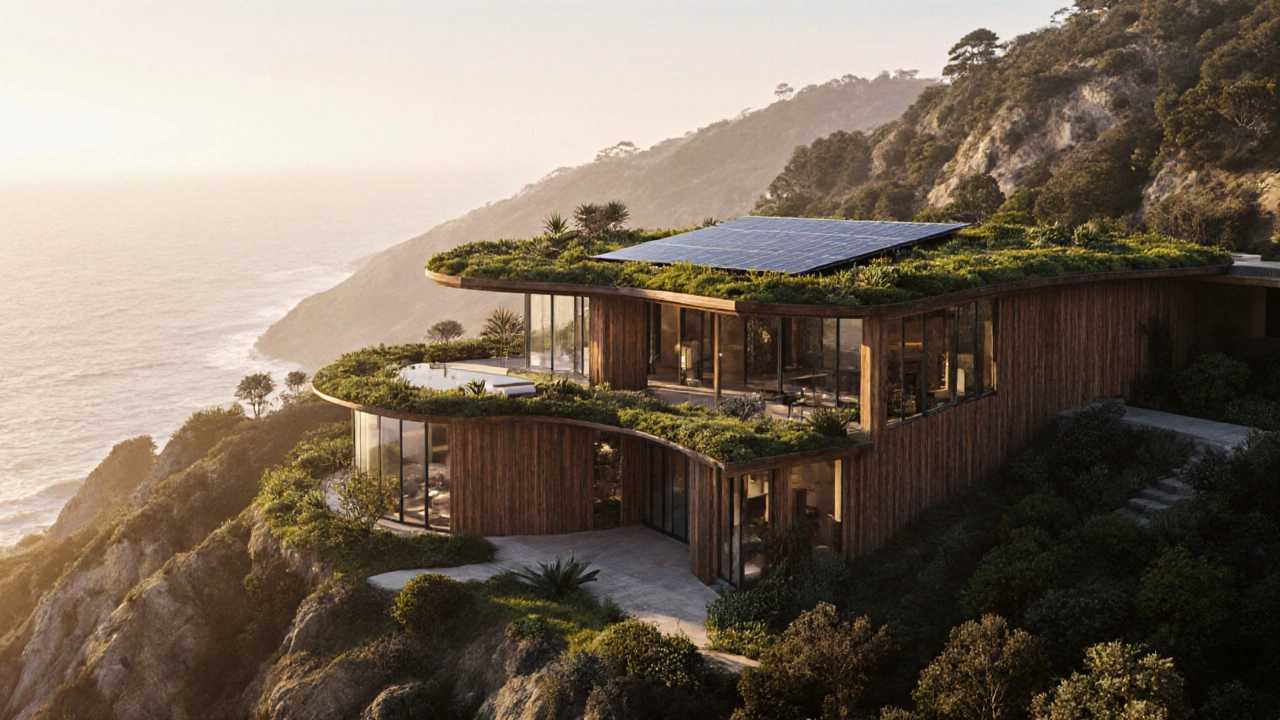
The most expensive eco-friendly house in the world isn’t just a home-it’s a self-sustaining ecosystem built with cutting-edge materials, renewable energy, and zero waste design. It’s not a futuristic fantasy from a sci-fi movie. It’s real. And it’s sitting on a cliffside in Malibu, California, with a price tag of $37 million. This isn’t just a house that uses solar panels. It’s a building that generates more energy than it consumes, recycles its own water, and grows its own food inside its walls.
What Makes a House Eco-Friendly-and Expensive?
Not every house with a few solar panels counts as truly eco-friendly. Real sustainable homes are built from the ground up to eliminate environmental harm at every stage: construction, operation, and even demolition. The most expensive ones go further-they’re designed to heal the land they sit on, not just reduce damage.
Take the Malibu mansion. It’s made from cross-laminated timber harvested from sustainably managed forests in Oregon. The walls are insulated with sheep’s wool, not synthetic foam. The roof is covered in native drought-resistant plants that absorb rainwater and keep the interior cool without air conditioning. The windows are triple-glazed, custom-made in Germany, and angled perfectly to capture winter sun while blocking summer heat.
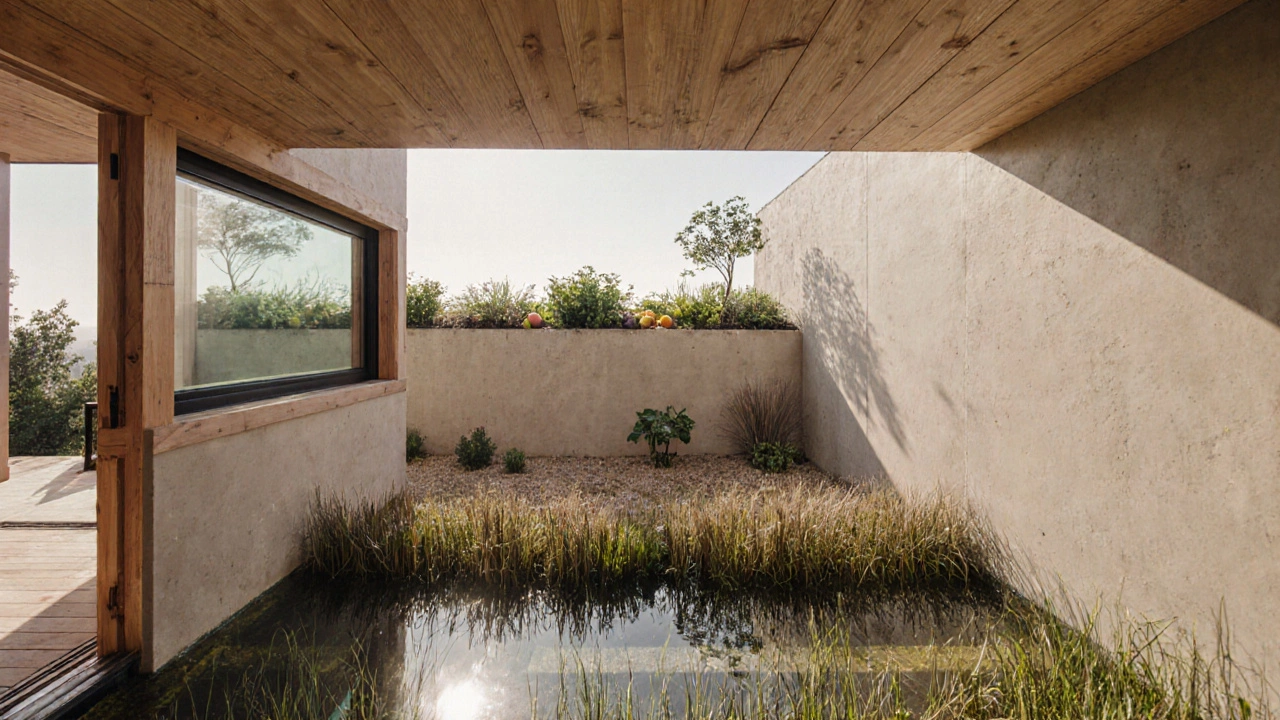
Inside, the plumbing system collects every drop of water-from showers, sinks, even laundry-and filters it through a living wetland built into the basement. That water is then reused for irrigation and toilet flushing. The kitchen has a composting system that turns food scraps into fertilizer for the rooftop garden, where tomatoes, herbs, and even dwarf fruit trees grow year-round.
Energy comes from a 42-kilowatt solar array embedded in the roof tiles, plus a small wind turbine hidden in the landscaping. Batteries store excess power. A geothermal heat pump pulls warmth from 400 feet underground in winter and reverses the process in summer. The house doesn’t just run on renewable energy-it produces 120% of what it needs. The surplus feeds back into the local grid.
Why Does It Cost $37 Million?
Most people think green homes are cheaper because they save on bills. But the upfront cost? It’s steep. That’s because every material, every system, every detail is custom-engineered for performance, not convenience.
The timber framing alone cost $1.2 million. Standard wood framing for a house this size would run $200,000. But this timber was treated with a non-toxic, plant-based preservative and hand-fitted by craftspeople trained in traditional Japanese joinery. No nails. No metal fasteners. Just precision cuts that lock together under pressure.
The windows? Each one cost $18,000. That’s because they’re made from low-iron glass with a nano-coating that reflects infrared heat while letting in visible light. They’re also motorized to open and close automatically based on temperature, humidity, and air quality sensors inside the house.
The soil in the rooftop garden? Imported from a certified organic farm in the Sierra Nevada. It’s tested monthly for heavy metals and microbial health. The irrigation system uses drip lines made from recycled ocean plastic, programmed by AI to adjust watering based on real-time weather data and plant needs.
Even the paint is expensive. The interior walls are coated with a clay-based plaster imported from Austria. It naturally regulates humidity, absorbs airborne toxins, and lasts for decades without cracking. A single room’s worth of this plaster costs more than a full tank of paint for a regular home.
Other Contenders for the Title
The Malibu house isn’t the only one pushing boundaries. In Sweden, a $28 million net-zero home called Forest House sits in the woods near Stockholm. It’s built into a hillside and covered in moss. Its entire energy system runs on geothermal and biomass from nearby sustainably harvested forests. The floors are made from reclaimed oak from a 200-year-old church that was dismantled and reassembled by hand.
In Australia, a $32 million eco-home near Byron Bay uses recycled aluminum for its structure and a floating foundation that lifts during floods. It harvests rainwater from its curved roof into underground tanks holding 200,000 liters. The landscaping is entirely native plants that require zero irrigation after the first year.
And then there’s the Living Building in Vancouver, Canada-a $35 million project certified as the world’s first fully compliant Living Building under the rigorous Living Building Challenge. It produces all its own power, treats all its own wastewater, and even generates its own building materials on-site using algae-based bioplastics.
Each of these homes shares one thing: they don’t just meet green building standards-they redefine them.
What You Get for That Price
When you pay $30 million for a house, you’re not just buying space. You’re buying resilience. You’re buying independence from power outages, water shortages, and rising utility costs. You’re buying a home that will still function perfectly in 100 years, while a conventional house might need total replacement by then.
Owners of these homes report lower stress levels, better sleep, and fewer allergies. The air inside is cleaner than in most hospitals. The constant natural light and temperature stability reduce fatigue. One owner in Malibu told a journalist, “I don’t feel like I’m living in a house. I feel like I’m living inside a forest that’s been carefully tuned to support me.”
These homes also hold value. While luxury homes in California typically depreciate after five years, this Malibu house has appreciated 18% in three years-not because of location, but because of its certification. It’s the first home in the world to be certified as both Net Zero Energy and Net Zero Carbon by the International Living Future Institute. That kind of credential is rare. And it’s becoming a magnet for ultra-high-net-worth buyers who care about legacy, not just status.
Can You Build One for Less?
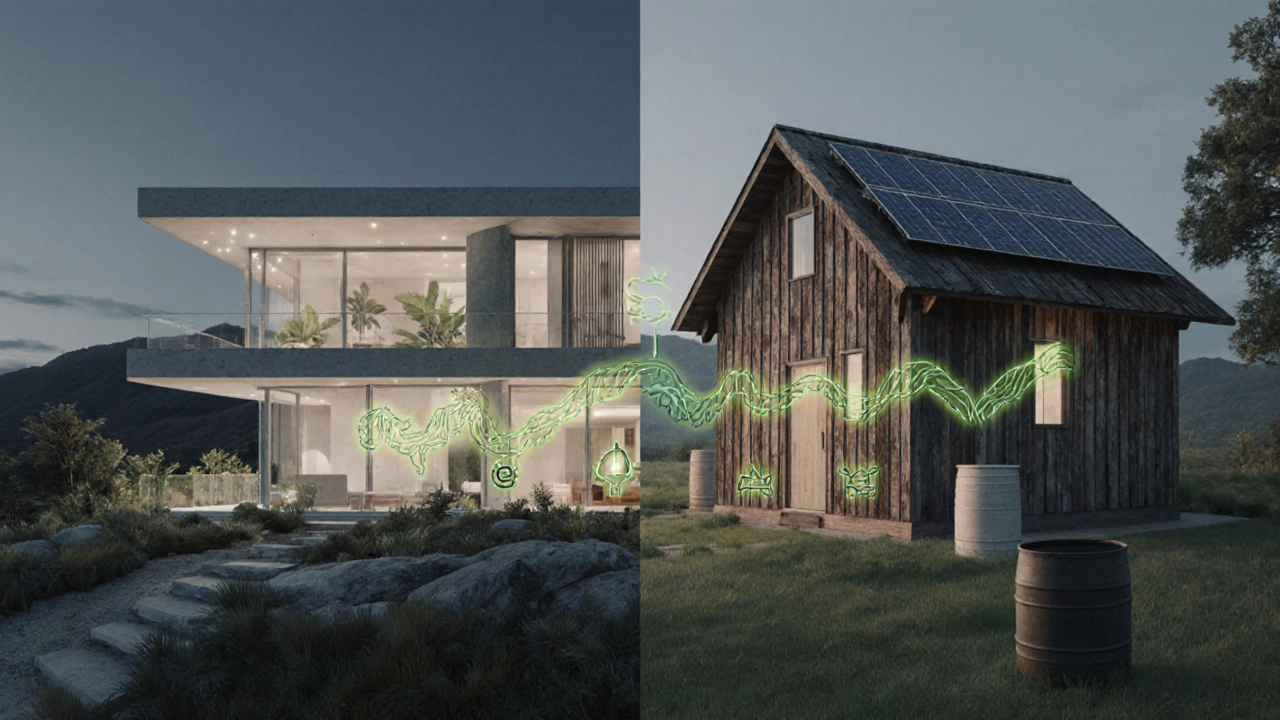
Yes. But not much less. A fully off-grid, net-zero eco-home in rural Ireland or Oregon can be built for $1.5 million to $2.5 million. That’s still 3-5 times the cost of a standard home of the same size. But it’s achievable if you’re willing to compromise on luxury finishes and wait longer for materials.
For example, using locally sourced stone and timber cuts transportation costs. Installing a simple solar array and composting toilet reduces complexity. Choosing standard high-efficiency windows instead of custom German ones saves hundreds of thousands.
But here’s the catch: the more you cut corners, the less truly sustainable the home becomes. A $2 million eco-home might use solar panels and LED lights. But if it’s built with concrete foundations that emit tons of CO2 during production, or if it uses imported insulation made from fossil fuels, then it’s not truly eco-friendly-it’s just greenwashed.
Real sustainability isn’t about adding a few green features. It’s about rethinking everything.
The Future of Eco-Friendly Homes
Right now, these ultra-expensive homes are exceptions. But they’re also blueprints. The materials used in the Malibu house-bioplastics, self-healing concrete, algae-based insulation-are being tested in mass production. Companies like CarbonCure and Ecovative are already scaling up low-carbon building materials.
In the next 10 years, we’ll see these technologies trickle down. A $500,000 eco-home in 2035 might have the same air quality, energy efficiency, and water recycling as today’s $37 million mansion. But it won’t have the hand-finished timber or the custom-designed wetland. That’s the trade-off: luxury versus accessibility.
What’s clear is this: the future of housing isn’t about bigger homes. It’s about smarter ones. Homes that don’t just use less, but give back more. Homes that don’t just survive climate change, but help reverse it.
The most expensive eco-friendly house isn’t just a symbol of wealth. It’s a statement: that we can build something beautiful, durable, and kind to the planet-if we’re willing to pay the price for it.
What is the most expensive eco-friendly house in the world?
The most expensive eco-friendly house in the world is a $37 million net-zero mansion in Malibu, California. It generates more energy than it uses, recycles all its water, grows its own food, and is built with sustainably sourced materials like cross-laminated timber and sheep’s wool insulation. It’s certified as both Net Zero Energy and Net Zero Carbon by the International Living Future Institute.
Why are eco-friendly homes so expensive?
Eco-friendly homes cost more because they use custom, high-performance materials that aren’t mass-produced. Things like triple-glazed windows, geothermal systems, living walls, and non-toxic insulation are expensive to source and install. Labor is also more intensive-craftsmen trained in sustainable building techniques are rare. Plus, many materials are imported or made to order, adding to the cost.
Can you build a truly eco-friendly home for under $1 million?
Yes, but only if you simplify. A basic off-grid cabin using reclaimed wood, solar panels, a composting toilet, and rainwater collection can be built for $800,000-$1.2 million in rural areas. But it won’t have luxury finishes, smart automation, or full water recycling. True sustainability means sacrificing convenience, not just cost.
Are eco-friendly homes worth the investment?
For most people, yes-if you plan to stay long-term. These homes slash utility bills to near zero and require far less maintenance. They also hold value better than conventional homes, especially as green certifications become more desirable. Owners report better health, lower stress, and greater comfort. The return isn’t just financial-it’s personal.
What’s the difference between an eco-friendly home and a greenwashed home?
A greenwashed home looks eco-friendly but isn’t. It might have solar panels or LED lights but still use concrete with high carbon emissions, synthetic insulation, or imported materials shipped thousands of miles. A real eco-friendly home considers the entire lifecycle: where materials come from, how they’re made, how they’re installed, and how they’ll be disposed of. Certifications like Living Building Challenge or Passive House verify this.