Boutique Hotel Value Calculator
Hotel Price Comparison
Real Value Comparison
Boutique Hotel Total Cost
Chain Hotel Total Cost
This boutique hotel offers better value
Key Insight: Boutique hotels often include amenities that chain hotels charge extra for, creating real value even when base prices are higher.
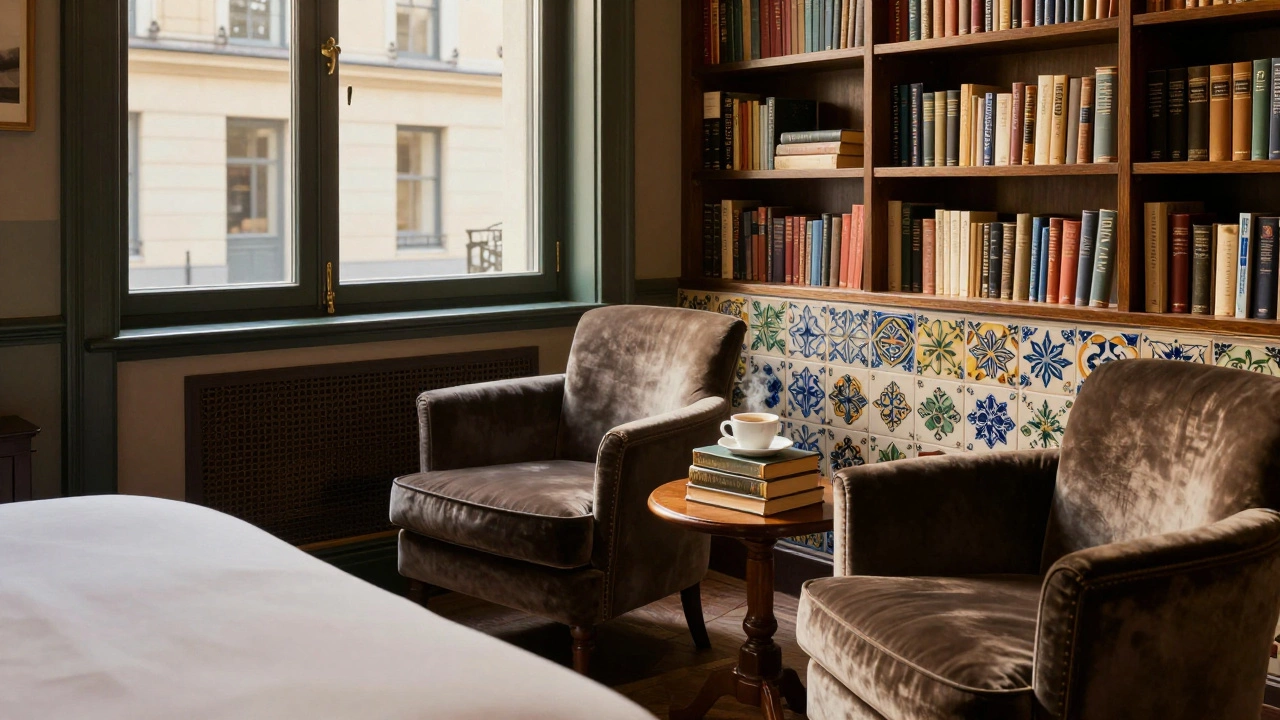
When you see a boutique hotel listed online-maybe it’s a converted 1920s bookstore with velvet armchairs and hand-painted tiles-you might pause. The price tag often jumps out. Is this just a fancy name for a high price? Or is there real value behind it?
The short answer: yes, boutique hotels usually cost more than standard chain hotels. But that doesn’t mean you’re overpaying. What you’re paying for isn’t just a bed. It’s a story, a mood, and an experience you won’t find at a Marriott or Holiday Inn.
Why boutique hotels cost more
Boutique hotels aren’t built to maximize occupancy. They’re built to stand out. That means smaller rooms, fewer floors, and often no corporate backing. Without bulk purchasing power, owners pay more for linens, toiletries, and even coffee beans. A single guest room might have custom furniture made by a local artisan, while a chain hotel buys 500 identical beds from the same warehouse.
Staffing is another big factor. Chain hotels often use automation-self-check-in kiosks, robotic room service, AI chatbots. Boutique hotels hire real people. Front desk staff know your name by the second day. Concierges don’t just hand you a map-they’ll call their friend who runs a hidden speakeasy and get you a reservation.
Location matters too. Many boutique hotels sit in historic districts, tucked into old townhouses or seaside villas. Land in these spots costs more. Chain hotels build on the edge of highways where land is cheap. You’re not just paying for the room-you’re paying for being in the heart of it all.
What’s included that chain hotels skip
Think about what you get at a typical hotel. Free Wi-Fi? Sure. Breakfast? Maybe a cold buffet with packaged croissants. Parking? Extra $25 a day. Spa access? Not unless you pay $120 extra.
Boutique hotels often include things chain hotels charge for. Here’s what you might actually get:
- Complimentary local wine or craft beer in the lobby at 5 p.m.
- Handmade breakfast with eggs from the owner’s farm and sourdough baked on-site
- Free bicycle rentals or guided walking tours with a local historian
- No parking fees-even in downtown areas where parking costs $40 a day
- Personalized welcome notes, not printed labels
At the 18-room Belle Maison is a boutique hotel in Charleston, South Carolina, housed in a restored 1840s mansion. Also known as Belle Maison Inn, it offers a daily wine hour, curated local art on every wall, and a breakfast that changes based on what’s fresh at the farmers market. Guests rarely pay less than $350 a night, but many say the experience feels like staying with a well-connected friend.
When boutique hotels aren’t more expensive
It’s not always true. In some cities, during off-seasons, boutique hotels drop prices lower than chain hotels. In late January in Portland, Oregon, you can find boutique rooms for $140 a night-while the nearest Hilton charges $170. Why? Fewer tourists. More competition. Owners need to fill rooms.
Book directly. Boutique hotels don’t pay 20% commission to Booking.com or Expedia. If you book through their website, you might get a free upgrade, late checkout, or a bottle of local whiskey. Chain hotels don’t do that.
Also, in places like Lisbon, Mexico City, or Bali, boutique hotels often cost less than international chains. Why? The local economy. A family-run guesthouse in Oaxaca might charge $65 a night with breakfast and a rooftop terrace. A nearby Marriott? $180.

What you’re really paying for
You’re not paying for square footage. You’re paying for uniqueness. For a room that feels like it was designed for one person-because it was. For a lobby that smells like cedar and vanilla, not industrial cleaner. For a staff who remembers you liked your coffee with a splash of oat milk.
It’s the difference between eating at a chain diner and a family-run bistro where the chef comes out to ask how your meal was. One fills your stomach. The other fills your memory.
Studies from Cornell University’s School of Hotel Administration show guests at boutique hotels report 37% higher satisfaction scores than those at large chains-even when prices are similar. Why? Emotional connection. Personal service. A sense of belonging.
Who should stay at a boutique hotel
If you’re traveling for work and need a reliable Wi-Fi connection and a 24-hour front desk, a chain hotel might be smarter. But if you’re on vacation, celebrating something, or just want to feel like you’ve stepped into a different world-you’ll get more value from a boutique stay.
Here’s who benefits most:
- Couples on a romantic getaway
- Travelers who care about local culture
- Photographers or writers looking for unique backdrops
- People who hate generic interiors
- Anyone who values quiet over crowd size
It’s not for everyone. If you need a pool, a gym, or a breakfast buffet with 12 options, you’ll be disappointed. But if you want to remember your trip five years later? That’s where boutique hotels win.

How to find a good one without overspending
Not every hotel with a fancy name is worth it. Here’s how to spot the real ones:
- Check reviews for mentions of staff names-real people, not automated replies
- Look at photos: are the rooms unique? Or do they look like every other hotel?
- Search for "boutique hotel" + the city + "hidden gem"-you’ll find blogs and local guides
- Call the hotel. If the person on the phone sounds excited to talk to you, that’s a good sign
- Look for properties that have won local awards (like "Best Design Hotel" or "Top Family Run Inn")
Also, avoid booking too far in advance. Boutique hotels often release last-minute discounts to fill empty rooms. A room that costs $420 two months out might drop to $280 a week before your stay.
The real cost of cheap hotels
It’s easy to think a $90-a-night chain hotel is the smart choice. But look closer. That price doesn’t include parking. Or breakfast. Or Wi-Fi. Or the $30 fee for a second pillow. Add it all up, and you’re often within $20 of a boutique room that includes everything.
Plus, chain hotels are designed for turnover. Sheets are washed after one night. Towels are replaced even if you used them once. Boutique hotels reuse towels, wash linens less often, and focus on sustainability. That’s not just cheaper for the hotel-it’s better for the planet.
At the end of the day, it’s not about how much you spend. It’s about what you get in return.
Are boutique hotels always more expensive than chain hotels?
No, not always. In off-season months, in non-tourist cities, or in countries with lower living costs, boutique hotels can be cheaper than international chains. For example, in Lisbon or Hanoi, you can find boutique stays for under $100 a night while nearby Hiltons charge $150+. Always compare prices directly on the hotel’s website-booking platforms often inflate rates.
Do boutique hotels offer free breakfast?
Many do-but it’s not a buffet. Expect a small, thoughtful spread: fresh fruit, local cheese, homemade bread, and coffee brewed from single-origin beans. It’s served in a quiet corner, not a noisy dining hall. Some don’t offer breakfast at all, but will give you a gift card to a nearby café. Always check the listing details.
Is it worth paying more for a boutique hotel if I’m only staying one night?
Yes-if you’re using that night to reset, celebrate, or escape routine. A single night in a boutique hotel can feel more restorative than three nights in a generic room. The atmosphere, attention to detail, and quiet service make even one night memorable. Many travelers say their most cherished travel moments happened during a one-night boutique stay.
Do boutique hotels have pools or gyms?
Most don’t. They prioritize space and atmosphere over amenities. If you need a pool or gym, you’ll usually find a nearby public facility or partner spa. Some upscale boutiques have small rooftop pools, but they’re rare. Don’t choose a boutique hotel for fitness or swimming-choose it for character.
Are boutique hotels better for couples?
They’re ideal. The intimate scale, romantic decor, and personalized service make them perfect for couples. Many offer private terraces, fireplaces, or bathtubs with views. Staff often know to leave rose petals or champagne without being asked. If you’re planning a proposal, anniversary, or romantic escape, boutique hotels are the top choice.
Final thought: Value isn’t just in the price
Price tags lie. A $400 room might feel cheap if it gives you a night you’ll never forget. A $120 room might feel expensive if you leave feeling like you stayed in a warehouse.
Boutique hotels don’t compete on price. They compete on feeling. And for many travelers, that’s worth every dollar.