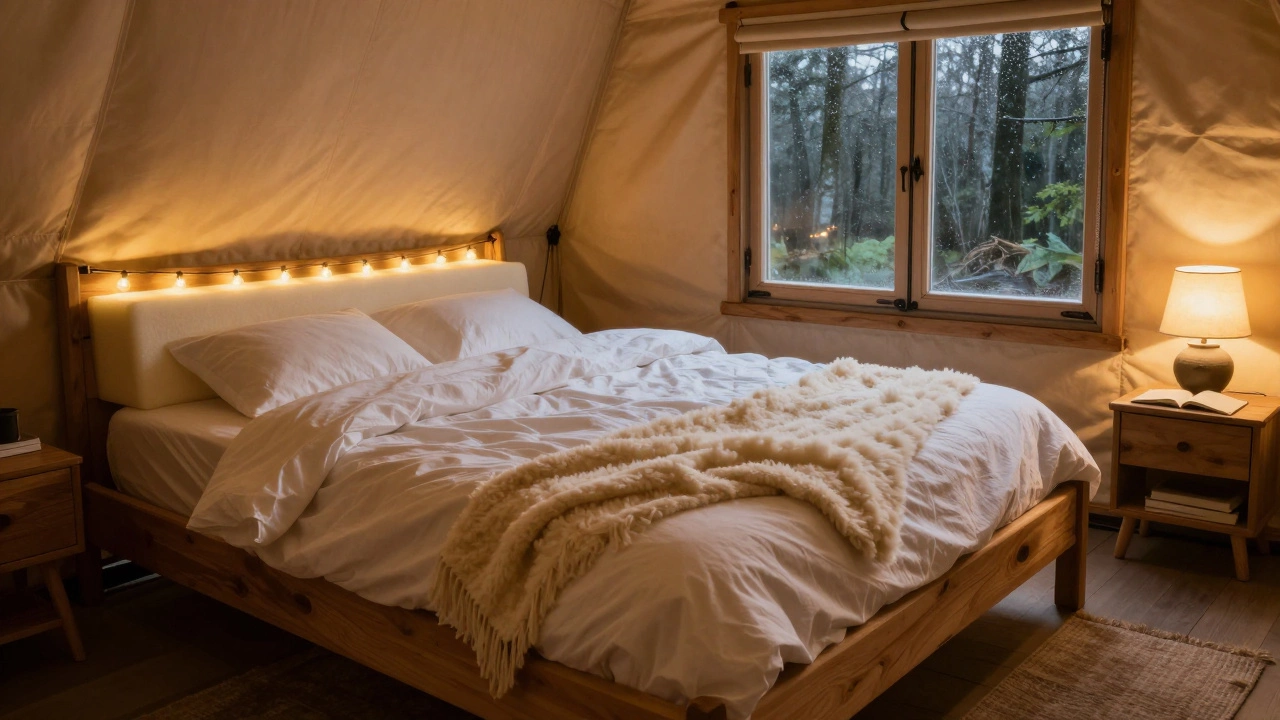
When you think of glamping, you probably picture cozy wooden cabins, string lights, and a hot tub under the stars. But the real question most people don’t ask until they’re packing their bags is: what do you sleep in when you go glamping? It’s not a tent with a sleeping bag. It’s not a fold-out cot in a camper van. Glamping sleep is its own thing - and if you’re expecting a hotel bed, you might be in for a surprise.
Glamping Beds Are Not What You Think
Most glamping sites don’t use standard hotel mattresses. They use high-end camping beds designed for comfort without sacrificing the outdoorsy feel. The most common setup? A sturdy wooden frame with a thick memory foam or hybrid mattress - often 10 to 14 inches thick. These aren’t the thin, springy mattresses you’d find in a budget motel. They’re built to last, with breathable fabrics and hypoallergenic covers that handle humidity, dew, and occasional dust from the surrounding trees. In Ireland, where damp nights are common, many glamping cottages use mattresses with moisture-wicking layers. Brands like Tempur-Pedic, Emma, and even custom local makers like GreenSleep Cottages are a Dublin-based supplier of eco-friendly glamping mattresses made with natural latex and organic cotton are popular choices. These mattresses are designed to stay cool in summer and warm in winter, without needing electric blankets or extra layers.Bedding: It’s All About Layers
Forget just a sheet and a pillow. Glamping bedding is layered like a luxury hotel, but with nature-friendly materials. You’ll typically find:- High-thread-count organic cotton sheets (300 to 600 thread count)
- A plush duvet filled with wool or recycled down alternatives
- Two or three pillows - one firm, one soft, and sometimes a body pillow
- A wool or cashmere throw at the foot of the bed
What’s Under the Bed? Storage and Space
Glamping beds aren’t just for sleeping - they’re designed to save space. Many cottages use elevated platforms with hidden storage underneath. You’ll find pull-out drawers or lift-up lids holding extra blankets, slippers, or even a small cooler for midnight snacks. Some luxury glamping sites include built-in nightstands with USB charging ports, reading lamps, and tiny drawers for your phone, glasses, or journal. In a 2024 survey of 1,200 glampers across Europe, 78% said they appreciated under-bed storage. It meant they didn’t have to unpack their entire suitcase. One family from Belfast told me they kept their kids’ pajamas and bedtime books in the under-bed bins. No more digging through suitcases at 10 p.m. when someone needs a clean shirt.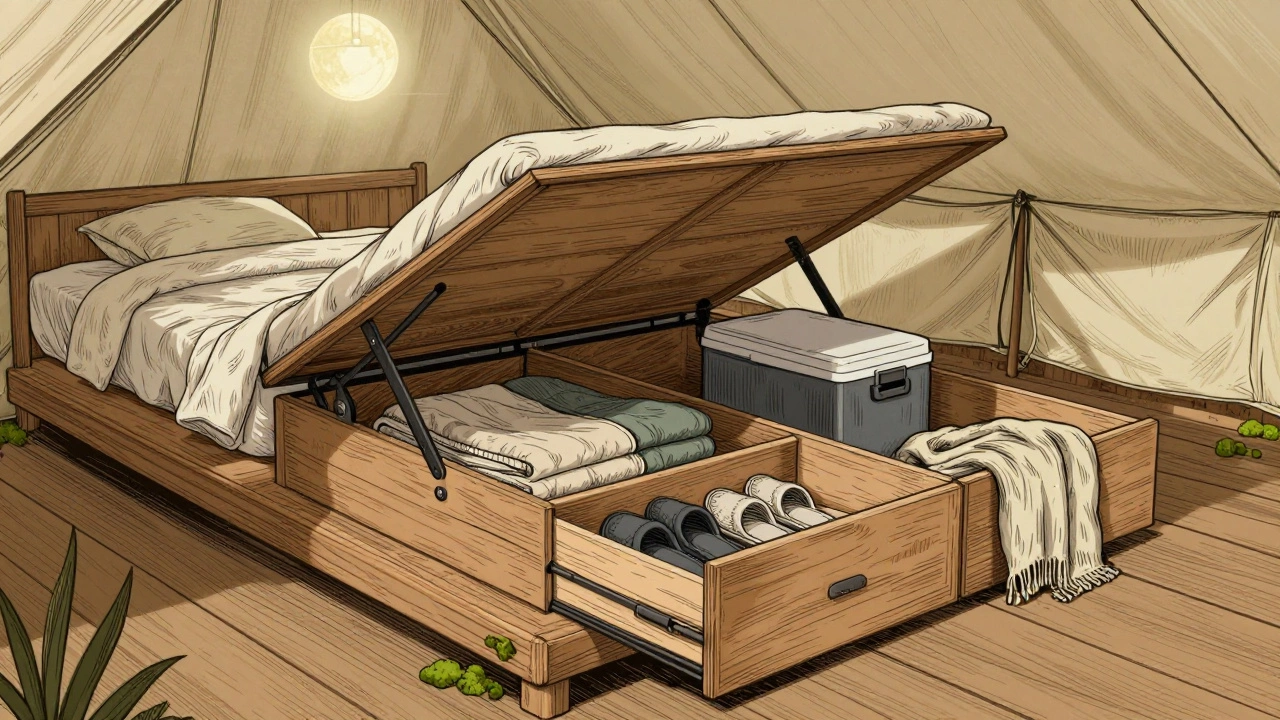
Temperature Control: No AC, But Still Comfortable
You won’t find air conditioning in most glamping cottages. That’s part of the point. But that doesn’t mean you’ll sweat or shiver. Glamping sites use passive design to keep things cozy year-round:- Thick wooden walls with natural insulation
- Double-glazed windows that seal out wind
- Underfloor heating in winter (often solar-powered)
- Large roof vents that open at night to let cool air in
What’s Missing? The Things You Don’t Need
Glamping isn’t about mimicking a hotel. It’s about simplifying. You won’t find:- Mini-bars or fancy room service
- TVs in the bedroom (some sites ban screens entirely)
- Overly synthetic fabrics
- Plastic-wrapped toiletries
Glamping vs. Camping: The Sleep Difference
If you’ve ever slept in a tent, you know the ground doesn’t forgive you. Glamping fixes that - but not with luxury alone. Here’s how the sleep experience differs:| Feature | Glamping | Camping |
|---|---|---|
| Bed Type | Memory foam or hybrid mattress on wooden frame | Inflatable pad or foam mat on ground |
| Bedding | Organic cotton sheets, wool duvet, multiple pillows | Sleeping bag, maybe a pillowcase |
| Temperature Control | Passive insulation, underfloor heating, roof vents | Depends on tent material and weather |
| Moisture Management | Wool and moisture-wicking fabrics | Condensation builds up inside tent walls |
| Privacy | Enclosed cabin with lockable door | Open tent, often shared with others |

What to Pack for Glamping Sleep
You don’t need much. Most sites provide everything - but here’s what to bring if you want to be extra comfy:- A favorite eye mask (glamping cabins often have lots of natural light at dawn)
- Earplugs (some sites are near streams or wildlife - owls, deer, or frogs can be loud at night)
- A small bottle of lavender spray (some cottages don’t use air fresheners, so a drop on your pillow helps)
- Your own pillow if you’re picky - most sites have extras, but if you sleep on a specific shape, bring it
Why Glamping Sleep Feels So Good
It’s not just the mattress. It’s the silence. It’s the way the wood smells after rain. It’s waking up to birds instead of an alarm. Glamping sleep works because it removes the stress of modern life - the buzzing phones, the flickering screens, the noise pollution. You’re not just sleeping on a nice bed. You’re sleeping in a space designed to help you rest deeply. One study from the University of Edinburgh in 2023 found that people who stayed in glamping accommodations for three nights reported a 40% improvement in sleep quality compared to their usual home routine. The researchers pointed to reduced light exposure, lower noise levels, and natural materials as key factors.Final Thought: It’s About Feeling Safe, Not Just Comfortable
Glamping isn’t about pretending you’re in a five-star hotel. It’s about feeling safe, warm, and grounded - even when you’re miles from civilization. The bed is just the vehicle. The real luxury is knowing you’re protected from the elements, surrounded by nature, and completely unplugged.So when someone asks you what you sleep in when you go glamping? You don’t just say "a bed." You say: "A real one. With wool. And quiet. And no Wi-Fi."
Do glamping cottages have real beds?
Yes, most glamping cottages have real beds - not air mattresses or cots. They use sturdy wooden frames with high-quality memory foam or hybrid mattresses, often 10 to 14 inches thick. Many are made with natural materials like organic cotton and latex, designed for comfort and durability in outdoor environments.
Are glamping beds warm enough in winter?
Absolutely. Glamping cottages are built with thick insulation, double-glazed windows, and often underfloor heating. Bedding includes wool duvets and thick blankets, which naturally retain heat. Guests in Ireland and Scotland regularly report sleeping comfortably in January without needing extra heaters.
Do I need to bring my own bedding?
No, most glamping sites provide everything - sheets, duvets, pillows, and even throws. But if you have specific preferences (like a certain pillow type or a favorite eye mask), it’s fine to bring those. Avoid heavy blankets; wool duvets are more than enough.
Is glamping better than a hotel for sleep?
For many people, yes. A 2023 University of Edinburgh study found that glamping guests reported 40% better sleep quality than at home, thanks to lower light and noise pollution, natural materials, and a complete digital detox. The lack of screens and the connection to nature play a big role.
Can I get a king-size bed in a glamping cottage?
Yes, many luxury glamping sites offer king or even queen-sized beds. Some even have two separate beds in one cabin for couples who prefer space. Always check the listing before booking - bed size is usually listed under amenities.
Are glamping beds eco-friendly?
Most are. Leading glamping providers use mattresses made from natural latex, organic cotton, and recycled materials. Bedding is often OEKO-TEX certified, meaning no harmful chemicals. Even the wood frames are typically sourced from sustainably managed forests.