
Sustainable Home Cost Calculator
Estimate Your Sustainable Home Costs
Calculate the cost of building a sustainable home in Ireland based on your specific needs and location.
Cost Estimate
Building a fully sustainable house doesn’t mean you have to live in a tin shed or grow all your own food. It means designing a home that uses less energy, produces less waste, and fits naturally into its environment-without breaking the bank. But here’s the truth: most people assume going green means paying double. That’s not always true. In fact, with smart choices, you can build a sustainable home for about the same as a conventional one-and save thousands over time.
What Exactly Is a Fully Sustainable House?
A fully sustainable house isn’t just about solar panels and composting toilets. It’s a system. It includes energy efficiency, water recycling, non-toxic materials, renewable resources, and long-term durability. Think of it like a car that runs on electricity, lasts 20 years, needs no oil changes, and doesn’t pollute. That’s the goal.
Key features include:
- Super-insulated walls and triple-glazed windows
- Passive solar design (windows facing south to capture winter sun)
- Heat recovery ventilation systems
- Rainwater harvesting and greywater recycling
- Locally sourced, low-carbon building materials
- On-site renewable energy (solar PV, small wind, or geothermal)
- Zero or near-zero net energy use
These aren’t luxury add-ons. They’re core components that reduce your long-term bills and environmental impact. And yes-they’re becoming more affordable every year.
Cost Breakdown: What You’re Really Paying For
In Ireland, the average cost to build a standard 150-square-meter home is around €2,800 per square meter. That’s about €420,000 total. A fully sustainable house? It runs between €3,200 and €4,000 per square meter. So for the same size, you’re looking at €480,000 to €600,000.
That sounds steep-until you see where the money goes.
Here’s a real breakdown from a completed project in County Wicklow, built in early 2025:
| Category | Cost (€) | % of Total |
|---|---|---|
| Foundation & Structure | 110,000 | 23% |
| High-Performance Windows & Insulation | 85,000 | 18% |
| Renewable Energy System (Solar + Battery) | 65,000 | 14% |
| Heat Pump & Ventilation | 50,000 | 10% |
| Sustainable Materials (wood, clay, hempcrete) | 70,000 | 15% |
| Rainwater & Greywater System | 25,000 | 5% |
| Labour & Permits | 80,000 | 17% |
| Contingency & Design Fees | 15,000 | 3% |
| Total | 500,000 | 100% |
Notice something? The most expensive parts aren’t the solar panels or fancy insulation-they’re the materials and labor. That’s because sustainable materials like cross-laminated timber, hempcrete, and recycled steel are still niche. But prices are falling fast. In 2020, hempcrete cost 40% more than standard concrete. Today? It’s only 12% higher.
Where You Can Save Money Without Sacrificing Sustainability
You don’t need to buy every green product on the market. Here’s where you can cut costs without hurting performance:
- Skip the geothermal heat pump-an air-source heat pump is 60% cheaper and still cuts heating bills by 70%. In Ireland’s mild climate, it’s more than enough.
- Use reclaimed timber-salvaged beams and flooring from old barns or warehouses cost half the price of new sustainably harvested wood.
- Build smaller-a 120m² home uses 20% less material and energy than a 150m² one. You can still have three bedrooms and a home office.
- Do some work yourself-if you’re handy, you can install insulation, paint with low-VOC paint, or lay flooring. That saves €15,000-€25,000.
- Wait for subsidies-the Irish government offers up to €5,000 for heat pumps and €3,000 for solar panels under the SEAI grants. Apply early-funds fill up fast.
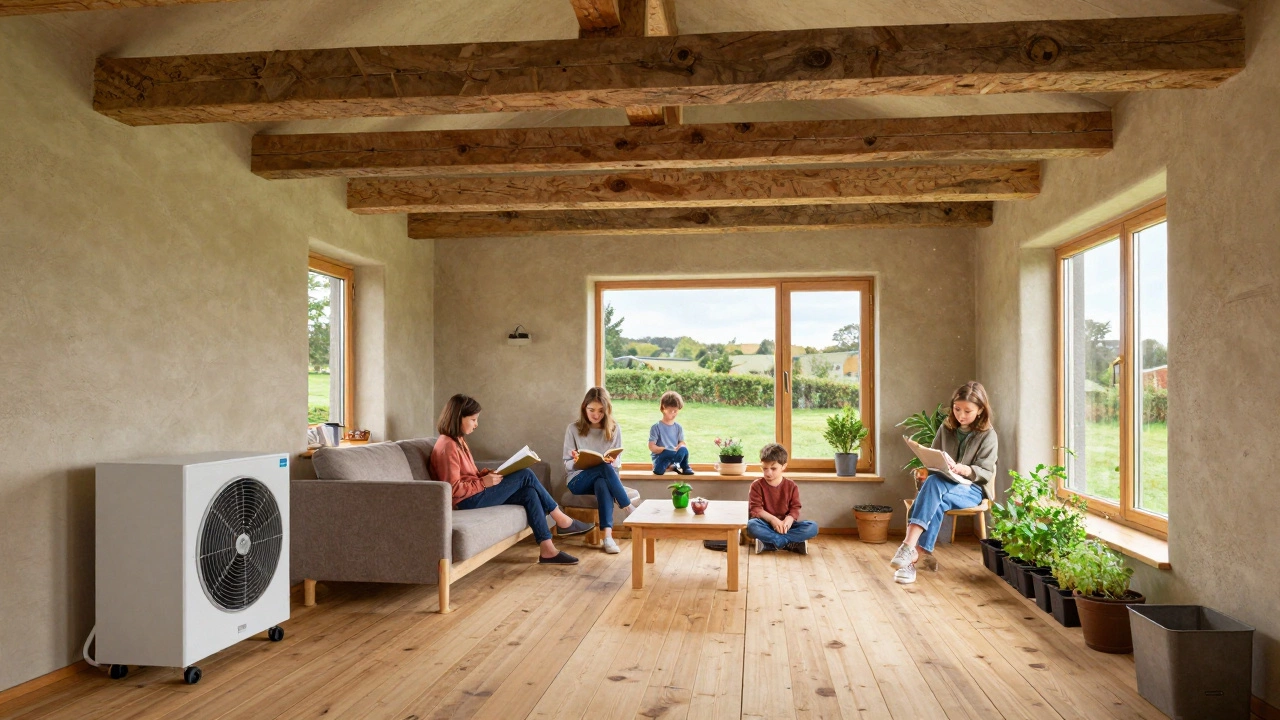
One family in Galway built their 110m² sustainable cottage for €390,000 by using reclaimed bricks, DIY insulation, and waiting for a seasonal discount on triple-glazed windows. Their annual energy bill? €180.
What You Save Over Time
The real value of a sustainable house isn’t in the upfront cost-it’s in the decades after you move in.
Compare two homes:
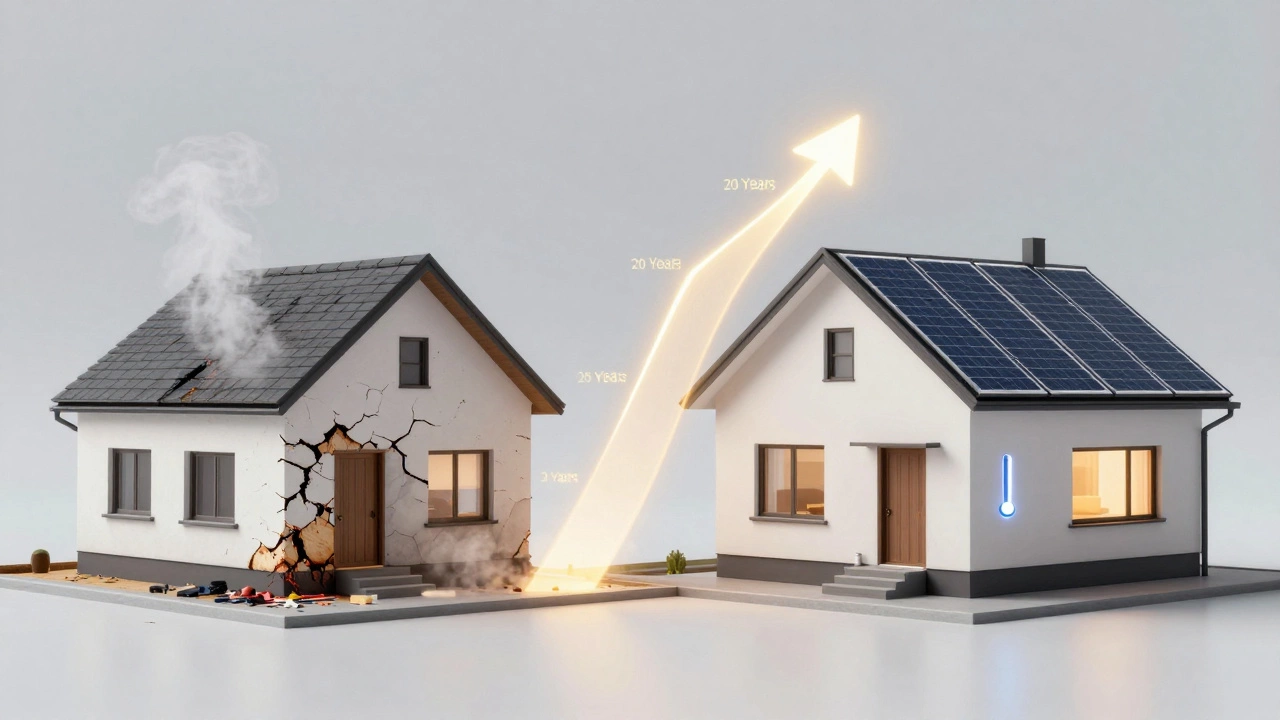
- Standard home: €420,000 build cost, €2,500/year in heating and electricity
- Sustainable home: €500,000 build cost, €150/year in energy
After 10 years, the sustainable home has saved €23,500 in energy bills alone. After 20 years? Nearly €50,000. And that’s without counting rising energy prices-which have gone up 45% in Ireland since 2020.
Plus, sustainable homes sell faster and for 10-15% more. A 2024 study by the Sustainable Energy Authority of Ireland found that homes with an A2 energy rating sold in 32 days on average-half the time of homes with a D rating.
Common Mistakes That Drive Up Costs
Many people think going green means buying the most expensive tech. That’s a trap.
- Overbuying solar panels-you don’t need 10kW if your house uses 4kW. A 5kW system with a battery is enough for most Irish homes.
- Choosing imported materials-a bamboo floor from China has a bigger carbon footprint than Irish-grown oak. Always check the origin.
- Ignoring orientation-if your main windows face north, you’re wasting free solar heat. It’s the #1 design error.
- Skipping air-tightness testing-a poorly sealed home loses 30% of its heat. That’s like leaving your front door open all winter.
One client in Cork spent €12,000 extra on imported insulation because they didn’t know Irish sheep’s wool insulation was cheaper, more effective, and locally made. They didn’t even get an A1 rating.
Real Examples from Ireland
There are over 2,000 certified sustainable homes in Ireland now. Here are two real cases:
The Dublin Cottage (2024) - A 90m² retrofit of a 1920s semi-detached house. Added external insulation, triple-glazed windows, solar panels, and a heat pump. Total cost: €210,000. Energy use dropped from 28,000 kWh/year to 2,100 kWh/year. SEAI grant covered €6,500.
The Clare Off-Grid Home (2025) - A 130m² self-build using straw bale walls, timber frame, and solar + micro-hydro. No grid connection. Cost: €410,000. Includes rainwater collection, composting toilet, and wood-burning stove. Annual energy cost: €0.
These aren’t outliers. They’re becoming more common. And with new building regulations requiring all new homes to be nearly zero-energy by 2030, they’re the future.
How to Start Your Own Project
If you’re serious about building a sustainable house, here’s your simple roadmap:
- Decide on size and layout. Smaller = cheaper.
- Choose a site with good sun exposure (south-facing is best).
- Hire an architect experienced in passive house design. Ask for references.
- Get a preliminary energy assessment from SEAI.
- Compare materials: local, recycled, low-embodied carbon.
- Apply for SEAI grants before breaking ground.
- Build with a contractor who’s done at least three sustainable builds.
- Test air-tightness before drywall goes up.
Don’t rush the design phase. That’s where 80% of savings happen. A good architect can cut your energy needs in half just by changing window placement and wall thickness.
Final Thought: It’s Not About the Price Tag
Building a sustainable house isn’t a luxury-it’s a smart investment in comfort, health, and future-proofing your finances. Yes, it costs more upfront. But the savings on bills, the quietness of a well-insulated home, the peace of mind knowing you’re not heating the planet… those are priceless.
And in Ireland, with our wet winters and rising energy costs, a sustainable home isn’t just nice to have-it’s becoming the only sensible choice.
Is it cheaper to build a sustainable house from scratch or retrofit an old one?
It depends. Retrofitting an old house can cost €150,000-€300,000, depending on the condition. Building new costs €3,200-€4,000 per square meter. But a retrofit often leaves you with a less efficient home than a purpose-built one. If you’re starting fresh, building new usually gives you better performance for the money. If you love your current home and it’s structurally sound, a deep retrofit is still a great option.
Do I need planning permission for a sustainable house in Ireland?
Yes. All new builds require planning permission, even if they’re eco-friendly. But some sustainable features-like solar panels or rainwater tanks-may qualify for permitted development rights if they meet size and placement rules. Always check with your local council. Some counties, like Wicklow and Clare, have fast-tracked green builds.
Can I get a mortgage for a sustainable home?
Absolutely. Banks like AIB, Bank of Ireland, and Permanent TSB now offer green mortgages with lower interest rates-up to 0.5% off-for homes with an A2 or better energy rating. You’ll need an Energy Performance Certificate (EPC) before approval. Some lenders even offer higher loan-to-value ratios for sustainable homes.
What’s the most cost-effective sustainable material?
Irish sheep’s wool insulation. It’s naturally fire-resistant, regulates humidity, and costs about €15 per square meter-less than synthetic options. Hempcrete is another strong contender for walls, especially if you’re building in a rural area where suppliers are nearby. Reclaimed brick and timber are also excellent-often cheaper than new and with zero embodied carbon.
How long does it take to build a sustainable house?
Typically 8-12 months, same as a conventional home. But if you’re using modular or prefab sustainable components, it can drop to 4-6 months. The delay usually comes from sourcing materials-especially if you’re using local or recycled products. Plan ahead and order early.