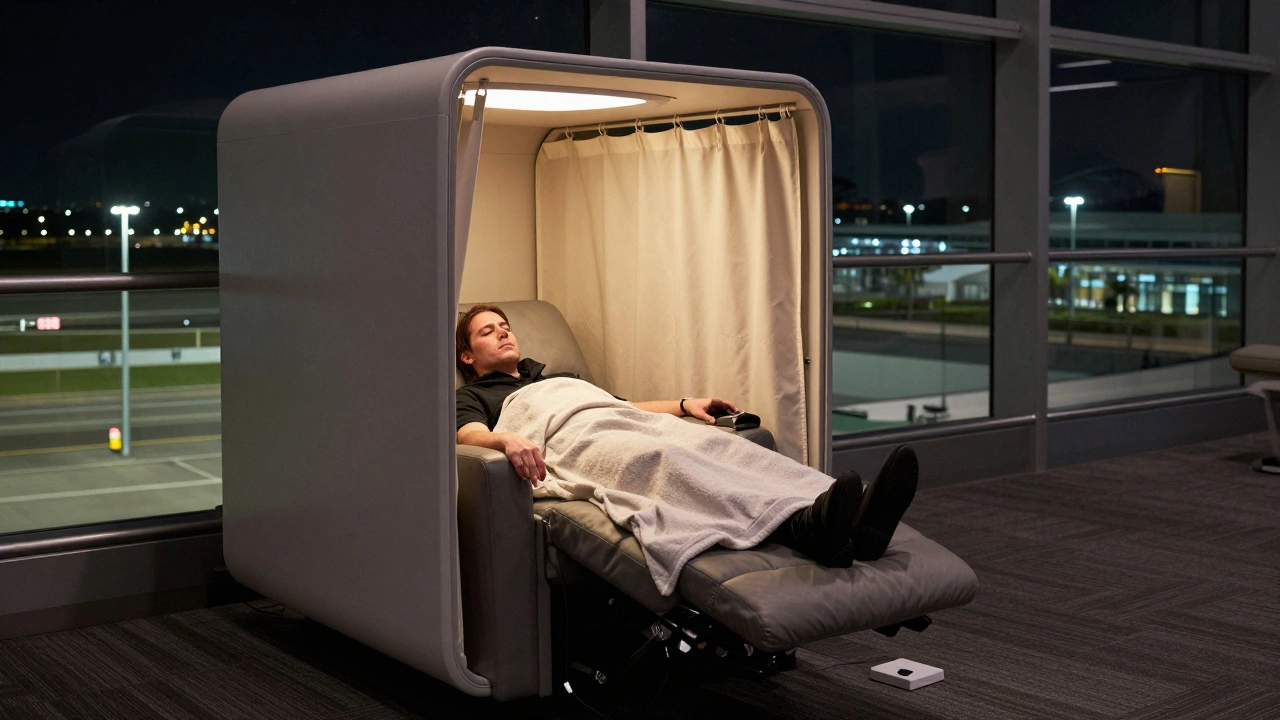
Ever landed at an airport late at night, only to find your flight canceled or delayed until morning? You’re not alone. Thousands of travelers face this every year, and the big question always pops up: do airports provide sleeping rooms? The answer isn’t simple-it depends on where you are, how much you’re willing to spend, and how long you’re stuck.
Not All Airports Have Sleeping Rooms-But Many Have Alternatives
Most major international airports don’t offer free sleeping rooms like a hotel. You won’t find cozy beds just lying around in Terminal B. But that doesn’t mean you’re out of luck. Many airports have invested in dedicated sleep zones, nap pods, or even private rooms you can rent by the hour.
Take Singapore’s Changi Airport. It’s famous for its free sleep pods in the transit areas. These aren’t full beds, but padded recliners with privacy curtains, blankets, and charging ports. You can use them for up to three hours without paying a cent. Tokyo’s Narita Airport has similar setups, with quiet zones and cushioned seating designed for tired travelers.
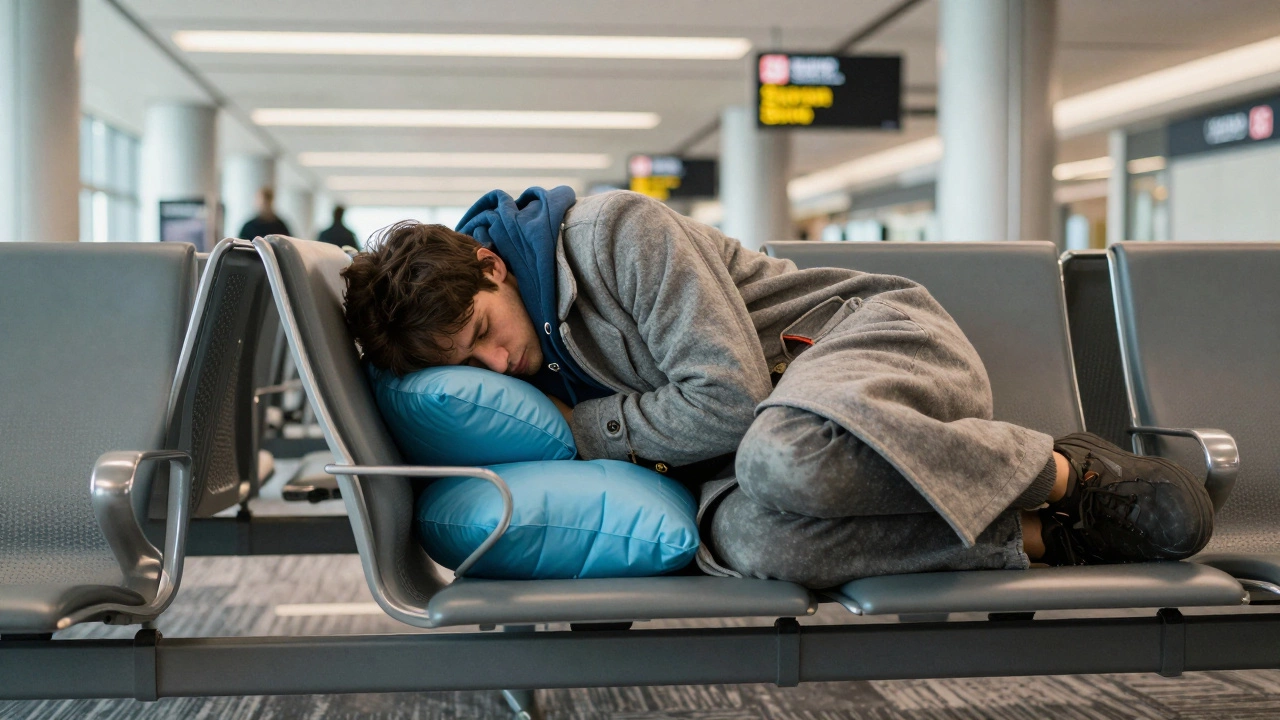
But if you’re flying out of a smaller U.S. airport like Kansas City or Boise? Don’t expect much. You’ll likely be stuck on hard plastic seats, surrounded by crying babies and blaring announcements. Some travelers bring inflatable pillows, eye masks, and noise-canceling headphones. Others just huddle under their coats and hope for the best.
Pay-for-Sleep Options: Nap Pods, Lounges, and Private Rooms
If you want real sleep-not just a slumped posture on a bench-there are paid options. Many airports now offer sleeping rooms you can book online or at kiosks. These aren’t full hotel rooms, but they’re far better than a bench.
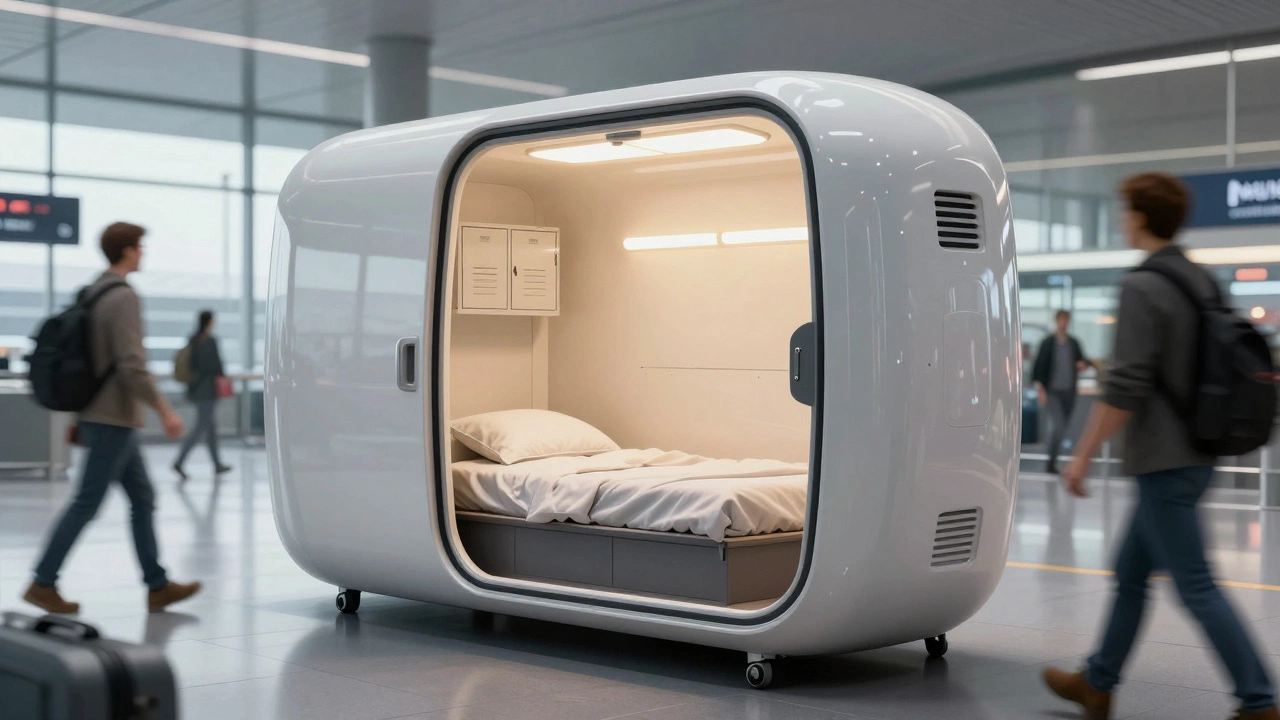
For example, at Munich Airport, you can rent a Sleeping Box for €25-€40 per hour. It’s a soundproof pod with a mattress, lighting, power outlet, and even a small locker. No one can see in. No one can hear you snore. It’s basically a hotel room stripped down to essentials.
Similarly, in London Heathrow, the YOTELAIR cabins offer tiny but functional rooms with real beds, TVs, and ensuite bathrooms. You can book by the hour, and check-out is as simple as tapping a card. No need to check in at a front desk. Prices start around £30 per hour.
Some lounges, like those run by Priority Pass or airline memberships, include sleep areas. If you’re flying business class or have elite status, you might already have access. But even if you don’t, many lounges now let non-members pay for entry-often around €50-€80 for a few hours of rest.
What About Free Sleeping Areas?
Yes, some airports offer free resting spots-but with big catches.
At Amsterdam Schiphol, there are quiet zones with reclining chairs and dim lighting. They’re not private, and you can’t lock anything up. If you leave your bag unattended, it’s gone. At Dubai International, you’ll find designated sleep areas near gates, but they’re often crowded and noisy. And in most U.S. airports, the only "free" sleeping spots are in the security hold areas after you’ve cleared screening. That means if you miss your flight, you might be stuck outside security, where seating is sparse and temperature-controlled only by the wind from the jet bridges.
One thing to watch out for: some "sleeping areas" are just marketing terms. A few airports call their padded benches "sleep zones," but they don’t have mattresses, blankets, or even armrests you can lean on. Always check reviews on sites like FlyerTalk or Reddit before you count on them.
Why Do Some Airports Have These Rooms-and Others Don’t?
The reason some airports have sleep rooms and others don’t comes down to traffic, money, and passenger expectations.
Airports in Asia and Europe often serve as major international hubs. Think of Istanbul, Doha, or Frankfurt. Millions of travelers connect through them, often with long layovers. These airports treat sleep as a service, not a luxury. They know if you’re well-rested, you’re more likely to spend money on food, shopping, and duty-free.
In contrast, airports in smaller cities or countries with fewer international flights don’t see the same return on investment. Building a sleep pod costs thousands. Maintaining it costs even more. If only 20 people a night use it, it’s not worth it.
There’s also a cultural difference. In Japan and South Korea, it’s normal to nap in public. In the U.S. and parts of Europe, people expect privacy. That’s why you’ll find more open nap zones in Tokyo, but more private pods in London or Zurich.
What Should You Do If You Need to Sleep at the Airport?
Here’s a simple checklist for anyone stuck overnight:
- Check your airport’s website before you fly. Search for "sleep," "rest areas," or "nap pods." Many list locations, hours, and prices.
- Use apps like Sleepinginairports.net-it’s a crowdsourced database with photos and reviews of every airport’s sleep options.
- Bring your own gear: a travel pillow, eye mask, earplugs, and a lightweight blanket. Even if the airport has a nap zone, it’s not always clean or quiet.
- Know the rules: Some airports lock doors overnight. Others don’t allow food or drinks in rest zones. Don’t get caught off guard.
- Consider a nearby airport hotel: Often, they’re just a free shuttle ride away. A $60 room with a real bed, shower, and breakfast beats a $40 pod with no windows.
Real Example: A 14-Hour Layover in Frankfurt
Last year, a traveler named Maria had a 14-hour layover in Frankfurt. Her flight was delayed by 8 hours. She didn’t have elite status. She wasn’t flying business.
She checked the airport’s website. Found out about the Sleep ‘n Go pods-€35 for three hours. She booked one. Slept for two hours, woke up, showered at the spa lounge (included with the pod), ate a sandwich, then booked another pod for the next shift. Total cost: €70. She arrived at her final destination refreshed.
Another traveler, James, tried to sleep on a bench. He got woken up three times by cleaning staff, lost his phone to a pickpocket, and spent the whole night shivering. He didn’t book a pod because he assumed they were "for rich people." He learned the hard way: in airports, the cheapest option isn’t always the best.
What’s Changing? The Rise of Airport Sleep Tech
More airports are testing smart sleep tech. In 2025, Helsinki Airport rolled out AI-powered nap pods that adjust lighting and sound based on your sleep cycle. Dallas-Fort Worth is testing silent sleep rooms with air purification and circadian lighting. Even smaller airports like Portland and Calgary are starting pilot programs.
The goal? Make transit less stressful. Airports aren’t just transportation hubs anymore-they’re rest stops. And travelers are demanding better.
Final Thought: It’s Not About Luxury. It’s About Survival
If you’re stuck overnight, you’re not asking for a five-star experience. You’re asking for safety, comfort, and dignity. Whether it’s a free bench, a paid pod, or a shuttle to a nearby hotel, your body needs rest. Don’t let pride or budget fears keep you awake on a cold airport floor. There’s a solution out there. You just need to look for it.
Do airports have free sleeping rooms?
Most airports don’t have free sleeping rooms with beds. Some offer free rest zones with reclining chairs, like in Singapore or Amsterdam, but these aren’t private and don’t include mattresses. If you need real sleep, expect to pay.
Can I sleep in an airport overnight?
Yes, many airports allow overnight stays, but rules vary. Some lock doors after hours. Others have curfews or restrict access to certain terminals. Always check the airport’s website or call ahead to confirm.
Are airport nap pods worth the cost?
If you’re stuck for more than 4 hours and need real rest, yes. A €30-€40 pod gives you privacy, a mattress, and a quiet space-far better than a bench. For shorter layovers, free zones might be enough. Compare your options before paying.
What’s the cheapest way to sleep at an airport?
Bring your own gear: a travel pillow, eye mask, and blanket. Find the quietest corner near a gate, away from food courts and security checkpoints. Avoid sleeping near restrooms or jet bridges. Many travelers report better sleep in unused seating areas after midnight.
Do airport hotels cost more than regular hotels?
Sometimes, but not always. Airport hotels often charge a premium because they’re convenient. But many offer free shuttles, breakfast, and late check-out. A $70 airport hotel with breakfast and a shower is often cheaper than a $50 nap pod if you need to freshen up.