Country House Hotel Evolution Explorer
Grand Tour Hospitality
Wealthy travelers needed rural lodging. Gentry opened doors to friends, but it wasn't a commercial business yet.
The Tax Crisis
UK introduces Death Duties (up to 80%). Aristocrats face ruin: sell land, let homes rot, or find income.
Belvoir & Chatsworth Open Up
Estates begin opening gardens and houses for tours. A hybrid model emerges to generate revenue while maintaining privacy.
Downsizing & Stays
Staff costs become prohibitive. Estates sell farmland and start offering exclusive overnight stays in wings of the house.
Dromoland Castle Opens
A full-service luxury hotel opens in Ireland. Professional management marks a shift from "side hustle" to serious business.
Modern Experience
Curated experiences including gastronomy, wellness, and activities. Many now owned by investment groups rather than families.
Belvoir Castle
Location: Leicestershire, UK
Era: 1950s (Tours) / 1970s (Stays)
Model: Hybrid
Pioneered the concept of using public access to fund preservation. Guests stayed in specific wings, maintaining a family-home feel.
Dromoland Castle
Location: County Clare, Ireland
Era: 1972
Model: Full-Service Luxury
Committed fully to professional hospitality. Set the standard for scale and service, moving beyond just a side income stream.
Chatsworth House
Location: Derbyshire, UK
Era: 1950s
Model: Attraction-Focused
Mastered branding and mass appeal through gardens and art. Proved heritage could be packaged effectively as a tourist product.
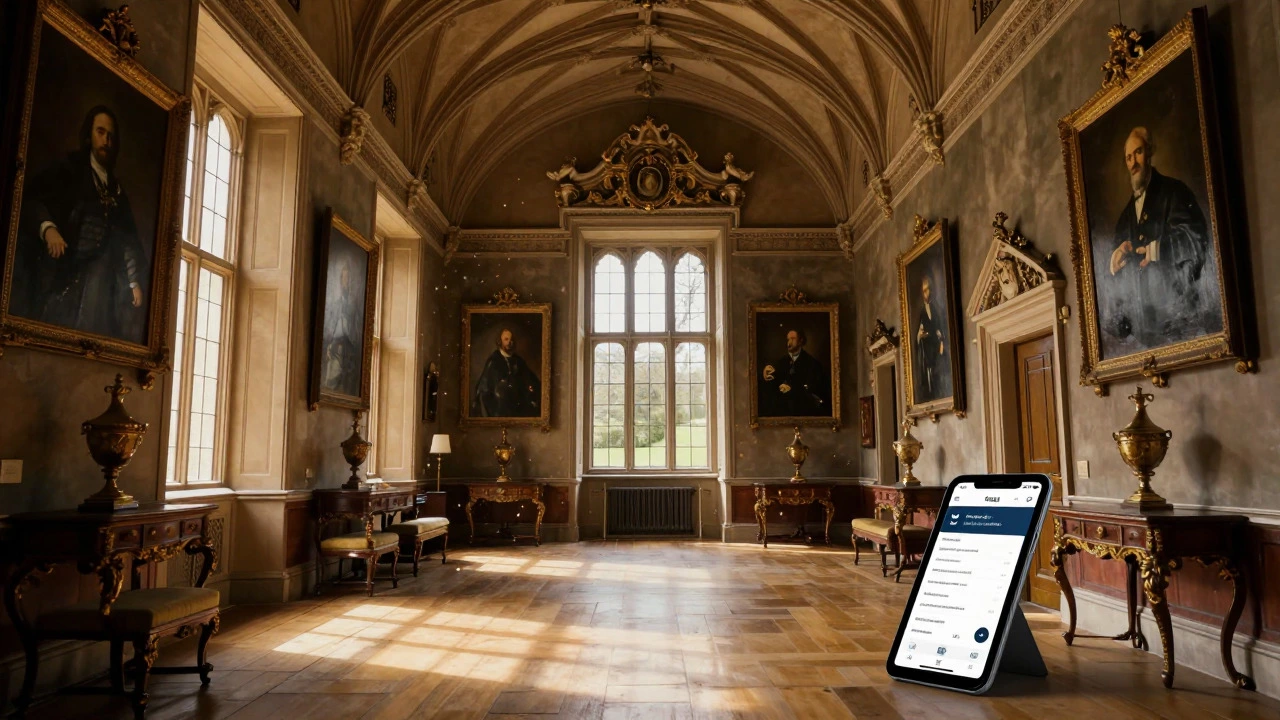
Picture this: you’re standing in a grand hall with vaulted ceilings, surrounded by portraits of ancestors who never imagined their home would one day host guests checking in via an app. This is the reality of the modern country house hotel, which is a luxury accommodation located in a historic estate or manor house, offering guests access to grounds, heritage architecture, and personalized service. But when did these stately homes stop being private residences and start charging for beds? The answer isn’t as simple as pointing to a single opening date. It’s a story of economic survival, shifting social norms, and a few very brave aristocrats who decided that renting out their drawing rooms was better than letting them rot.
The Problem with Private Mansions
To understand why the first country house hotels emerged, you have to look at what happened to the British aristocracy after World War II. Before the war, owning a massive estate was a status symbol. You had staff, you hosted events, and you lived like royalty. Then came the bombs, the loss of empire, and finally, the crushing weight of taxation.
In 1949, the UK government introduced Death Duties (inheritance tax) that could take up to 80% of an estate’s value. For many families, this meant they couldn’t afford to keep their ancestral homes. They had three choices: sell the land to developers, let the building fall into ruin, or find a way to make the property pay for itself. The third option gave birth to the commercial country house hotel industry.
It wasn’t just about money, though. There was also a cultural shift. The rigid class structures of the early 20th century began to dissolve. The idea of paying to stay in someone else’s family home went from scandalous to chic. But who took the leap first?
The Early Pioneers: From Inns to Estates
If we define a "country house" strictly as a large, historic aristocratic residence converted for public lodging, the timeline narrows down to the mid-20th century. However, if we look at the broader concept of rural hospitality in grand settings, the roots go back further.
In the 17th and 18th centuries, wealthy travelers on the Grand Tour or those attending hunting seasons needed places to stay. Some landed gentry opened their doors to friends and associates, but this wasn’t really a business. It was more like an extended guest list. True commercial operation-where strangers paid fixed rates for rooms and meals-didn’t become viable until the infrastructure existed to support it.
The real turning point came in the 1950s and 1960s. As the cost of maintaining vast staff teams became prohibitive, estates started downsizing. They kept the core house but sold off farmland. To cover maintenance costs, they began hosting weekend parties, weddings, and eventually, overnight stays.
Belvoir Castle: A Case Study in Survival
One name often cited in discussions about the earliest conversions is Belvoir Castle, which is a historic castle in Leicestershire, England, that has been the seat of the Duke of Rutland since the 13th century. While it didn’t open as a full-service hotel immediately, it pioneered the model of opening its gates to the public. In the 1950s, under the leadership of the 9th Duke of Rutland, the estate began allowing visitors to tour the castle and gardens. This generated revenue that helped preserve the structure.
By the 1970s, Belvoir had added guest accommodations. It wasn’t a traditional hotel with a front desk and bellboys; it was more exclusive. Guests stayed in specific wings, ate in the dining room, and participated in activities organized by the family. This hybrid model-part private residence, part commercial venue-became the blueprint for many other estates.
Belvoir’s success proved that heritage assets could be financially sustainable without selling off the crown jewels (literally). Other families watched closely. If the Dukes of Rutland could do it, maybe they could too.
Dromoland Castle: The Irish Counterpart
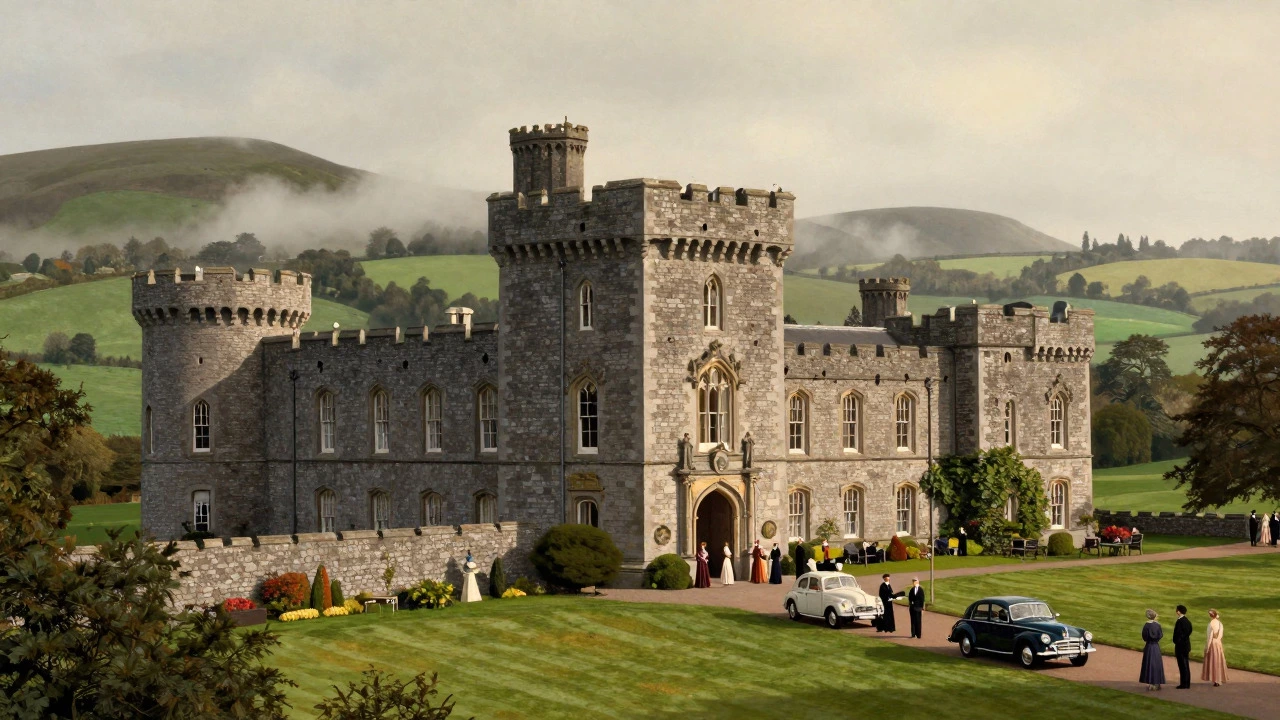
Crossing the Irish Sea, we find another contender for the title of "first": Dromoland Castle, which is a five-star luxury hotel located in County Clare, Ireland, housed in a 12th-century castle owned by the O'Briens. The O’Brian family has owned the castle for over 800 years. In the 1970s, faced with similar financial pressures as their British counterparts, they made the decision to convert parts of the castle into a hotel.
Dromoland opened its doors to paying guests in 1972. Unlike some earlier attempts that were half-hearted, Dromoland committed fully to the hospitality industry. They hired professional management, invested in amenities, and marketed themselves as a luxury destination. Today, it’s one of the most famous country house hotels in Europe, hosting celebrities and dignitaries regularly.
The key difference between Dromoland and earlier examples is scale and professionalism. It wasn’t just a side hustle; it was a serious business venture. This set a new standard for what a country house hotel could be.
Why the 1970s Were the Decade of Change
You might wonder why the 1970s specifically. Several factors aligned to make this decade perfect for the rise of country house hotels:
- Tax Reforms: Governments in the UK and Ireland adjusted inheritance laws, making it slightly easier to pass down properties, but only if they generated income.
- Rise of Leisure Travel: The post-war boom in disposable income meant more people could afford luxury holidays. Domestic tourism grew as international travel was still expensive and complex.
- Heritage Awareness: There was a growing appreciation for historical preservation. Organizations like the National Trust and Historic Environment Ireland encouraged owners to maintain buildings rather than demolish them.
These forces created a market where wealthy tourists wanted unique experiences, and aristocratic families needed cash flow. It was a match made in heaven-or at least, in a ballroom.
| Estate Name | Location | Year Opened to Public | Business Model | Key Innovation |
|---|---|---|---|---|
| Belvoir Castle | Leicestershire, UK | 1950s (Tours), 1970s (Stays) | Hybrid: Tours + Exclusive Stays | Proved heritage sites could generate revenue |
| Dromoland Castle | County Clare, Ireland | 1972 | Full-Service Luxury Hotel | Professionalized the aristocratic hospitality sector |
| Chatsworth House | Derbyshire, UK | 1950s (Gardens/Tours) | Attraction-Focused | Leveraged gardens and art collections for mass appeal |
The Role of Chatsworth House
We can’t talk about the origins of country house hotels without mentioning Chatsworth House, which is the country house of the Duke of Devonshire in Derbyshire, England, known for its extensive gardens and art collection. While Chatsworth didn’t operate as a hotel in the traditional sense during its early commercial phase, it redefined how estates interacted with the public.
In the 1950s, the 10th Duke of Devonshire opened the gardens and house to tourists. This move saved the estate from financial ruin. Over time, Chatsworth expanded its offerings to include event spaces and limited accommodation options. Its success demonstrated that a country house could be both a working family home and a major tourist attraction.
Chatsworth’s influence lies in its branding. It showed that heritage could be packaged and sold effectively. Other estates followed suit, realizing that their history was their biggest asset.
How the Model Evolved
From those early pioneers, the industry has evolved significantly. Today’s country house hotels are not just about staying in old buildings. They offer curated experiences:
- Gastronomy: Farm-to-table dining using produce from the estate’s own land.
- Wellness: Spas and retreats leveraging the peaceful rural setting.
- Activities: Horseback riding, shooting sports, and guided historical tours.
The line between private residence and commercial hotel has blurred even further. Many modern country house hotels are no longer owned by the original families. They’ve been bought by hotel chains or investment groups who manage them professionally while preserving the historic facade.
Is There a Single "First"?
So, who was truly first? If you want a strict definition-a historic mansion operating primarily as a paid hotel with professional management-Dromoland Castle in 1972 is a strong candidate. If you accept a broader definition that includes phased openings and hybrid models, then Belvoir Castle in the 1950s holds the title.
But perhaps the real answer is that there was no single "first." Instead, there was a wave of necessity-driven innovation across the UK and Ireland. Families like the O’Briens, the Dukes of Rutland, and the Dukes of Devonshire all contributed pieces to the puzzle. Their collective decisions transformed decaying mansions into thriving businesses, creating the category we now know as country house hotels.
Lessons for Modern Owners
For anyone interested in heritage accommodation today, the history offers valuable lessons. First, authenticity matters. Guests don’t just want a pretty building; they want a connection to the past. Second, diversification is key. Relying solely on room bookings is risky. Successful estates combine lodging with food, events, and retail. Finally, adaptability wins. The families that survived were those willing to change their relationship with the public.
The next time you check into a country house hotel, remember that you’re not just booking a room. You’re participating in a decades-long experiment in survival, heritage preservation, and luxury hospitality. And thanks to those early pioneers, the experiment is still going strong.
Was Blenheim Palace the first country house hotel?
Blenheim Palace is often cited as one of the most famous historic estates open to the public, but it wasn't the first to operate as a hotel. It opened to tourists in the 1950s, similar to Chatsworth, focusing initially on tours and events rather than overnight stays. Its role was more about popularizing heritage tourism than pioneering the hotel model itself.
Why did aristocrats start opening their homes to the public?
The primary reason was financial pressure. High taxes, particularly inheritance tax (Death Duties) in the UK, made it impossible for many families to maintain large estates without income. Opening homes to tourists provided a steady revenue stream to cover maintenance costs, staff salaries, and utilities.
Are all country house hotels owned by noble families?
Not anymore. While many started as family-owned ventures, numerous estates have been sold to hotel chains, investment funds, or private equity firms over the last few decades. These new owners often manage the properties professionally while trying to preserve the historic character.
What makes a country house hotel different from a regular luxury hotel?
Country house hotels are defined by their location in historic estates, often with significant architectural and cultural heritage. They typically offer access to large grounds, gardens, and unique activities like shooting or horseback riding. The experience is focused on immersion in history and nature, unlike urban luxury hotels which focus on convenience and city views.
Did any country houses fail to survive the transition to hotels?
Yes, unfortunately. Many estates were demolished or fell into ruin because the owners couldn't secure enough funding or find a viable business model. Those that succeeded usually had a combination of strong heritage appeal, strategic location, and innovative management. Failure often resulted from underestimating the costs of restoration and ongoing maintenance.