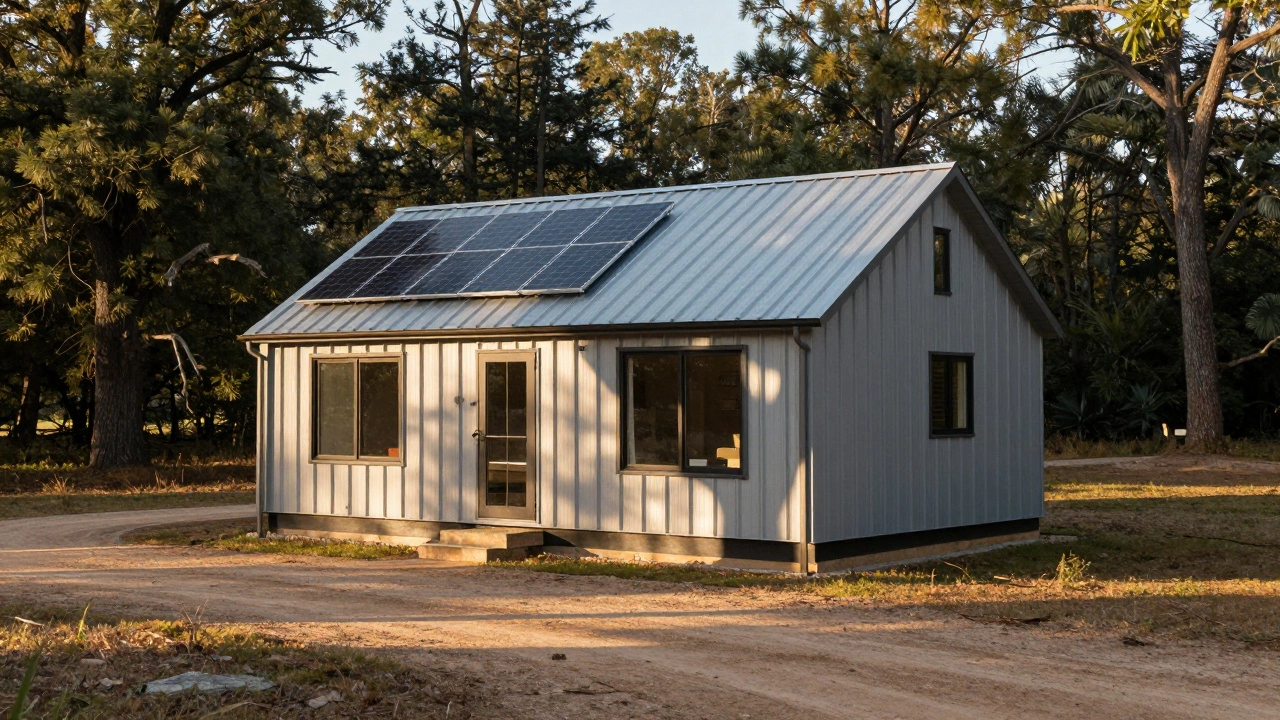
Eco-Cottage Cost Calculator
Estimate Your Build Cost
Calculate estimated costs based on 2025 data from the National Association of Home Builders
Building a house doesn’t have to break the bank - especially if you’re aiming for something small, smart, and eco-friendly. More people are ditching big suburban homes for compact, energy-efficient cottages that cost less to build, heat, and maintain. But where’s the cheapest place to do it? The answer isn’t just about land prices. It’s about permits, labor, materials, and local rules that either help or hurt your budget.
Why location matters more than you think
You might think building in Texas or Florida is cheap because land is cheap. But that’s only half the story. A $50,000 lot in California could end up costing $300,000 to build on because of strict codes, high labor rates, and long permit waits. Meanwhile, a $75,000 lot in Missouri might let you build a full eco-cottage for under $120,000. Why? Because the rules are simpler, workers are more affordable, and local suppliers know how to handle small-scale builds.
The real savings come from places where:
- Building permits cost under $1,000
- Contractors charge $40-$60/hour (not $100+)
- Local suppliers carry affordable solar panels, insulation, and recycled materials
- There’s no mandatory energy audit or green certification fee
The top 5 cheapest states for building an eco-friendly cottage
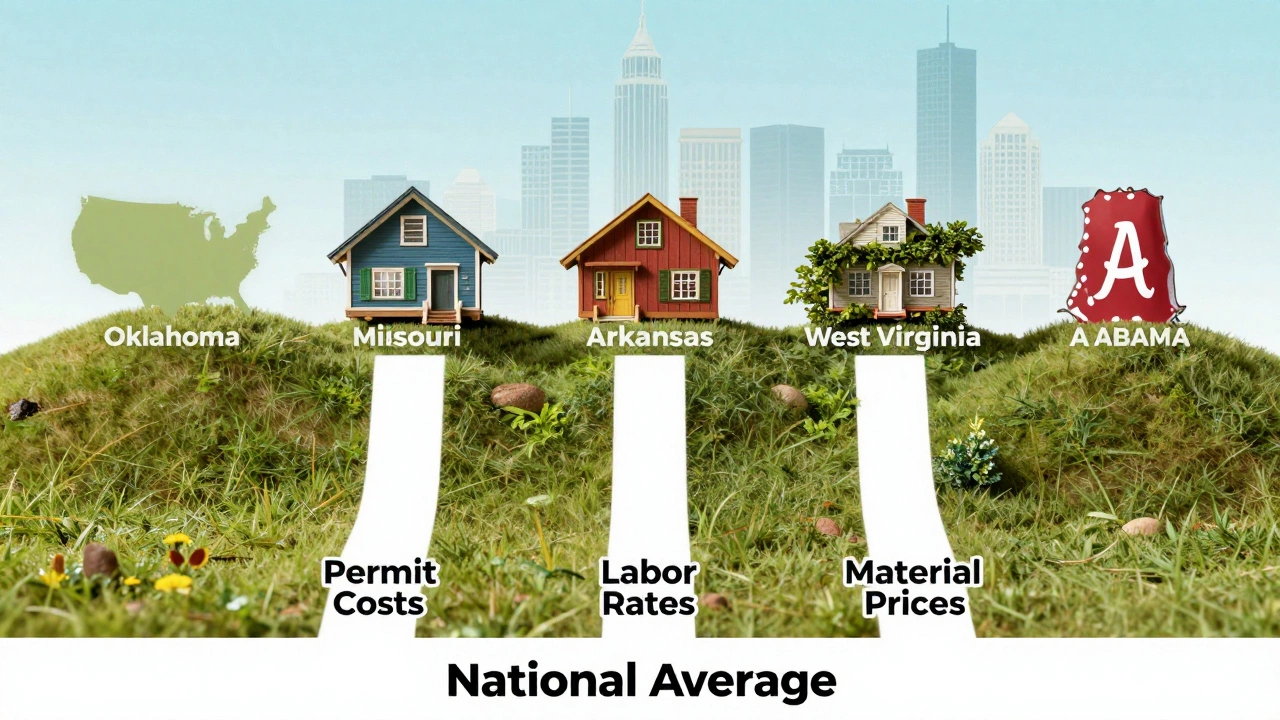
Based on 2025 data from the National Association of Home Builders and state housing reports, here are the five most affordable states to build a small, sustainable home.
1. Oklahoma
Oklahoma is quietly the top pick for budget builders. The average cost to build a 600-square-foot eco-cottage? Around $95,000. That includes solar panels, high-efficiency windows, and cellulose insulation. Permits? Under $600. Labor? Around $48/hour. Land prices? As low as $20,000 in rural counties like Pushmataha or Love. No state income tax. No mandatory green building codes. You can build your own, hire a local crew, and still save over 40% compared to the national average.
2. Missouri
Missouri offers a sweet spot: low costs without sacrificing quality. A 700-square-foot cottage with a rainwater system, geothermal heating, and reclaimed wood floors runs about $108,000. Permit fees? $750. Electrician rates? $52/hour. The state even offers a 10% tax credit for solar installations. Rural areas like Springfield or Columbia have plenty of wooded lots with water access - perfect for off-grid cottages. And unlike some states, Missouri doesn’t force you to use licensed contractors for homes under 2,000 sq ft. That means DIYers can save big.
3. Arkansas
Arkansas has some of the lowest building material costs in the U.S. A 650-square-foot cottage with a green roof, LED lighting, and passive solar design costs roughly $102,000. Permitting is simple - often handled in one visit to the county clerk’s office. Labor is cheap: carpenters average $45/hour. Land? You can find 5-acre parcels with electricity access for under $15,000 in counties like Pope or Izard. Plus, the state has zero sales tax on building materials for owner-built homes. That’s a huge win if you’re sourcing your own lumber or insulation.
4. West Virginia
West Virginia is the dark horse. It’s not flashy, but it’s real. Build a 600-square-foot cottage with straw bale walls, a wood stove, and a composting toilet, and you’re looking at $98,000 total. Permits? $500. Labor? $42/hour. Land? As low as $10,000 in places like Pendleton County. The state doesn’t require energy codes for homes under 1,000 sq ft. That means you can skip expensive HVAC systems and rely on passive design. Many locals build their own homes using local timber and stone. It’s slow, but it’s cheap.
5. Alabama
Alabama’s rural counties are a builder’s dream. A 700-square-foot cottage with solar, rainwater harvesting, and recycled steel framing costs about $110,000. Permit fees? $800. Labor? $50/hour. Land? $18,000 average. The state has no income tax, no property tax on solar panels, and no mandatory green certifications. Counties like Lamar or Wilcox have zoning rules that allow tiny homes and off-grid living. You’ll find local builders who specialize in using reclaimed barn wood and locally made insulation. It’s not the easiest place to find a contractor, but the ones you do find know how to build smart on a budget.
What makes these states cheaper?
These states share a few key traits:
- No green code mandates - You’re not forced to pay for expensive certifications like LEED or Passive House.
- Low labor rates - Skilled tradespeople charge less because demand is lower.
- Simple permitting - No 6-month wait for approvals. Some counties process permits in under a week.
- Tax breaks - Many offer property tax exemptions for solar, wind, or rainwater systems.
- Local materials - You can buy timber, stone, and insulation from nearby suppliers, cutting shipping costs.
Compare that to states like California, New York, or Hawaii - where permits can cost $5,000+, labor runs $120/hour, and you’re forced to use certified green products that add 20-30% to your budget.
What to avoid
Some states look cheap on paper but aren’t. Here’s what to skip:
- California - Even if land is cheap, permits, inspections, and labor add $150,000+ to a basic build.
- New York - Zoning laws often ban cottages under 1,000 sq ft. You can’t build what you want.
- Hawaii - Everything is shipped in. Insulation? $80/sq ft. Solar panels? Double the price.
- Massachusetts - Requires energy audits for every new home. Adds $3,000-$5,000 before you even break ground.
Also avoid coastal zones, flood zones, or areas with strict HOAs. They’ll either block your build or force you into expensive upgrades.
Real cost breakdown: Building a $100,000 eco-cottage
Here’s what a typical build looks like in Oklahoma or Missouri:
| Item | Cost | Notes |
|---|---|---|
| Land | $18,000 | 5 acres, electricity access, no flood risk |
| Permits & Fees | $700 | Building, electrical, septic |
| Foundation | $8,500 | Slab-on-grade with insulation |
| Frame & Walls | $22,000 | Recycled timber, cellulose insulation |
| Roof | $9,000 | Metal roof, green roof option |
| Windows & Doors | $7,500 | Double-pane, low-E, energy-rated |
| Solar System | $12,000 | 4kW system with battery backup |
| Plumbing & Water | $10,000 | Rainwater catchment, composting toilet |
| Electrical | $6,000 | LED lighting, smart meter, off-grid ready |
| Interior Finishes | $12,000 | Reclaimed wood floors, non-toxic paint |
| Contractor Labor | $12,000 | Full build, 12 weeks |
| Total | $105,700 |
This isn’t a luxury build. It’s a functional, durable, zero-utility-home. No AC. No gas. Just sunlight, insulation, and smart design.
Can you build it yourself?
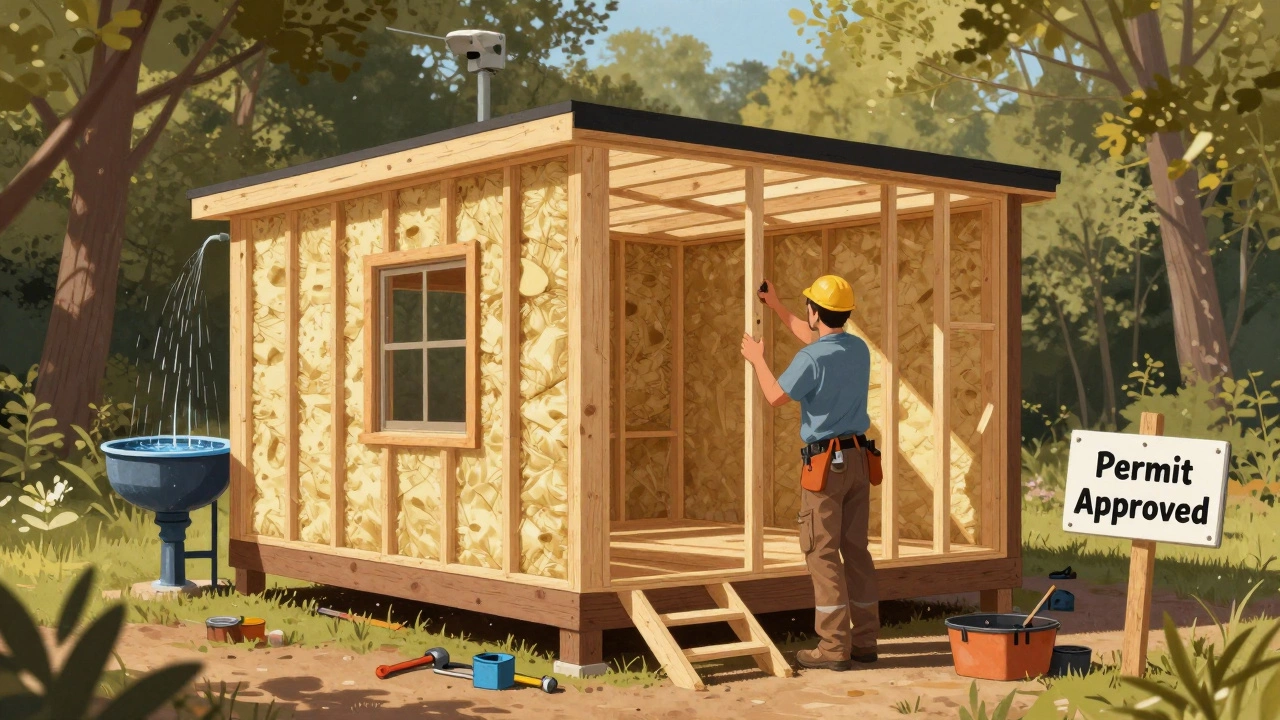
Yes - and that’s where the biggest savings happen. In states like Arkansas and Missouri, you can legally build your own home without a contractor license. You just need to get the permits and pass inspections. Many DIYers save $30,000-$50,000 by doing framing, insulation, and finishing work themselves. You don’t need to be an expert. YouTube tutorials, local community colleges, and free workshops from county extension offices can teach you everything from pouring a slab to installing a solar array.
What’s the catch?
There’s always a catch. The cheapest states often mean:
- Longer drive to hospitals or grocery stores
- Slower internet (though satellite and Starlink fix this)
- Less access to specialized builders
- Harsher winters or hotter summers - so insulation matters more
If you’re okay with quiet, self-reliant living - and you’re willing to learn a few skills - then these states give you the best shot at owning a home without a 30-year mortgage.
Final tip: Start with the land
The biggest mistake? Choosing a house design first. That’s backwards. The best eco-cottages are shaped by their land. Look for:
- South-facing slope (for passive solar)
- Access to rainwater runoff
- Soil that drains well (no clay)
- Distance from flood zones or wildfire risk areas
Once you find the right spot, the design follows. In Oklahoma, a simple A-frame with solar panels and a wood stove costs less than a tiny home in California with all the bells and whistles.
Building an eco-friendly cottage isn’t about being trendy. It’s about being smart. And right now, the smartest places to build are the ones no one’s talking about.