Off-Peak Resort Booking Calculator
Find Your Cheapest Resort Dates
Results
Off-Peak Window
What to expect:
Let’s cut to the chase: if you want the absolute lowest price on an all-inclusive resort, you need to go when no one else wants to. That means avoiding holidays, school breaks, and peak weather seasons. The cheapest time to book an all-inclusive resort is typically late April to early June and mid-September to mid-November, depending on the destination. These are the shoulder seasons - not quite peak, not quite dead - and resorts are desperate to fill rooms. You’ll get the same pools, same food, same beach access, but pay 30% to 50% less than you would in December or July.
Why prices drop outside peak season
All-inclusive resorts operate on volume. They need to hit occupancy targets to cover fixed costs - staff salaries, food supply chains, maintenance. When demand drops, prices drop. It’s simple economics. Resorts in the Caribbean, Mexico, and the Dominican Republic don’t shut down in the off-season. They just turn down the heat - literally and figuratively.Think about it: in January, you’ve got snowbirds from Canada and the northern U.S. flooding into Cancún. In July, families are on summer break. But in late April? The crowds are gone. The humidity hasn’t kicked in yet. The hurricanes? Still months away. Resorts that were charging $800 a night in December are now offering $400. Same room. Same buffet. Same open bar. You just have to be okay with fewer people around the pool.
Best destinations for cheap all-inclusive deals
Not all resorts drop prices equally. Some locations are more sensitive to seasonality than others. Here are the top five spots where you’ll find the biggest discounts during off-peak windows:- Playa del Carmen, Mexico - Late April to mid-June offers the best value. Rain is minimal, water is warm, and resorts like Moon Palace or Grand Velas drop rates by up to 45%.
- Domestic Republic - September is the sweet spot. Hurricane season is active, but early September still has decent weather. Resorts like Secrets Cap Cana and Barceló Bavaro Palace slash prices to avoid empty rooms.
- Montego Bay, Jamaica - Mid-September to October is quiet. Resorts like Sandals Royal Caribbean and Half Moon cut rates dramatically. You’ll find deals under $200/night for couples.
- Costa Rica - May and November are the green season. It rains in the afternoons, but mornings are sunny. Resorts like Nayara Tented Camp and El Mangroove offer all-inclusive packages at 50% off winter rates.
- Canary Islands, Spain - April and November are quiet. Temperatures stay around 22°C. Resorts like Barceló Tenerife and Iberostar Playa Alcudia offer European-style all-inclusives with no visa hassle for EU travelers.
What to avoid
Not every low season is a bargain. Some months look cheap but come with hidden costs. Here’s what to skip:- Mid-December to early January - Prices spike. Everyone’s booking for New Year’s. Even if you’re not celebrating, you’re paying for the crowd.
- June to August - Peak summer. Especially in the Caribbean. Resorts raise prices because families have no choice but to book now.
- October - This is tricky. In the Caribbean, it’s hurricane season. One storm can shut down a resort for days. You might get a $150/night deal - but if your flight gets canceled or the pool is closed, was it worth it?
- February - Cold weather in the U.S. and Europe drives demand. Resorts know this. Prices stay high.

How to find the real deals
You can’t just Google "cheap all-inclusive" and expect results. Resorts don’t advertise their lowest rates publicly. You need to hunt. Here’s how:- Book directly - Resorts often have unlisted "staff picks" or "off-season specials" on their websites. Look for a "Special Offers" or "Last Minute Deals" tab. Don’t trust third-party sites like Expedia - they mark up prices even on "discounts."
- Use price alerts - Set up alerts on Google Travel or Hopper. Pick a specific resort and set a target price. You’ll get a text or email when it drops. I’ve saved $300 on a 7-night stay this way.
- Travel midweek - Flying out on a Tuesday instead of Friday can save you 15% on flights. Staying Sunday to Sunday? That’s a weekend. Stay Monday to Monday - you’ll get better room rates and fewer families.
- Check for all-inclusive upgrades - Sometimes, a "standard" package includes only basic drinks. Upgrade to "premium all-inclusive" for $20 extra. It includes top-shelf liquor, 24/7 room service, and spa credits. You’re not paying more - you’re getting more value.
What you give up (and what you don’t)
Some people think off-season means fewer services. It doesn’t. The buffet still runs. The pool is still heated. The staff still smiles. You might notice:- One less live band per night
- Some restaurants closed for deep cleaning
- Smaller crowds at the beach - which means more lounge chairs
- More attentive service - fewer guests means staff have time for you
You won’t miss out on the core experience. You’ll just miss the chaos. And honestly? If you’ve ever stood in line for a margarita at 3 p.m. on a Saturday in July, you’ll thank yourself for choosing a quieter time.
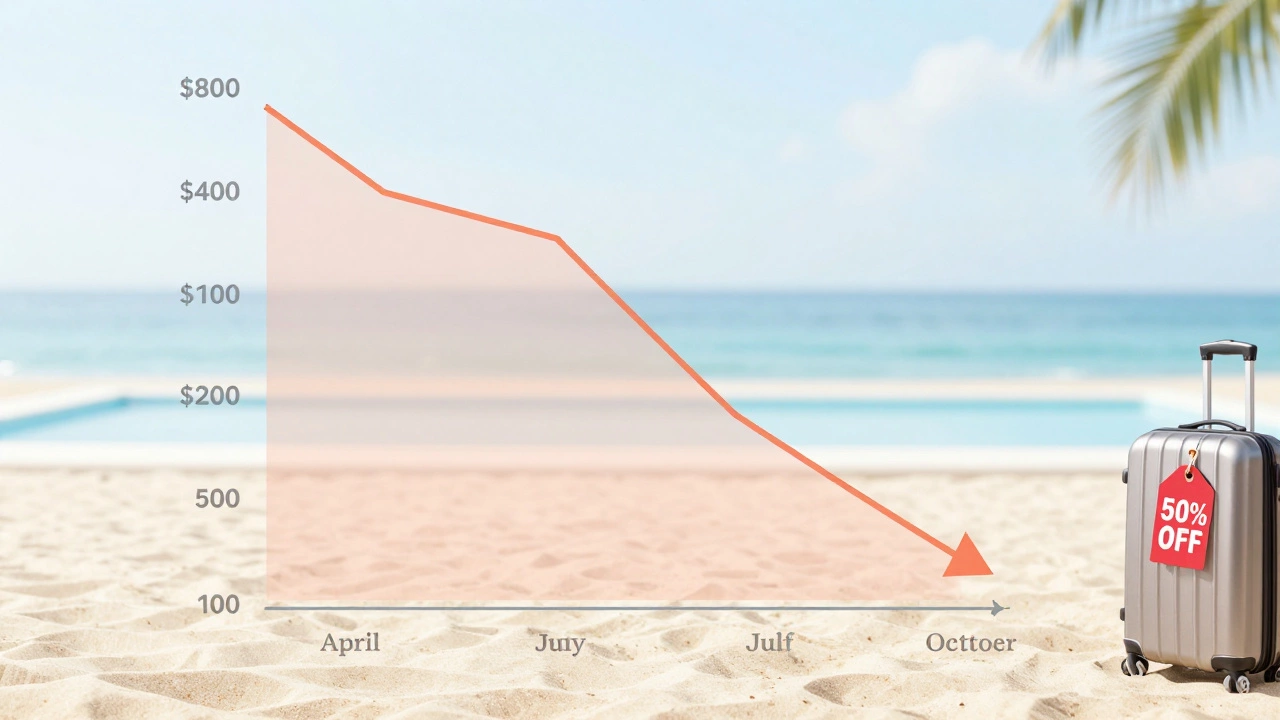
Real example: A ,200 trip for 0
Last year, a couple from Dublin booked a 7-night stay at the Royalton Punta Cana in early October. They paid $500 total - $71 per night. Flights were $350 round-trip. That’s $850 for a full week of food, drinks, activities, and a beachfront room. In December? Same resort, same room: $1,800. They went snorkeling on quiet reefs, got massages at 10 a.m. without waiting, and ate lobster at the seafood night without sharing a table. No one else was there. They didn’t need a reservation for anything.When to book
Timing your booking matters as much as timing your trip. Don’t wait until the last minute. Resorts don’t slash prices until they’re at 60% occupancy. So:- If you want to go in May - book in February.
- If you want to go in October - book in July.
- If you’re flexible - monitor prices for 30 days. If it drops 10% in a week, pounce.
Most resorts release their off-season rates 6 to 9 months ahead. That’s your window. Book too early? You might miss a better deal. Book too late? You’ll get the leftovers - maybe a room with a view of the parking lot.
Final tip: Don’t fear the rain
If you’re heading to Costa Rica or the Caribbean in the shoulder season, you’ll get rain. But it’s not all day. It’s usually a 2-hour downpour in the late afternoon. Mornings are clear. The ocean is calm. The air smells like wet earth and salt. And the resorts? They’ve got indoor lounges, covered pools, and complimentary coffee in the lobby. You’re not getting soaked - you’re getting a deal.Is it safe to travel to all-inclusive resorts during hurricane season?
Hurricane season runs from June to November, but most storms hit between August and October. Resorts in high-risk areas have evacuation plans, backup power, and insurance. Many offer flexible cancellation policies - you can change dates for free if a storm is forecast. Check the resort’s policy before booking. Also, travel insurance that covers weather-related cancellations is worth the cost. Most storms pass quickly. The resorts stay open. You just need to be flexible.
Can I still get good food and drinks during off-season?
Absolutely. All-inclusive resorts rely on food and drink sales for profit. Even in slow months, they keep kitchens running. Buffets are fully stocked. Bars stay open. Some resorts even upgrade their menus during off-season to attract guests - think fresh seafood nights, chef’s tasting menus, or themed cocktail hours. The quality doesn’t drop. You just get more personal attention.
Are all-inclusive resorts crowded during shoulder seasons?
Not at all. Shoulder seasons mean fewer families, fewer groups, and fewer party crowds. You’ll find more couples, solo travelers, and remote workers. Pools are empty. Beach chairs are free. The spa has availability. You’ll get better service because staff aren’t overwhelmed. If you hate crowds, this is your ideal time.
Do all-inclusive resorts offer discounts for longer stays?
Yes - especially in off-season. Many resorts offer 10% to 20% off for stays of 7 nights or more. Some even throw in a free dinner, spa credit, or airport transfer. Always ask when booking. You don’t have to book a 10-night stay - even extending from 5 to 7 nights can trigger a discount. It’s a common tactic to keep guests longer and fill more rooms.
What’s the best way to compare prices across resorts?
Use Google Travel or Hopper. Filter by "all-inclusive," set your dates, and sort by price. Then, go straight to the resort’s official website. Third-party sites often add hidden fees or lock you into non-refundable rates. The resort’s site will show you what’s included - drinks, tips, activities - and sometimes offer a better deal than any aggregator. Always compare the fine print: are spa services included? Are excursions free? Is Wi-Fi really free?