Country House Hotel Authenticity Checker
Is This Property a True Country House Hotel?
This tool helps you determine if a rural property meets the authentic criteria for a country house hotel based on the article's guidelines. Answer the questions below to check its authenticity.
Architectural Features
Size & Land
History & Experience
Authenticity Assessment
Criteria Met
- Stone or brick construction
- Symmetrical design
- Original woodwork and detailing
- 10+ bedrooms
- 5+ acres with gardens
- Documented historical lineage
- Personalized service
When you hear the phrase "country house," what comes to mind? A grand stone mansion tucked behind oak trees? A cozy stone cottage with a thatched roof? Or maybe a restored 18th-century manor turned into a boutique hotel? The truth is, "country house" means different things to different people-but when it comes to country house hotels, there’s a clear set of traits that define them.
It’s Not Just a House in the Countryside
A country house isn’t simply any building located outside a city. You can’t call a modern prefab cabin in the woods a country house. Nor can you label a roadside B&B with a garden as one. The term carries history, architecture, and intent. A true country house was originally built as a residence for the landed gentry-wealthy families who owned large tracts of land and needed a place to live away from urban centers. These weren’t farms. They weren’t hunting lodges. They were statements of status, built to impress, to host, and to reflect centuries of design tradition.
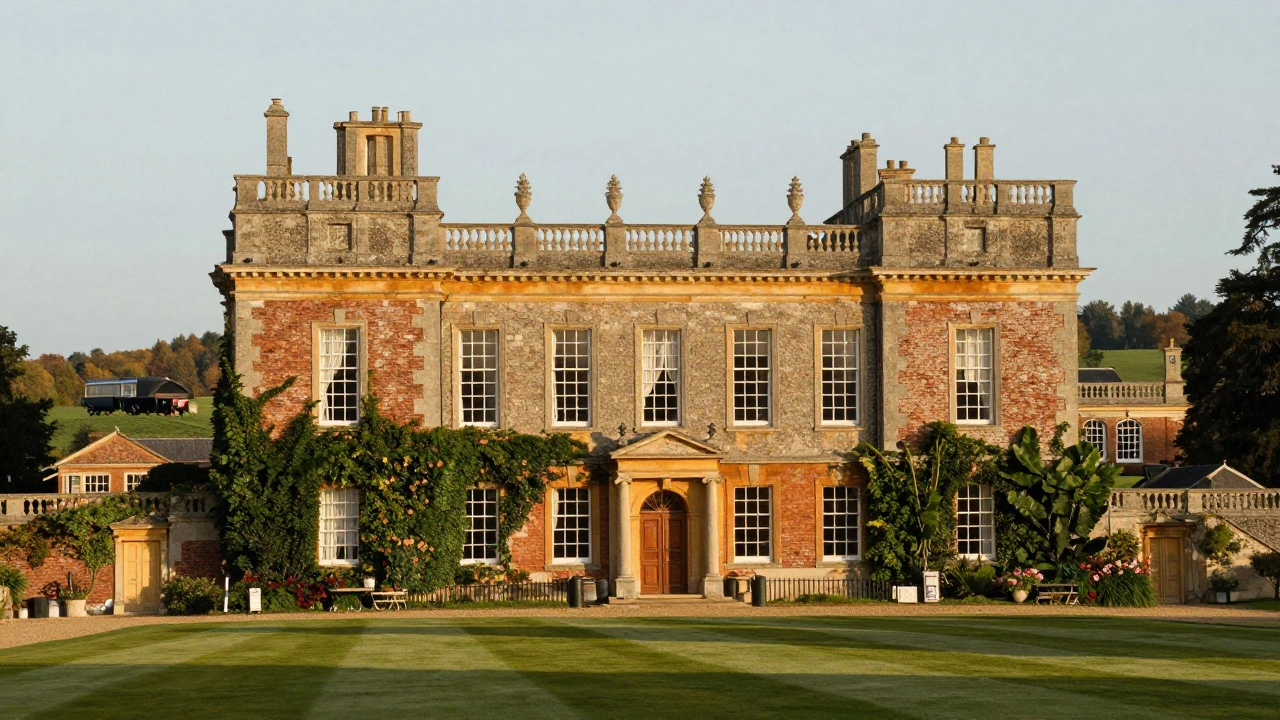
Today, many of these homes have been converted into hotels. But even then, not every rural hotel qualifies. A country house hotel must retain key elements of its original form: architectural character, scale, and a connection to the land it sits on. Think formal gardens, stone facades, high ceilings, original fireplaces, and maybe even a walled courtyard or a carriage house. These aren’t decorative extras-they’re defining features.
Architectural Hallmarks of a Country House
If you’re trying to spot a real country house, look for these signs:
- Stone or brick construction-usually local materials, aged by time, not painted over.
- Symmetrical design-many were built in the Georgian or Palladian style, with balanced windows and centered entrances.
- Large windows and high ceilings-designed to let in natural light before electricity existed.
- Original woodwork and detailing-paneling, crown molding, carved staircases.
- Outbuildings-stable blocks, dovecotes, or servants’ quarters that still stand.
These aren’t random features. They’re part of a lineage. In England, for example, a country house built between 1700 and 1850 often followed strict design rules. The entrance hall wasn’t just a hallway-it was a reception space meant to awe visitors. The drawing room wasn’t just a living room-it was where guests were entertained with music and conversation. Even the kitchen was often a separate building, to keep heat and smells away from the main house.
Scale Matters: It Has to Be Impressive
One of the biggest misunderstandings is thinking that any large rural home is a country house. But size alone doesn’t cut it. A country house typically has at least 10 bedrooms, often more. Many have wings, courtyards, or attached chapels. Some even had their own post offices or schools for staff and tenants.
Compare that to a country cottage-usually one or two bedrooms, stone walls, a small garden. Or a farmhouse-functional, practical, built for work, not for show. A country house was built to host. It was meant for dinners with 20 guests, balls with live orchestras, weekend escapes for the elite. That’s why when you stay in a country house hotel today, you’re not just booking a room-you’re stepping into a space designed for grandeur.
Location: Isolated, But Not Remote
Country houses were never truly isolated. They were part of an estate-connected to farmland, woodlands, and sometimes even small villages. The house sat at the center of a working landscape. Today, that means a country house hotel is often surrounded by fields, forests, or rivers, but still within a short drive of a market town or historic village.
If you’re more than an hour from the nearest town with shops and services, it’s probably not a country house. It’s a remote lodge. If it’s right on a main road with no land around it, it’s just a hotel with a pretty view. A true country house hotel sits on its own grounds, with a sense of seclusion without being cut off.
Function: A Place for Guests, Not Just Lodging
Modern hotels are about efficiency. Country house hotels are about experience. The best ones still feel like private homes-just ones that happen to have 15 rooms and a butler.
You’ll find:
- Breakfast served in the original dining room, not a buffet line.
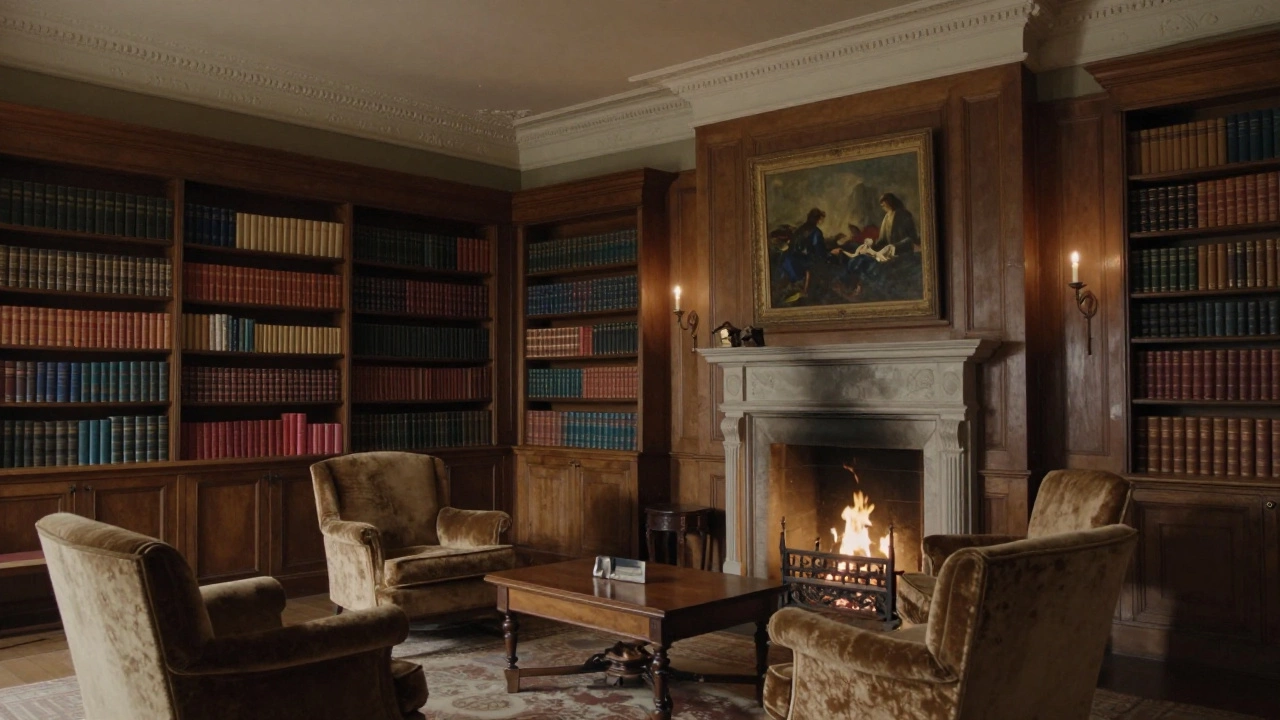
- Fireplaces lit in the evening, even in summer.
- Staff who know your name and remember your favorite tea.
- Books in the library that aren’t just for decoration.
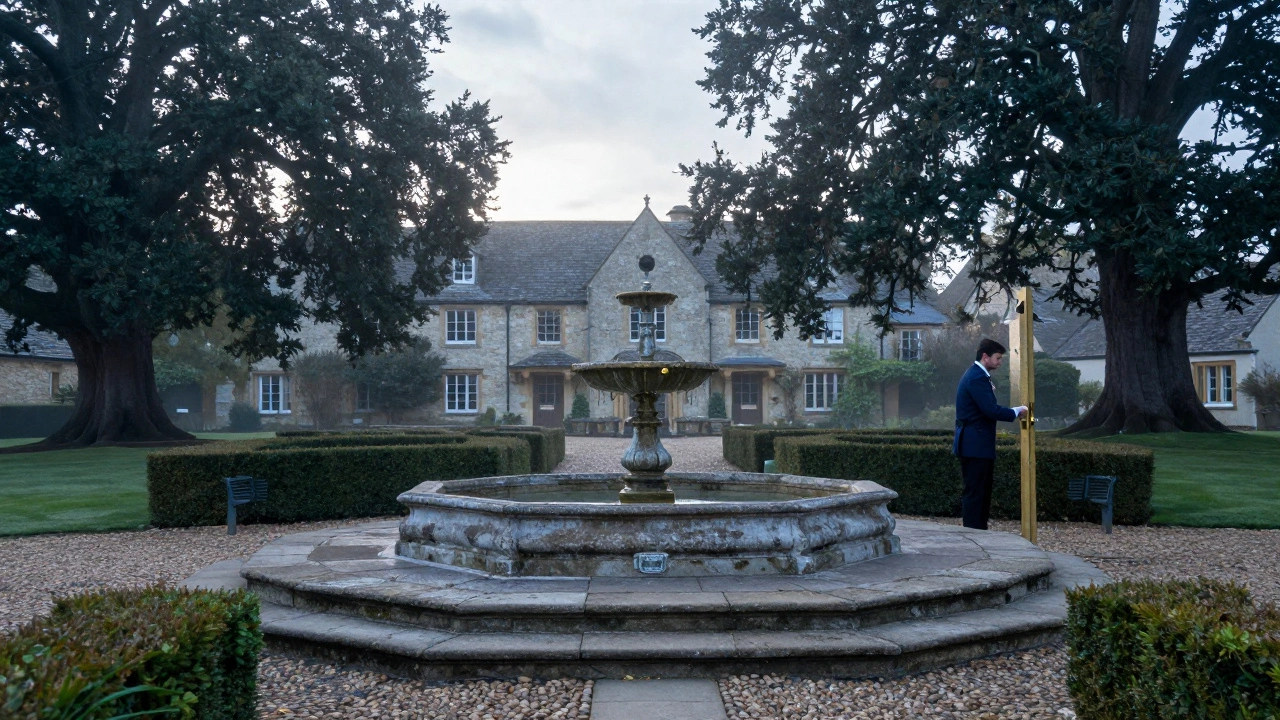
- A garden that’s been maintained for 200 years, not just planted last year.
There’s no checklist for this. It’s in the details. A country house hotel doesn’t advertise "historic charm." It lives it.
Not All Rural Hotels Are Country House Hotels
Let’s clear up some confusion. You’ll see ads for "country house hotels" that are really just modern buildings with rustic decor. Or hotels in the countryside that have no architectural heritage at all. These aren’t country house hotels-they’re countryside hotels.
The difference is real:
| Feature | Country House Hotel | Countryside Hotel |
|---|---|---|
| Architecture | Historic, original construction (1700-1900) | Modern or renovated structure |
| Size | 10+ bedrooms, multiple wings | 5-15 rooms, single building |
| Land | 5+ acres, formal gardens, outbuildings | Small garden or lawn, no estate |
| History | Documented lineage, often listed building | No historical record |
| Experience | Personalized, immersive, heritage-focused | Standard service, scenic view |
If you’re looking for a stay that feels like you’ve stepped into a Jane Austen novel-or a Downton Abbey episode-you’re after the real thing. If you just want peace, quiet, and a nice view, you can find that anywhere.
Why It Still Matters Today
In a world of cookie-cutter hotels and digital check-ins, country house hotels offer something rare: continuity. They’re not just buildings. They’re living pieces of history, cared for by people who understand their value. The same oak beams that held up ceilings in 1780 now hold up your morning coffee. The same stone steps that welcomed aristocrats now welcome families celebrating anniversaries.
Staying in a country house hotel isn’t about luxury for luxury’s sake. It’s about connection-to place, to time, to craftsmanship. It’s about knowing that the wallpaper in your room was hand-painted in 1842, or that the fountain in the garden was restored using original blueprints.
That’s why, even in 2026, people still seek them out. Not because they’re expensive (though many are), but because they’re irreplaceable.
Is a country house the same as a manor house?
Almost always, yes. A manor house is a type of country house, typically one that was once the center of a feudal estate. The term "manor" often implies ownership of land and tenants, while "country house" is broader and includes homes built later by wealthy merchants or industrialists. In practice, the two terms are used interchangeably today, especially in hotel listings.
Can a country house be modern?
No. By definition, a country house must have historical roots. A modern building-even if it looks old-doesn’t qualify. You can build a house in the style of a country house, but it won’t have the history, materials, or craftsmanship that define the real thing. These are not replicas. They’re relics.
Do all country house hotels have spas or fine dining?
Not at all. While some have been upgraded with spas or Michelin-starred restaurants, many still offer simple, home-cooked meals and quiet evenings by the fire. The charm lies in authenticity, not luxury add-ons. A country house hotel with a single dining room and no spa can be more genuine than one with a 12-room spa and a pool.
Are country house hotels only in England?
No. You’ll find them across the UK, Ireland, France, Italy, Germany, and even parts of the U.S. and Canada. Each region has its own style-Irish country houses often have red brick and wrought iron, while French ones might have stone turrets and vine-covered walls. But the core idea remains: a grand, historic home turned guesthouse.
How do I know if a hotel is a true country house?
Look for evidence of original architecture: historic building records, listed status (like Grade II in England), or mentions of original owners. Check if the hotel mentions specific years in its history-"built in 1752," "restored in 1998." Avoid places that just say "rustic charm" or "country vibe." Real country house hotels tell stories, not slogans.
What to Do Next
If you’re planning a stay and want to be sure you’re booking a real country house hotel, skip the generic travel sites. Go straight to the hotel’s own website. Look for photos of the original staircase, the library, the estate map. Read their history section. If they don’t mention the year the house was built, or who lived there, they’re probably not one.
And if you find one? Slow down. Sit by the fire. Open a book from the library. Let the house speak. That’s what it was built for.