
Imagine arriving at your holiday destination, dropping your bags in the bedroom, and heading straight to the kitchen. You brew a coffee, grab some fresh bread from the local bakery, and plan your day without checking a hotel’s breakfast schedule or waiting for room service. This is the essence of a self-catering property, which is a type of accommodation where guests have full access to kitchen facilities and manage their own meals and daily routine.
If you’ve ever scrolled through booking sites and wondered why some listings say "self-catering" while others don’t, you’re not alone. The term sounds simple, but it covers a wide range of stays-from rustic cabins in the woods to luxury apartments in city centers. Understanding what this actually means can save you money, reduce stress, and give you control over your vacation.
The Core Definition: More Than Just a Kitchen
At its heart, a self-catering property is any rental unit that allows you to cook your own food. Unlike hotels or bed-and-breakfasts, there is no staff preparing meals for you. You are responsible for shopping, cooking, cleaning (usually), and managing your time.
This setup isn’t just about having a stove. It changes how you experience travel. When you stay in a holiday cottage, you aren’t just sleeping; you’re living temporarily in someone else’s home. This shift from "guest" to "temporary resident" brings specific benefits and responsibilities that differ sharply from traditional lodging.
- Full Kitchen Access: You get a fridge, oven, hob, microwave, and basic utensils.
- Private Living Space: Most units include a separate living area, not just a bedroom.
- Self-Service: Check-in is often keyless or handled via a lockbox. There’s no front desk.
- No Daily Housekeeping: You clean up after yourself during the stay.
For families with young children, pet owners, or groups traveling together, this independence is often the main reason they choose this style of accommodation. You can heat up baby food at 2 AM, feed your dog on schedule, or let the kids play in the living room without worrying about disturbing other guests in a shared hallway.
How Self-Catering Differs From Hotels and B&Bs
To truly understand the value, you need to compare it against the alternatives. The differences go beyond just who makes your toast.
| Feature | Self-Catering Property | Hotel | Bed & Breakfast (B&B) |
|---|---|---|---|
| Kitchen Facilities | Full kitchen provided | Rarely available (mini-fridge only) | Usually none or very limited |
| Meal Service | You prepare all meals | Room service or restaurant options | Breakfast included; dinner sometimes optional |
| Cleaning | Guest cleans during stay; final clean often required | Daily housekeeping included | Daily housekeeping included |
| Privacy | Entire unit is private | Private room, shared common areas | Private room, shared lobby/kitchen |
| Cost Structure | Fixed weekly/monthly rate + grocery costs | Nightly rate + high meal costs | Nightly rate + optional extras |
| Check-in Flexibility | Often rigid (lockbox codes) | Front desk open late or 24/7 | Host-dependent, often flexible |
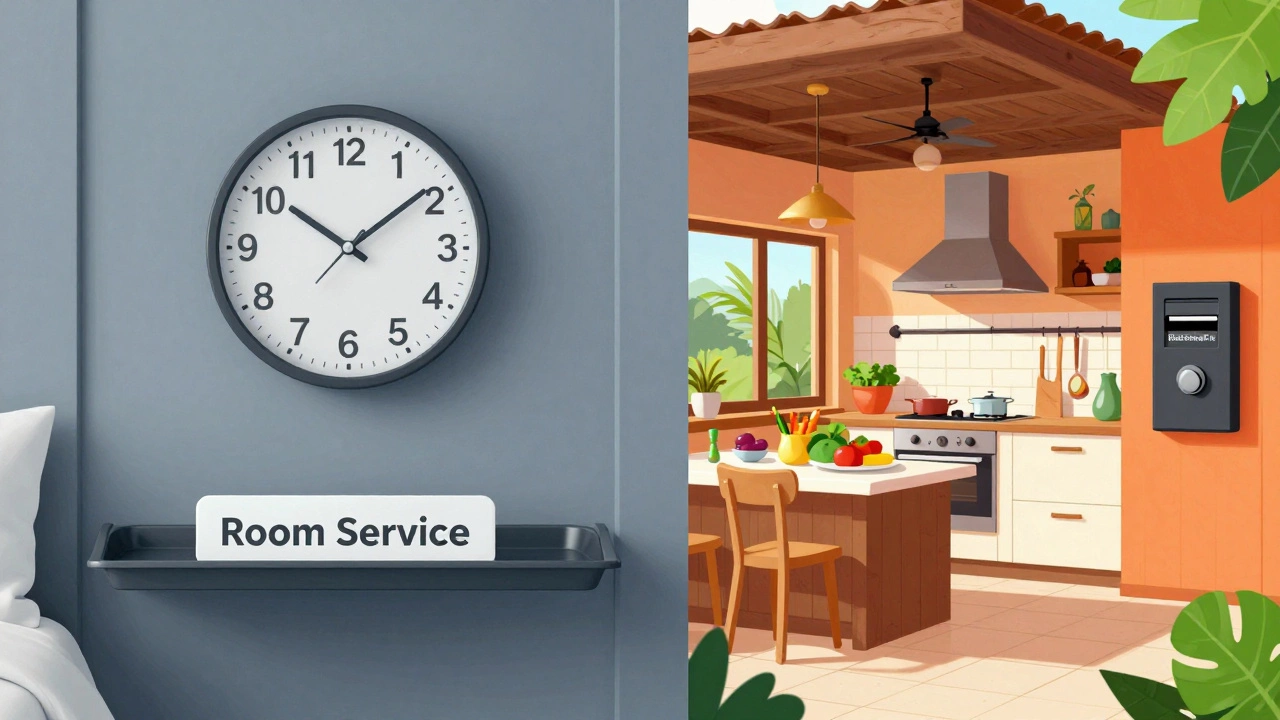
Hotels offer convenience and services. If you want someone to iron your shirt or bring champagne to your room, a hotel is better. But if you want to save money on dining out and have space to spread out, self-catering wins. Bed-and-breakfasts sit in the middle-they offer personal interaction but lack the privacy and culinary freedom of a self-catering unit.
Who Benefits Most From Self-Catering Stays?
Not every traveler needs a kitchen. In fact, for solo business travelers or couples on a romantic weekend getaway, the hassle of cooking might outweigh the benefits. However, certain groups find self-catering properties almost essential.
Families with Children are the biggest users. Kids have unpredictable eating schedules. Being able to make pasta, sandwiches, or hot milk quickly avoids tantrums and expensive takeaway bills. Plus, having a washing machine (common in these units) means you can handle dirty clothes without packing extra outfits.
Pet Owners also rely on this format. Many hotels charge steep pet fees or ban animals entirely. Self-catering cottages, especially those in rural areas, are more likely to accept pets because the owner manages the property directly and can set specific rules about gardens and grounds.
Long-Term Travelers and digital nomads prefer the cost efficiency. Staying in a hotel for three weeks adds up fast. A self-catering apartment usually offers discounted weekly rates. Cooking at home cuts food expenses by up to 60%, making extended trips financially viable.
Groups of Friends benefit from the social space. Instead of splitting into multiple hotel rooms, a group can rent one large house. The kitchen becomes a hub for communal meals, games, and bonding-something a hotel corridor never provides.

Hidden Costs and Responsibilities to Watch For
While self-catering looks cheaper upfront, there are hidden costs if you aren’t prepared. The "all-inclusive" price tag of a hotel includes linen, towels, cleaning, and meals. With self-catering, you pay less per night but take on more tasks.
First, consider the grocery budget. You’ll need to buy basics like oil, spices, and toiletries if the host doesn’t provide them. Always check the listing description carefully. Some hosts provide a starter pack (coffee, tea, milk); others expect you to arrive empty-handed.
Second, factor in cleaning expectations. Most self-catering properties require you to leave the place as tidy as you found it. This might mean loading the dishwasher, taking out trash, and stripping beds. Some hosts charge a mandatory cleaning fee regardless, so read the fine print. If you hate cleaning, this could ruin the relaxation vibe.
Third, beware of minimum stay requirements. Unlike hotels, many self-catering cottages enforce weekend or weekly minimums. If you only want two nights, you might be forced to pay for five. This is common in popular tourist spots during peak season.
Types of Self-Catering Properties Available
The term "self-catering" applies to various structures. Knowing the difference helps you pick the right fit for your trip.
- Cottages: Typically standalone houses in countryside settings. Ideal for nature lovers seeking quiet and space. Often feature gardens and fireplaces.
- Apartment Rentals: Located in cities or coastal towns. Good for urban exploration. Usually smaller, with limited outdoor space.
- Villas: High-end properties with pools, multiple bedrooms, and luxury amenities. Targeted at affluent travelers or large groups.
- Caravans and Campervans: Mobile self-catering units. Offer maximum flexibility for road trips but have minimal facilities.
- Converted Buildings: Barns, lighthouses, or historic homes turned into rentals. Unique character but may lack modern conveniences.
In Ireland and the UK, "cottages" dominate the market. They appeal to domestic tourists looking for a break from city life. In Europe, "apartments" are more common, catering to international visitors exploring capitals like Paris or Rome.
Tips for Booking Your First Self-Catering Stay
Booking a self-catering property requires different research than booking a hotel. Here’s how to avoid pitfalls.
Read Recent Reviews Specifically About Cleanliness. Since there’s no daily maid service, cleanliness depends entirely on the previous guest and the host’s turnover process. Look for comments mentioning "spotless," "well-stocked kitchen," or "dirty dishes left behind."
Confirm Kitchen Equipment Details. Don’t assume "kitchen" means everything you need. Does it have a blender? A kettle? Enough plates for four people? If you’re planning to cook elaborate meals, message the host beforehand to confirm appliance availability.
Understand the Check-In Process. Self-catering stays rarely have a concierge. Check-ins usually involve collecting keys from a lockbox or meeting the host briefly. Arrive within the specified window, or you might miss the code update and stand outside in the rain.
Ask About Wi-Fi Reliability. Rural cottages often have spotty internet. If you need to work remotely, verify the connection speed. City apartments usually have fiber optics, but confirm it anyway.
Check Cancellation Policies. Self-catering hosts operate independently. Their cancellation terms can be stricter than major hotel chains. Some require full payment upfront with no refunds. Read the policy before clicking "book."
The Rise of Short-Term Lets and Regulatory Changes
In recent years, platforms like Airbnb and Vrbo have exploded the number of self-catering options. This growth has led to new regulations in many cities. In places like Dublin, Barcelona, and New York, local governments now limit the number of days a property can be rented out annually.
Why does this matter to you? Because legitimate listings will display registration numbers. If a property seems too good to be true and lacks official licensing, it might be operating illegally. Booking unlicensed units carries risks: no insurance coverage, potential eviction mid-stay, and lack of consumer protection.
Always look for verified badges or license IDs on booking platforms. This ensures the host complies with safety standards and tax laws, giving you peace of mind.
Is self-catering cheaper than a hotel?
It depends on your group size and duration. For solo travelers or short stays (1-2 nights), hotels are often cheaper due to fixed nightly rates. For families, groups, or stays longer than three nights, self-catering is usually more economical. You save significantly on meals and avoid single-supplement charges. However, you must add the cost of groceries and utilities to your calculation.
Do I need to clean the property before leaving?
Most self-catering properties require you to do light cleaning. This typically includes washing dishes, wiping surfaces, taking out trash, and stripping beds. Heavy cleaning (vacuuming, mopping) is often covered by a cleaning fee paid at booking. Always check the house manual provided by the host for specific instructions to avoid extra charges.
What should I bring when staying in a self-catering cottage?
Bring your own toilet paper, hand soap, and dish soap unless listed otherwise. Also pack basic cooking essentials like olive oil, salt, pepper, and tea/coffee if you’re particular about brands. Towels and bedding are usually provided, but confirm this in advance. A reusable water bottle and shopping bags are also handy for grocery runs.