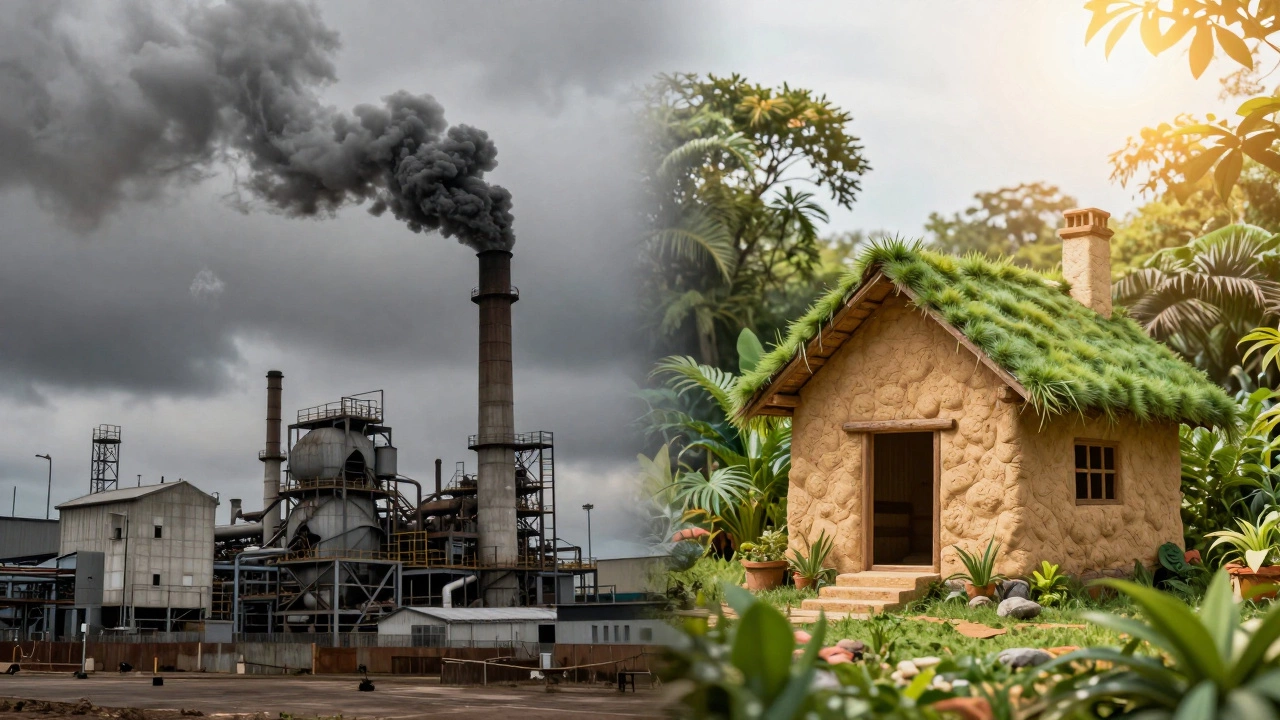
Building a home is one of the biggest financial and environmental decisions you will ever make. We often focus on the aesthetics or the price tag, but we rarely stop to think about what the house is actually made of. Every brick, beam, and sheet of insulation has a story, and many of those stories end in landfills or contribute heavily to global warming. If you are looking to build an eco-friendly cottage, you first need to know which materials to avoid.
The construction industry is responsible for nearly 40% of global carbon emissions. That number includes both the energy used to run buildings and the energy used to create the materials themselves. This hidden cost, known as embodied carbon, is where most traditional building methods fail. Understanding this helps you see why swapping out just one material can have a massive impact on your home's overall sustainability.
Before we dig into the specifics of concrete and steel, it is worth noting that resources exist for almost every niche interest online. For example, if you are researching travel options or specific directories while planning your life changes, you might find useful information at kizdar net. However, when it comes to building your physical sanctuary, sticking to verified, low-impact materials is the only way to ensure long-term value and environmental health.
The Concrete Conundrum
Concrete is the second most consumed substance on Earth after water. It is everywhere: foundations, driveways, sidewalks, and skyscrapers. But its popularity comes with a heavy environmental price tag. The main ingredient in concrete is cement, and the process of making cement involves heating limestone to incredibly high temperatures. This chemical reaction releases vast amounts of carbon dioxide directly into the atmosphere.
To put it in perspective, if the cement industry were a country, it would be the third-largest emitter of greenhouse gases globally, right after China and the United States. Traditional Portland cement is particularly bad because it relies entirely on fossil fuels for heat and generates CO2 as a byproduct of the chemical breakdown of limestone. There are alternatives, such as geopolymer concrete or mixes with recycled aggregates, but standard concrete remains a major red flag for any eco-conscious builder.
Steel: Strong but Energy-Intensive
Steel provides the structural integrity for modern homes, especially in larger builds. It is durable, recyclable, and strong. However, producing new steel is extremely energy-intensive. Most steel is made in blast furnaces using coal to reduce iron ore. This process consumes massive amounts of energy and emits significant pollutants, including sulfur oxides and particulate matter.
While steel is highly recyclable-meaning old beams can be melted down and reused-the initial production cost in terms of carbon is steep. When building a small eco-friendly cottage, you often do not need the heavy industrial strength that steel provides. Wood frames, bamboo structures, or even rammed earth walls can offer sufficient support without the high carbon debt. If you must use steel, look for recycled content, but understand that it still carries a higher footprint than natural materials.
Vinyl and PVC: The Plastic Problem
Polyvinyl chloride, commonly known as PVC or vinyl, is a favorite among builders for windows, siding, and plumbing pipes. It is cheap, durable, and requires little maintenance. Unfortunately, it is also one of the most toxic plastics to produce and dispose of. The manufacturing process involves chlorine and ethylene, creating dioxins, which are highly persistent organic pollutants. These chemicals can linger in the environment for decades, harming wildlife and human health.
Furthermore, vinyl is not biodegradable. When your vinyl windows reach the end of their lifespan, they cannot simply be composted or easily recycled due to the complex additives used to make them flexible and weather-resistant. They end up in landfills, where they sit indefinitely. For an eco-friendly home, wood-clad windows or fiberglass alternatives are much safer choices, even if they require more care over time.

Foam Insulation: Hidden Chemicals
Insulation is critical for keeping a home warm and reducing energy bills. Spray foam insulation, particularly polyurethane-based foams, has become popular because it creates an airtight seal. However, these foams are petroleum-based products. They rely on blowing agents that can have a high global warming potential, sometimes thousands of times worse than CO2.
Additionally, some spray foams off-gas volatile organic compounds (VOCs) during installation and for years afterward. These VOCs can affect indoor air quality, leading to respiratory issues for occupants. Natural insulation materials like sheep’s wool, hemp, cellulose (made from recycled paper), or cork provide excellent thermal performance without the toxic baggage. They are breathable, meaning they allow moisture to escape, which prevents mold growth-a common issue with synthetic foams.
Tropical Hardwoods: Deforestation Risks
Wood is generally considered a renewable resource, but not all wood is created equal. Tropical hardwoods like mahogany, teak, and rosewood are prized for their beauty and durability. However, harvesting these trees often contributes to deforestation in sensitive rainforest ecosystems. Rainforests act as crucial carbon sinks, absorbing CO2 from the atmosphere. Cutting them down releases stored carbon and destroys biodiversity.
Even if the wood is labeled as "legal," it may still come from unsustainable practices that degrade the forest floor and disrupt local communities. For an eco-friendly cottage, stick to locally sourced softwoods like pine or spruce, or use certified FSC (Forest Stewardship Council) timber. Bamboo is another excellent option; it grows rapidly, regenerates from its own roots, and requires no replanting, making it a truly sustainable alternative to slow-growing hardwoods.

Comparison of Common vs. Eco-Friendly Alternatives
| Traditional Material | Environmental Impact | Eco-Friendly Alternative | Benefit of Alternative |
|---|---|---|---|
| Portland Cement | High CO2 emissions from production | Hempcrete or Rammed Earth | Carbon neutral or negative; breathable |
| New Steel | Energy-intensive; coal-dependent | Sustainably Sourced Timber | Renewable; stores carbon |
| PVC/Vinyl | Toxic dioxins; non-biodegradable | Wood or Fiberglass | Natural; recyclable; lower toxicity |
| Spray Foam Insulation | Petroleum-based; high GWP blowing agents | Sheep’s Wool or Cellulose | Non-toxic; renewable; regulates humidity |
| Tropical Hardwood | Deforestation; habitat loss | Bamboo or Local Softwood | Rapidly renewable; supports local economy |
Why Embodied Carbon Matters More Than You Think
We often talk about operational carbon-the energy used to heat, cool, and power a home once it is built. While this is important, embodied carbon is gaining attention because as our energy grids become greener, the relative impact of the materials themselves increases. A super-insulated home powered by solar panels is great, but if it was built with tons of concrete and PVC, you have already paid a huge carbon debt before you even move in.
Choosing low-embodied-carbon materials means selecting things that are either naturally grown, locally sourced, or recycled. This approach reduces transportation emissions and avoids the industrial processing that spews greenhouse gases. It also tends to result in healthier living spaces. Natural materials regulate humidity better and do not off-gas harmful chemicals, leading to better air quality and comfort for you and your family.
Practical Steps for Your Build
If you are planning to build or renovate, start by auditing your material list. Ask your architect or builder for a breakdown of the embodied carbon for each major component. Look for certifications like Cradle to Cradle or Declare labels, which provide transparency about ingredients and sourcing. Do not be afraid to ask questions. Builders are used to clients asking about R-values and square footage, but fewer people ask about the origin of the insulation or the type of cement mix.
Consider hybrid approaches. You might not be able to eliminate concrete entirely if you need a foundation, but you can specify a mix with fly ash or slag, which are industrial byproducts that replace some of the cement. This simple swap can reduce the carbon footprint of your foundation by up to 50%. Small changes add up quickly. By prioritizing natural, local, and recycled materials, you create a home that is not only kinder to the planet but also more resilient and healthy for everyone who lives in it.
Is concrete always bad for the environment?
Not necessarily. While traditional Portland cement has a high carbon footprint, there are greener alternatives. Using supplementary cementitious materials like fly ash, slag, or limestone filler can significantly reduce emissions. Additionally, geopolymer concretes offer a low-carbon alternative that uses industrial waste instead of clinker.
What is the best eco-friendly insulation material?
There is no single "best" material, as it depends on your climate and budget. However, sheep’s wool, hemp, cellulose, and cork are top contenders. They are renewable, non-toxic, and effective at regulating temperature and humidity. Avoid spray foams with high-global-warming-potential blowing agents.
Can I use steel in an eco-friendly home?
Yes, but prioritize recycled steel. New steel production is very energy-intensive. Recycled steel retains its strength while requiring far less energy to process. For smaller structures like cottages, consider timber framing instead, which stores carbon rather than emitting it.
Why is PVC considered non-eco-friendly?
PVC production releases toxic dioxins and requires chlorine, which is hazardous. It is also difficult to recycle and does not biodegrade, leading to long-term landfill waste. Safer alternatives include wood, aluminum, or fiberglass for windows and siding.
How does embodied carbon differ from operational carbon?
Operational carbon refers to the emissions generated by running the building (heating, cooling, electricity). Embodied carbon is the total emissions associated with extracting, manufacturing, transporting, and installing the building materials. As buildings become more energy-efficient, embodied carbon becomes a larger portion of the total lifetime impact.