Oceanfront vs. Oceanview Decision Tool
Your Trip Details
Comparison Result
Enter your details and click Compare to see which option suits you best.
You’ve scrolled past dozens of listings. You see the word “oceanfront” and your heart skips a beat. Then you see “oceanview,” and suddenly you’re wondering if you’re being sold a dream or just a decent window seat. The difference between these two terms isn’t just marketing fluff-it changes your entire experience, your budget, and even how much sleep you get.
Here’s the short version: Oceanfront means the property touches the water. Oceanview means you can see the water from somewhere on the property, which might be three blocks away or over a parking lot. If you want to walk barefoot onto the sand at 6 AM, you need oceanfront. If you just want a nice photo op and a bit of sea breeze without paying the premium, oceanview is your friend.
What is the main difference between oceanfront and oceanview?
Oceanfront properties are built directly on the shoreline, meaning guests have immediate access to the beach. Oceanview properties offer a sightline to the ocean but may be separated by roads, other buildings, or significant distance.
The Anatomy of an Oceanfront Room
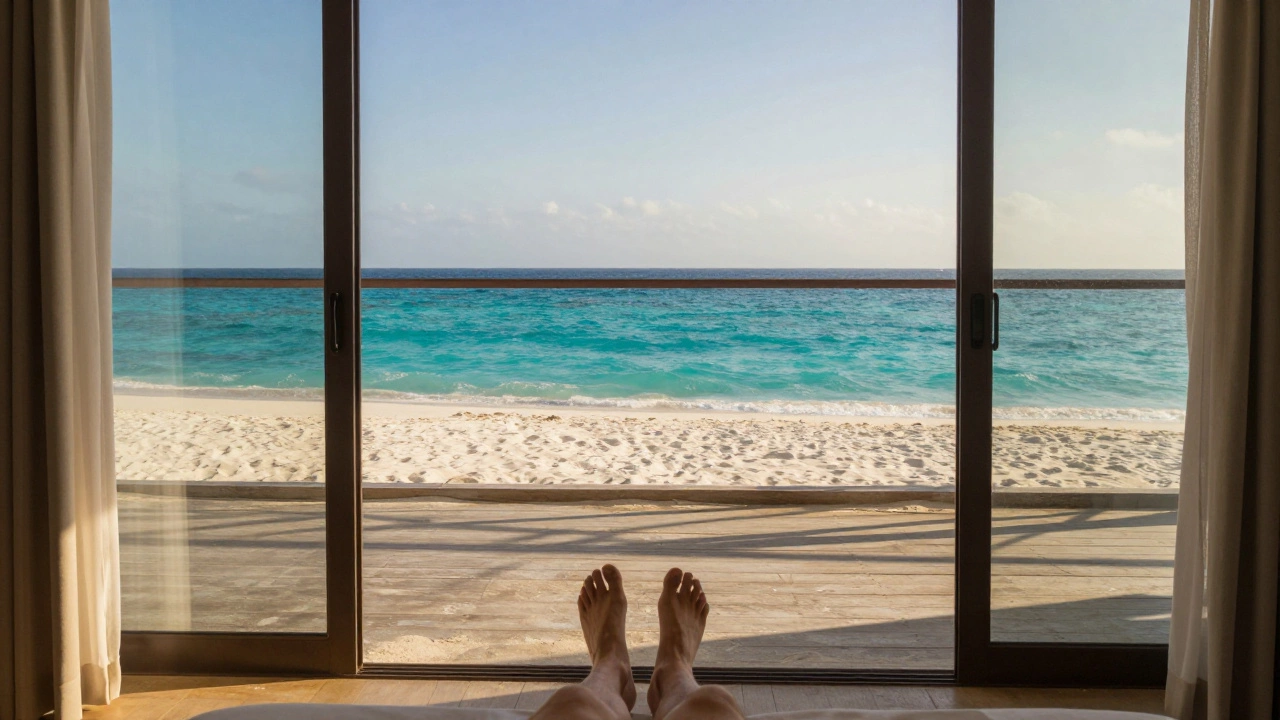
When a hotel claims to be Oceanfront is a lodging category where the building structure sits directly adjacent to the coastline, providing unobstructed physical access to the beach, they usually mean it. But what does that actually look like in practice? It means the first thing you step out of is likely a patio, a deck, or a direct path to the sand. There are no lobbies blocking your way to the tide line.
This proximity comes with distinct sensory advantages. You hear the waves crashing against the shore rather than the distant hum of traffic. You smell the salt air before you even open the window. In places like the Caribbean or the Mediterranean, this direct connection is often the primary reason travelers choose specific resorts. For example, in the Maldives, nearly all accommodations are technically oceanfront because they are built on stilts over the water. This creates a unique immersion that inland views simply cannot replicate.
However, there is a catch. Being right on the edge of the land means dealing with the elements. Salt spray can corrode balconies faster. Humidity levels are higher, which can make rooms feel stickier if the air conditioning isn’t top-notch. And let’s be honest-if you’re sensitive to noise, the sound of the ocean at night can sometimes be louder than expected, especially during high tide or stormy weather. Some travelers find the rhythmic crashing soothing; others find it disruptive after a few nights.
Decoding the "Oceanview" Label
Oceanview is a room classification that guarantees a visual line of sight to the ocean, regardless of the physical distance or obstacles between the room and the water. This is where things get tricky. An oceanview room could be on the ground floor looking over a garden toward the horizon. It could be on the 10th floor with a clear shot of the bay. Or it could be a corner room where one window looks at the pool and another catches a sliver of blue sky and water.
The key here is perspective. A high-rise hotel in Miami Beach might label a room on the 20th floor as “oceanview” even though the hotel itself is set back from the beach by a wide promenade and several rows of palm trees. You can definitely see the ocean, but you can’t touch it. You’ll need to take an elevator down, walk through the lobby, cross a street, and then hit the sand. That extra five-minute walk adds up if you’re planning to go for a morning jog or a sunset dip every day.
On the flip side, oceanview rooms often offer better value. Because they don’t command the prime real estate of the shoreline, they are typically priced lower-sometimes significantly so. If your priority is having a beautiful backdrop for your coffee in the morning rather than swimming immediately after breakfast, this is a smart financial move. Plus, being slightly further back can mean less humidity and less salt damage to your belongings.
Price Tags and Value Propositions
Let’s talk money. In most coastal destinations, oceanfront rooms carry a premium of 20% to 50% compared to their oceanview counterparts. In luxury markets like Bora Bora or Santorini, that gap can widen to double or triple. Why? Because location is everything in hospitality. Direct beach access is a scarce resource. Hotels charge more for it because demand outstrips supply.
But is it worth it? That depends on your travel style. If you are a surfer who needs to drag your board straight from the door to the break, oceanfront is non-negotiable. If you are a family with young kids who will be running back and forth between the room and the sand constantly, the convenience of oceanfront saves everyone’s sanity. However, if you plan to spend most of your time exploring local towns, visiting museums, or dining at restaurants away from the beach, the extra cost might not justify the benefit. You’ll only use the view for a few hours a day.
Consider also the hidden costs. Oceanfront rooms often come with smaller square footage because the land is expensive. You might pay more for a cramped space with a great view than for a spacious suite with a partial view. Always check the floor plans if available. Sometimes, a larger oceanview room offers more comfort and storage space, making it a better deal for longer stays.

Privacy and Noise Considerations
One aspect many travelers overlook is privacy. Oceanfront rooms, especially those with large glass doors opening onto private balconies, can feel exposed. If the balcony faces the public beach, you might find yourself being watched by tourists taking photos or locals walking by. High-end resorts mitigate this with landscaping or frosted glass, but it’s something to consider. Oceanview rooms, particularly those set back from the coast, often offer more seclusion. You’re less likely to have strangers peering into your personal space.
Noise is another factor. While the ocean is generally calming, it’s not silent. Waves crash, winds howl, and seabirds squawk. If you’re a light sleeper, an oceanfront room facing a busy beach area might also expose you to early morning activities like volleyball games or beach cleanup crews. Oceanview rooms, especially those oriented toward a pool or garden with the ocean in the background, tend to be quieter. The buffer zone of greenery or other buildings absorbs some of the ambient noise.
Accessibility and Convenience
Think about mobility. If you or your travel companions have difficulty walking long distances, oceanfront is almost always the better choice. Every trip to the beach involves fewer steps. For elderly travelers or those with disabilities, the ability to roll a wheelchair directly onto the sand (where permitted) or sit comfortably on a shaded deck without navigating crowds is invaluable. Many modern oceanfront hotels are designed with universal accessibility in mind, featuring ramps and wide corridors leading straight to the water.
Convenience also extends to amenities. Oceanfront properties often integrate their pools and lounges directly with the beach, creating a seamless transition from lap swimming to wading in the sea. You don’t have to pack up your towel and chair every time you want to switch environments. This integration enhances the relaxation factor, allowing you to stay in one spot while enjoying different aspects of the waterfront.

How to Choose: A Decision Framework
To help you decide, ask yourself these questions:
- How much time will I spend on the beach? If it’s most of the day, prioritize oceanfront. If it’s just a couple of hours, oceanview suffices.
- What is my budget? If saving $100-$200 per night allows for nicer dinners or excursions, opt for oceanview.
- Do I value silence or atmosphere? Oceanfront offers immersive sounds and smells; oceanview offers peace and quiet.
- Am I traveling with kids or seniors? Proximity reduces stress and effort, favoring oceanfront.
- Is the view the main attraction? If you’re booking a romantic getaway where the scenery is central, invest in oceanfront. If it’s a business trip or a quick stopover, skip the premium.
Also, read the fine print. Some hotels use “oceanview” loosely. Look for photos taken from actual guest rooms, not promotional shots from rooftops. Check reviews specifically mentioning “view” or “noise.” Real guests often reveal whether the view is obstructed by neighboring buildings or if the ocean sounds are overwhelming.
Special Cases: When Definitions Blur
In some regions, terminology varies. In parts of Europe, “sea-facing” might imply oceanfront, while in North America, it might just mean a good angle. In dense urban coastal areas like New York City or Sydney, true oceanfront is rare. Most “waterfront” hotels are actually riverfront or harbor-front, offering views of boats and bridges rather than open ocean. Be clear about what you expect. If you crave endless horizons, avoid city-center hotels unless they explicitly state “unobstructed ocean view.”
Another blurring occurs with “partial oceanview.” This usually means you can see a small portion of the water, perhaps framed by trees or other structures. It’s better than no view, but don’t expect panoramic sunsets. Similarly, “garden view with glimpse of ocean” is essentially a land view with a bonus peek. Manage your expectations accordingly.
Final Thoughts on Making the Right Call
There is no universally “better” option. It’s entirely contextual. Oceanfront delivers immersion, convenience, and prestige. Oceanview delivers value, tranquility, and space. Your choice should align with your priorities for the trip. Don’t let marketing jargon dictate your decision. Do your research, visualize your daily routine, and pick the room that supports the experience you truly want. Whether you’re waking up to the sound of waves or sipping coffee with a distant blue horizon in sight, both options can lead to memorable vacations if chosen wisely.
Is an oceanfront room always worth the extra cost?
Not necessarily. If you plan to spend most of your time off-property or prefer quiet, the premium for oceanfront may not be justified. Oceanview rooms offer significant savings and often more space, making them a better value for travelers who prioritize budget and comfort over direct beach access.
Can an oceanview room be noisy?
Yes, depending on its location. If the oceanview room faces a busy road, pool area, or party lounge, it can be quite loud. However, rooms set back from the beach often benefit from natural buffers like gardens or other buildings, which can reduce noise levels compared to direct oceanfront rooms exposed to wind and wave sounds.
What should I look for in photos to verify the view?
Look for user-generated photos on review sites rather than official hotel images. Pay attention to the angle of the window, any obstructions like trees or nearby buildings, and the distance to the water. A genuine oceanfront photo will show the beach immediately outside the balcony, while an oceanview photo might show a broader landscape with the ocean in the far background.
Are oceanfront rooms more humid?
Generally, yes. Being closer to the water increases exposure to salt spray and moisture. This can make the air feel heavier and may require stronger air conditioning. Travelers with respiratory sensitivities or those concerned about electronics corrosion should consider this factor when choosing an oceanfront room.
Which is better for families with young children?
Oceanfront is usually better for families with young children. The ease of accessing the beach reduces stress and logistical challenges. Parents can quickly return to the room for naps or snacks without navigating crowded paths or elevators, making the overall vacation experience smoother and more relaxed.