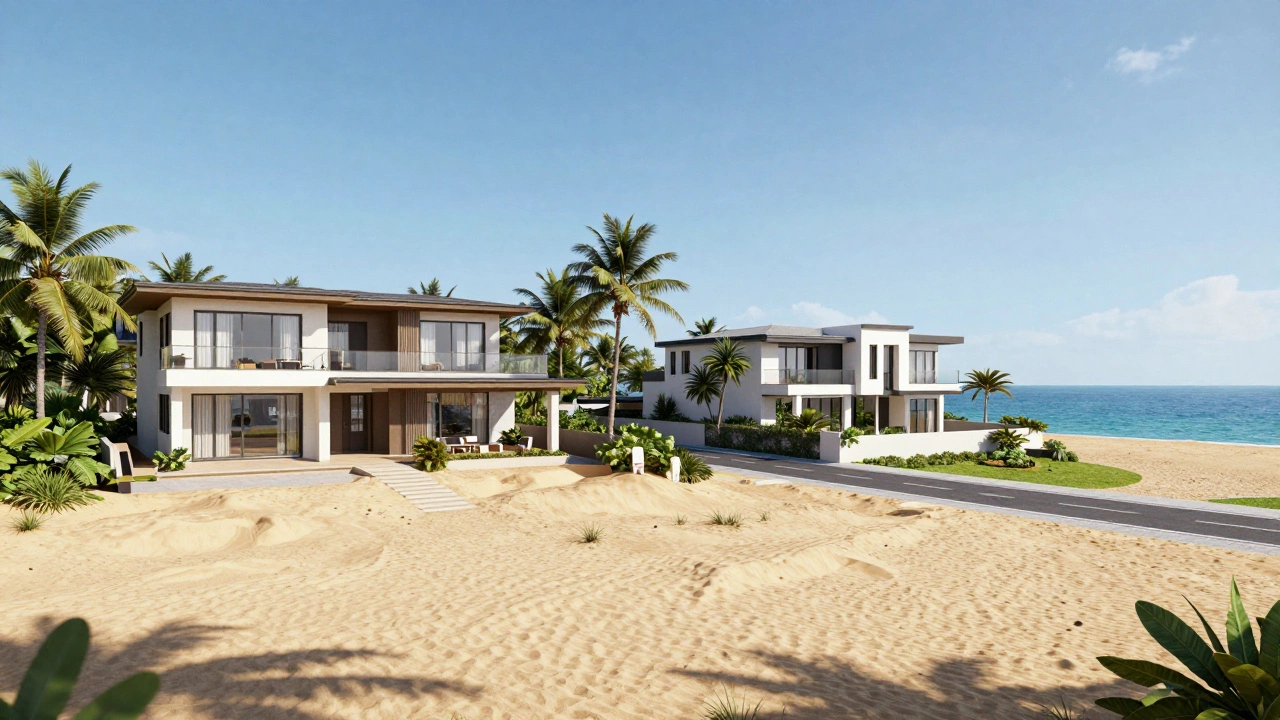
You scroll through the listings, eyes wide on the photos of crashing waves and golden sand. You see the tag Beachfront is a property located directly on the beach, offering immediate access to the sand and water. You book it. You arrive. You walk out the door and hit a parking lot. The ocean is fifty yards away, hidden behind a dune. This scenario happens more often than you think. The difference between oceanfront and beachfront on Vrbo isn't just semantics; it changes your entire vacation experience.
Understanding these terms saves you money and heartache. You are not just paying for a bed; you are paying for a view and a location. When you search for a rental, the platform uses specific filters, but hosts sometimes misuse them. Knowing the exact definitions helps you spot the real deals and avoid the misleading ones.
The Core Definitions: What the Words Actually Mean
Real estate agents and vacation rental hosts use specific language to describe proximity to the water. Oceanfront is a property situated directly adjacent to the ocean, typically with an unobstructed view of the water. This means the structure sits right on the coastline. You might step off a balcony and look straight at the horizon. There is no land between you and the water. In many cases, the oceanfront property has a private walkway or stairs that lead directly onto the sand.
Beachfront is a property located on the beach or very close to the shoreline, often with direct sand access. While similar to oceanfront, beachfront implies a closer relationship with the sand itself. Sometimes this means the house is built on the dunes. Sometimes it means the backyard is the beach. The key distinction is the physical connection to the sand. If you are beachfront, you are likely walking on sand to get to your car or your door.
There is a third term that often causes confusion: Waterfront is a property located next to any body of water, including lakes, rivers, or bays. Waterfront is the broad category. Oceanfront and beachfront are specific types of waterfront. If a listing says waterfront, do not assume it means the ocean. It could be a saltwater marsh or a canal. Always verify the body of water before you book.
How Vrbo Categorizes Listings
When you use Vrbo is a vacation rental platform that connects travelers with homes, condos, and villas., you see filters for "Beachfront" and "Ocean View." These filters are not always strictly enforced. Hosts select these tags themselves during the listing process. This means a host might mark a property as beachfront because it is 200 yards away, thinking that counts.
The platform allows hosts to describe their location in the title and description. You need to read beyond the tags. Look at the map view. Vrbo provides a map pin for every listing. Zoom in on the pin. Check the satellite view. If the pin is on the road and the beach is visible in the distance, it is not beachfront. If the pin is on the sand, you are in luck.
Another tool is the "Photos" section. Scroll to the end of the gallery. Look for the "Exterior" or "View" albums. If there are no photos of the beach from the property, be skeptical. A true beachfront listing will show the sand from the balcony or backyard. If all the photos are of the interior, the location might be less impressive than the title suggests.
Access Rights and Legal Boundaries
Physical proximity is one thing; legal access is another. Just because a house is near the water does not mean you can walk to the water. In many coastal regions, the land between the road and the beach is private property. This is where Homeowners Associations (HOAs) come into play.
Homeowners Association is an organization that manages rules and regulations for a residential community. An HOA might own the strip of land leading to the beach. They may require a key card or a pass to use the walkway. Some listings mention "shared access." This means you are not the only one using the path. If you have a large group with kids, a shared path can get crowded.
True beachfront properties often have "deeded access." This means the right to use the beach is legally attached to the property. It is a permanent right. Oceanfront properties might have a private boardwalk. Check the listing description for the words "private access" or "deeded access." If the host does not mention it, ask them directly. Do not assume you can walk across the neighbor's lawn to get to the sand.

The Ocean View Trap
Many travelers confuse "Ocean View" with "Oceanfront." An ocean view simply means you can see the water from somewhere in the house. It could be from the top floor of a building that is two blocks inland. You might see a sliver of blue through the trees. This is not the same as being on the water.
On Vrbo, the "Ocean View" filter is distinct from "Beachfront." If you select both, you get the best of both worlds. If you only select "Ocean View," you might end up with a view of the water but no access to the sand. This matters for families. You want to know if you can run out to the water for a quick swim without driving. An ocean view condo might require a ten-minute walk to find a public beach access point.
Consider the elevation. A property on a hill might have a great view but be far from the sand. A property on the ground level might have no view but immediate access. Decide what you value more. If you want to watch the sunrise from your bed, prioritize the view. If you want to build sandcastles every morning, prioritize the access.
Pricing and Value Comparison
The difference in terminology drives a significant difference in price. Oceanfront and beachfront rentals command a premium. You are paying for the location. A standard rental might cost $200 a night. The same house with a beachfront tag could cost $400 a night.
Is it worth the extra cost? For a week-long stay, the convenience might save you money on parking and transportation. If you have to drive to the beach every day, you pay for gas and wear and tear on your car. If you live on the beach, you save that time and money.
However, be aware of the noise. Oceanfront properties are louder. The waves crash at night. The wind howls during storms. If you are a light sleeper, a beachfront location might keep you awake. A property set back a few hundred yards offers the view and access but with less noise. This is a trade-off you must consider before booking.
| Feature | Oceanfront | Beachfront | Ocean View |
|---|---|---|---|
| Location | Directly on coastline | On or next to sand | Visible from property |
| Sand Access | Usually direct | Direct or very close | Varies widely |
| Price Level | Highest | High | Medium to High |
| Noise Level | High (waves/wind) | Medium to High | Low to Medium |
| Privacy | Lower (public beach) | Medium | Higher |

Questions to Ask the Host
Do not rely solely on the listing description. Contact the host before you confirm the booking. Send a message through the Vrbo platform to keep a record of the conversation. Ask specific questions about the location.
- Is the property directly on the sand or set back?
- Is there a private walkway or do we use a public path?
- Are there any HOA restrictions on beach access?
- Can you see the ocean from the main living area?
- How far is the nearest parking to the water?
Hosts usually respond quickly to these questions. If a host avoids the question or gives a vague answer, look for another property. Transparency is key. A good host will provide photos of the path to the beach or a map showing the exact location.
Also, check the reviews. Past guests often mention the truth about the location. Search the review text for words like "walk," "beach," and "view." If multiple guests say the beach is far away, the listing is misleading. Reviews are often more honest than the official description.
Weather and Environmental Factors
Living on the water comes with environmental realities. Salt spray is a constant factor for oceanfront properties. It can damage electronics and cars. If you are bringing a rental car, park it in a garage if possible. If you have sensitive electronics, keep them covered.
Wind is another factor. Coastal properties are often windier. This can make outdoor dining difficult. Check if the balcony is enclosed or screened. A screened porch allows you to enjoy the breeze without the bugs and the wind blowing your food away.
Storms can also impact your trip. If you book an oceanfront property during hurricane season, check the cancellation policy. Weather can change quickly. Some hosts offer flexible cancellation for weather events. Read the fine print before you pay.
Verifying the Listing
Before you book, do a quick Google search of the address. You can find the property on Google Maps. Use the Street View feature. This shows you exactly what the property looks like from the street. You can see if the beach is visible. You can see the distance to the water.
Look for the property on other platforms. Sometimes hosts list on Airbnb and Vrbo. The photos might be different. The description might be more detailed on one platform than the other. Cross-referencing helps you get the full picture.
Check local regulations. Some beaches are private. Some have restrictions on dogs or alcohol. If you plan to bring a pet, verify if the beach allows dogs. If you plan to have a picnic, check if alcohol is permitted. These rules vary by town and county.
Is oceanfront the same as beachfront?
No, they are not exactly the same. Oceanfront means the property is directly on the ocean coastline, usually with a view. Beachfront means the property is on the beach itself, often with direct sand access. Oceanfront focuses on the water view, while beachfront focuses on the sand location.
How do I know if a Vrbo listing is truly beachfront?
Check the map view on Vrbo to see the pin location relative to the water. Look at the photos for exterior shots showing the sand. Read the reviews for guest comments about beach access. Contact the host to confirm the distance and access type.
Does beachfront mean I can walk to the water?
Usually, yes, but not always. Some properties are near the beach but separated by private land or roads. Check for "deeded access" or "private walkway" in the description. Ask the host about any barriers between the house and the water.
Why are oceanfront rentals more expensive?
Oceanfront rentals are more expensive due to high demand and limited supply. You are paying for the premium view, immediate access to the water, and the convenience of not having to drive to the beach. The location adds significant value to the property.
Can I trust the Vrbo filters for beachfront?
You should be cautious. Hosts self-select the tags on Vrbo. A host might mark a property as beachfront if it is close, even if it is not directly on the sand. Always verify the location using the map and photos before booking.