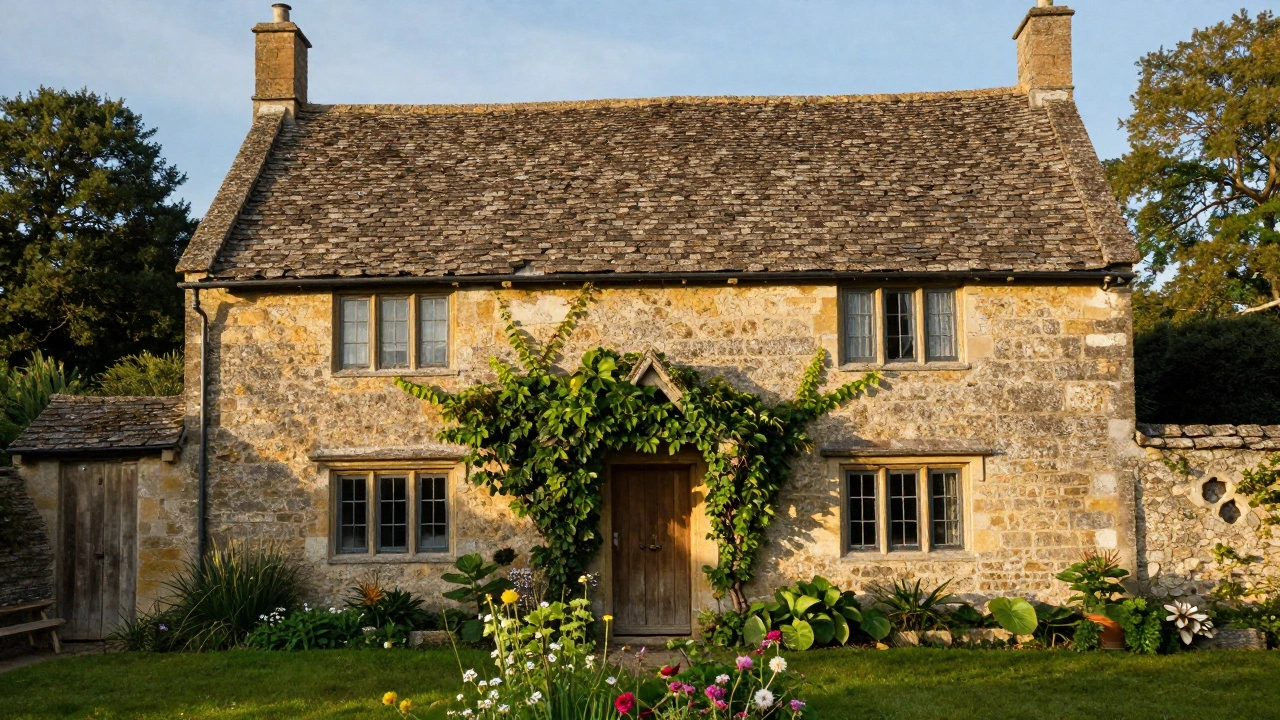
Cottage vs. Country House Classifier
Property Details
Standard Cottage
Traditional Definition
With 3 bedrooms and a modest footprint, this property fits the classic definition of a cottage perfectly. It is intimate enough to maintain without staff but spacious enough for a family.
There is no single magic number that defines how many bedrooms a cottage can have. If you are looking for a strict rulebook, you won't find one. A cottage in the Cotswolds might have six bedrooms and still feel like a tiny home, while a converted barn in Scotland with three rooms could feel like a mansion. The definition of a "cottage" has stretched and shifted over centuries, moving from a humble peasant dwelling to a high-end holiday rental or a cozy permanent residence.
However, if you are buying, selling, or renting, there are practical limits. These aren't just about aesthetics; they involve planning permissions, local council regulations, and even tax laws. So, what is the realistic ceiling? For most traditional definitions, a cottage rarely exceeds four bedrooms. Once you hit five or six, the property usually crosses the line into being classified as a "country house" or a "farmhouse." But the story doesn't end there. Let's look at why this distinction matters and where the real boundaries lie.
The Traditional Definition: Why Four Is Usually the Max
To understand the limit, we have to look at history. The word "cottage" comes from the Old English "cot," meaning a hut or shelter. Originally, these were tiny structures, often just one room with a sleeping loft. Over time, as families grew and wealth increased, cottages expanded. But they remained distinct from manors or large farmhouses.
In the modern context, especially in the UK and Ireland where the term is most heavily used, a cottage is defined by its scale and character rather than just its bed count. Most architectural historians and real estate experts agree that a true cottage typically has between one and four bedrooms. Here is why:
- Scale: Cottages are designed to be manageable by one household. A four-bedroom cottage is large enough for a family but small enough to maintain without staff.
- Footprint: Traditional cottages sit on smaller plots of land. Adding more bedrooms requires expanding the footprint, which changes the building's classification.
- Character: The charm of a cottage lies in its coziness. Large open spaces and multiple reception rooms are hallmarks of larger houses, not cottages.
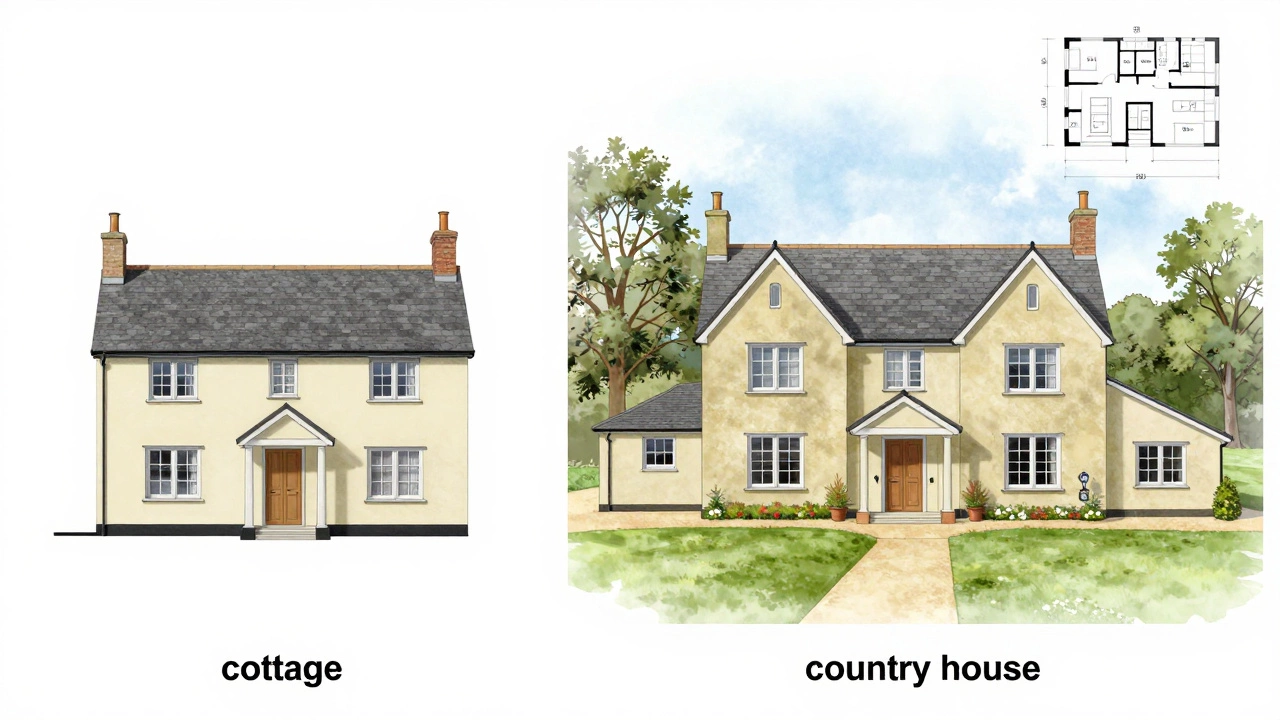
If you walk into a property with five bedrooms, a grand entrance hall, and separate wings, you are likely standing in a country house. The "cottage" label starts to feel like a marketing stretch. This isn't just semantics; it affects how people perceive value and lifestyle.
Planning Permissions and Legal Classifications
This is where things get tricky. In many jurisdictions, including parts of the UK and Ireland, local councils have specific guidelines for what constitutes a residential dwelling versus a commercial or larger residential unit. While there is no national law saying "a cottage cannot have five bedrooms," local planning authorities often use bedroom count as a proxy for size and impact.
For example, if you are converting an old barn into a cottage, your planning permission might specify a maximum floor area. A typical cottage conversion might be capped at 150-200 square meters. At that size, fitting more than four comfortable bedrooms becomes physically difficult without sacrificing living space. If you try to squeeze in five bedrooms, the rooms become tiny, potentially violating building codes for minimum room sizes.
Furthermore, some rural areas have strict conservation rules. In Areas of Outstanding Natural Beauty (AONB) or National Parks, new builds or conversions are often restricted to ensure they blend with the existing vernacular architecture. Since traditional vernacular cottages in these areas rarely had more than three or four bedrooms, planners may reject proposals for larger units to protect the visual character of the landscape.
| Property Type | Typical Bedroom Count | Average Size (sq m) | Key Characteristics |
|---|---|---|---|
| Studio / Tiny Cottage | 1 | 30 - 60 | Single room, loft sleepers, minimal kitchen |
| Standard Cottage | 2 - 3 | 60 - 120 | One living room, compact kitchen, garden |
| Large Cottage | 4 | 120 - 180 | Two living areas, larger kitchen, possibly a study |
| Country House | 5+ | 180+ | Multiple reception rooms, formal entrance, large grounds |
The Holiday Rental Factor: Bedroom Tax and Regulations
If you are asking this question because you want to rent out your cottage, the answer changes slightly. In the short-term rental market, "cottage" is often used as a broad category for any rural accommodation. However, financial incentives can influence bedroom counts.
In the UK, for instance, there is a concept known as "Bedroom Tax" (officially the Under-Occupancy Penalty). This applies to social housing tenants who have more bedrooms than they need. While this doesn't directly limit how many bedrooms a private owner can build, it does reflect a societal view that excessive space is inefficient. For holiday rentals, the goal is often maximization. A landlord might convert a large farmhouse into six separate two-bedroom "cottages" to maximize revenue. Each unit remains a cottage, but the original building was never one.
Additionally, some local tourism boards offer grants or tax breaks for maintaining historic properties. These programs often define eligible properties as those under a certain size, which indirectly caps the bedroom count. If you expand a cottage beyond its historical footprint to add more bedrooms, you might lose eligibility for these benefits.
Design Constraints: Coziness vs. Space
Beyond laws and taxes, there is the issue of design integrity. A cottage is supposed to feel intimate. When you start adding bedrooms, you need corridors, hallways, and circulation space. These non-living areas eat up square footage quickly. A four-bedroom cottage feels full and efficient. A five-bedroom cottage often requires a layout that feels more like a hotel or a large family home, losing that snug, enclosed feeling that defines the cottage aesthetic.
Consider the roofline. Traditional cottages often have steep, pitched roofs with limited attic space. Converting these attics into bedrooms is possible but expensive and structurally complex. Adding a second story to a single-story cottage drastically changes its appearance, often requiring planning permission due to the change in massing. Most owners prefer to keep the original silhouette, which naturally limits the number of floors and, consequently, the number of bedrooms.
Regional Variations: What Counts as a Cottage?
Your location plays a huge role in this definition. In the United States, a "cottage" might refer to a beachfront vacation home that could easily have five or six bedrooms. In New England, a colonial-style cottage might be quite large. However, in the UK and Ireland, the term is much more restrictive. A Scottish bothy or a Welsh longhouse is considered a cottage regardless of size, but a large Georgian house in London would never be called a cottage.
In Ireland, where I live, a "cottage" often implies a stone-built, rural property with a garden. Many of these older homes have been extended over generations. You might find a "cottage" with four bedrooms because a wing was added in the 1920s. But if it has six bedrooms, locals will likely call it a "big house" or a "farmhouse." The community perception matters as much as the legal definition.
Practical Advice for Buyers and Sellers
If you are buying a property labeled as a cottage with five bedrooms, do your homework. Check the title deeds. Was it originally a cottage that was merged with a neighbor? Is it a converted barn? Understanding the history helps you gauge the true nature of the home. If you are selling, be honest about the size. Calling a six-bedroom country house a "cottage" might attract the wrong buyers-those looking for low maintenance and intimacy will be overwhelmed by the upkeep of a large property.
For builders, stick to the four-bedroom rule if you want to market your new build as a cottage. It’s a sweet spot that appeals to families wanting space without the burden of a mansion. It also aligns with most planning guidelines for residential infill in rural areas.
Summary of Key Points
- Traditional Limit: Most authentic cottages have 1 to 4 bedrooms.
- Classification Shift: Properties with 5+ bedrooms are usually classified as country houses or farmhouses.
- Planning Rules: Local councils may restrict expansion based on footprint and conservation status.
- Rental Market: Landlords may subdivide large properties into multiple smaller cottages for profit.
- Design Integrity: Adding too many bedrooms destroys the cozy, intimate feel of a cottage.
Can a cottage have 5 bedrooms?
Technically, yes, but it is rare and often mislabeled. A property with five bedrooms is usually considered a country house or a large farmhouse. If you see a listing for a "5-bedroom cottage," check the floor plan and history. It is likely an extended property or a converted barn that has grown beyond traditional cottage proportions.
What is the smallest cottage?
The smallest cottages are studio apartments or tiny homes with just one room. These might have a sleeping loft or a convertible sofa bed. They are popular for weekend getaways or as guest houses. In terms of dedicated bedrooms, a one-bedroom cottage is the standard minimum for a standalone dwelling.
Does the number of bedrooms affect the price of a cottage?
Yes, significantly. More bedrooms generally mean a higher price, but the increase isn't always linear. A four-bedroom cottage might cost twice as much as a two-bedroom one, depending on location and condition. However, very large "cottages" (5+ bedrooms) might appeal to a niche market, potentially affecting resale speed.
Can I add a bedroom to my existing cottage?
You can, but you need to check planning permissions. Converting an attic or extending the ground floor may require approval from your local council, especially if the cottage is listed or in a conservation area. Always consult with a local architect or planner before starting work.
Is there a difference between a cottage and a cabin?
Yes. Cabins are typically made of wood and located in forested or mountainous areas. Cottages are often stone or brick and found in rural villages or countryside settings. Both can vary in bedroom count, but cabins tend to be simpler and more rustic in design.