
Hotel Selection Decision Tool
Answer these four quick questions to find the best accommodation strategy for your current trip.
Quick Takeaways
- Airport hotels focus on convenience and speed, usually located within walking distance or a short shuttle ride from the terminal.
- City hotels offer better access to tourism, dining, and local culture but require more transit time.
- Choose airport hotels for layovers, early departures, or extreme jet lag.
- Opt for city hotels when the airport is far from the center and you have more than 24 hours to spend in the city.
The Core Concept: What Exactly Is an Airport Hotel?
When we talk about an Airport Hotel is a specialized accommodation designed specifically for travelers in transit, typically situated on the airport perimeter or even inside the terminal. Unlike a traditional hotel, its primary "amenity" isn't the gym or the fancy lobby-it's the proximity to the runway. These properties are built to serve the specific needs of people who are exhausted, rushed, or stuck due to a flight delay.
Think of it as a strategic tool. If you're flying into Heathrow Airport or Dublin Airport and your next flight isn't until tomorrow afternoon, dragging yourself into the city center might seem like a fun adventure, but it's often just an expensive way to get more tired. Airport hotels remove the friction of urban navigation.
Key Differences: Breaking Down the Experience
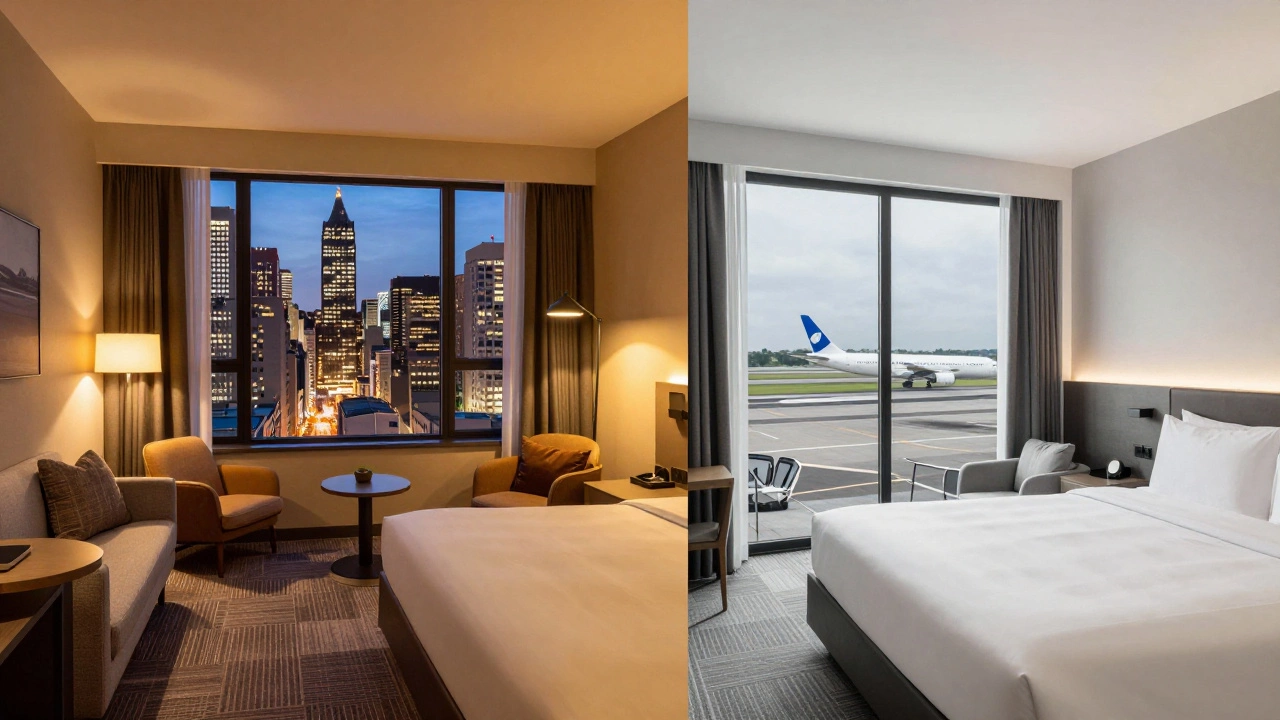
The gap between a standard hotel and an airport-centric one comes down to three things: location, guest psychology, and service offerings. In a city hotel, the goal is often "experience." You want a room with a view of the skyline or a walk to the nearest museum. In an airport hotel, the goal is "efficiency." You want a room that is soundproofed against jet engines and a check-in process that takes thirty seconds.
| Feature | Standard City Hotel | Airport Hotel |
|---|---|---|
| Primary Goal | Tourism & Exploration | Transit & Recovery |
| Location | City Center / Landmarks | Terminal Perimeter / On-site |
| Guest Profile | Vacationers, Business Travelers | Transit Passengers, Crew, Early Flyers |
| Check-in/Out | Standard (3 PM / 11 AM) | Often Flexible or 24/7 Express |
| Dining | Local Cuisine, Fine Dining | Quick Bites, 24-hour Room Service |
When the Airport Hotel Is the Only Right Choice
There are specific scenarios where booking a city hotel is actually a mistake. For instance, if you have a flight departing at 6 AM, you'd need to wake up at 3 AM to reach the terminal on time if you're staying downtown. That's not a vacation; that's a sleep deprivation experiment. By staying at an airport hotel, you can sleep until 4 AM and still be at the gate with time to spare.
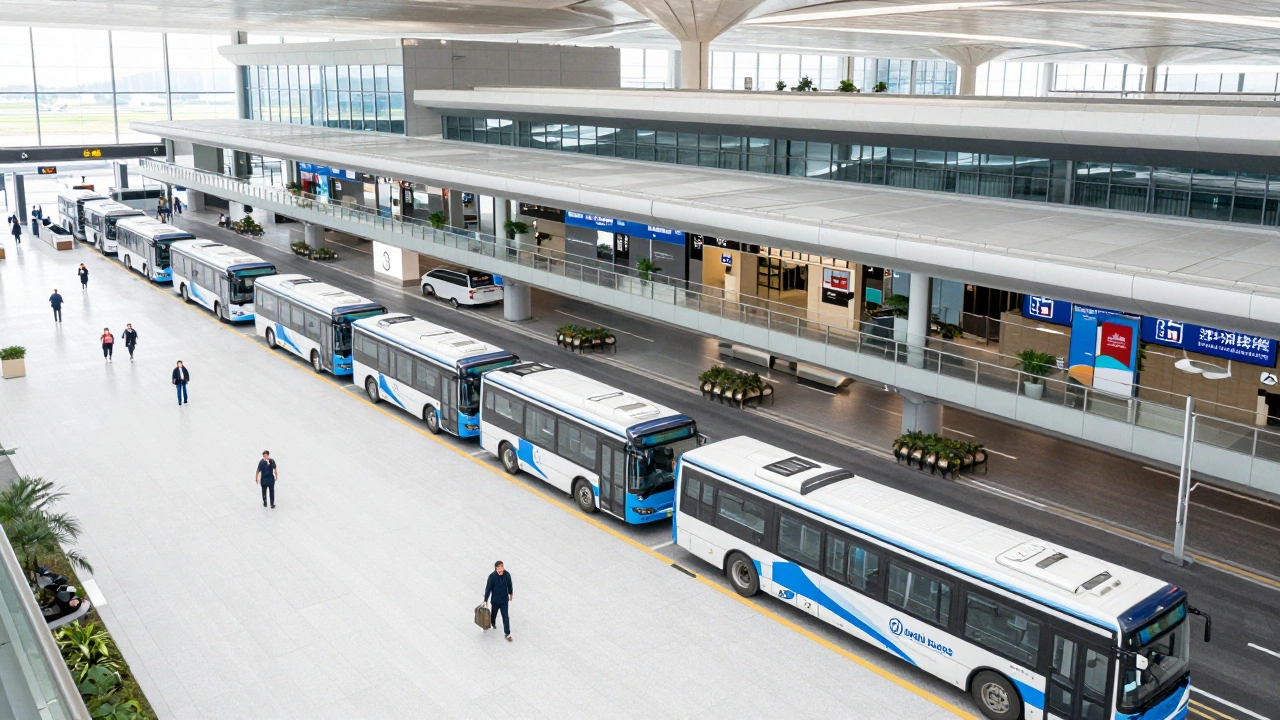
Another huge factor is Jet Lag. When you've crossed eight time zones and your brain thinks it's midnight while the local clock says 10 AM, the last thing you want to do is negotiate a taxi fare or figure out a subway map. The psychological relief of knowing your room is just a five-minute shuttle ride away is worth the premium you might pay.
The Trade-offs: What You Give Up for Convenience
It's not all sunshine and shuttle buses. When you choose the airport over the city, you're sacrificing the "soul" of the destination. Most airport hotels are built using a standardized corporate model-think Marriott or Hilton. They are clean, functional, and predictable, but they rarely have local character. You won't find a hidden gem bistro or a quirky art gallery next door; you'll find a parking garage and a rental car hub.
Then there's the noise. Even with high-end double glazing, some people can still hear the distant hum of turbines. While most modern airport hotels use heavy acoustic insulation, the environment is fundamentally industrial. If you're looking for a romantic getaway or a deep cultural immersion, the airport perimeter is the wrong place to be.
Strategic Booking: How to Decide?
To make the right choice, use a simple rule of thumb based on your "buffer time." Buffer time is the number of hours between your arrival and your next major move.
- Less than 12 hours: Always choose an airport hotel. The time spent commuting to the city and back will eat up half your resting time.
- 12 to 24 hours: This is the gray area. If you are exhausted, stay at the airport. If you have high energy and a "must-see" list, head to the city.
- More than 24 hours: Go for a city hotel. You have enough time to justify the transit and will get a much better sense of the local culture.
Also, consider the local transport infrastructure. In cities like Singapore or Tokyo, the Public Transport from the airport to the center is so efficient that a city hotel is an easy win. In cities with chaotic traffic or unreliable taxis, the safety of an airport hotel is a massive advantage.
Common Pitfalls to Avoid
One of the biggest mistakes travelers make is assuming all airport hotels are "at the airport." Some are listed as such but are actually three miles away and require a bus. Always check if the hotel offers a Complimentary Shuttle. If they don't, and you don't have a rental car, you're back to square one with expensive ride-shares.
Another trap is the "Day Room." Some airport hotels offer rooms for 4-8 hours during the day for transit passengers. If you only need a shower and a nap before a long-haul flight, don't pay for a full overnight stay. Look for "transit rates" or day-use options which can save you 50% of the cost.
Are airport hotels more expensive than city hotels?
Not necessarily. Prices vary based on demand. However, airport hotels often have more consistent pricing, whereas city hotels fluctuate wildly based on local events, festivals, or peak tourist seasons. You are paying for the convenience, not necessarily a more luxurious room.
Can I stay in an airport hotel without a flight?
Yes, absolutely. Anyone can book a room at an airport hotel. Some people use them as a base for visiting nearby business parks or simply because they prefer the standardized quality of these chains over smaller city guest houses.
Do airport hotels have better soundproofing?
Generally, yes. Because they are built specifically for an environment with high decibel levels, they typically employ thicker glass and reinforced walls to ensure guests can sleep through take-offs and landings.
What are the best amenities to look for in an airport hotel?
Prioritize a 24-hour shuttle service, express check-in/out, and a 24-hour gym or restaurant. Since travelers arrive at all hours, these services ensure you aren't stuck waiting for a breakfast buffet that doesn't open until 7 AM when your flight leaves at 6 AM.
Is it better to stay in the terminal or at a nearby airport hotel?
Terminal hotels (or sleep pods) are best for very short layovers (under 6 hours) where you don't want to clear customs or leave the secure area. For anything longer, a hotel outside the terminal offers a real bed, a full bathroom, and a chance to breathe fresh air.
Next Steps for Your Trip
If you're currently booking, start by checking the map. If the distance from the airport to the city center is more than 30 minutes and your stay is under 24 hours, book the airport hotel. If you're a business traveler, check if your company has a corporate rate with the major chains located at the terminal; these are often cheaper than the city center options. Finally, always double-check the shuttle schedule-knowing the bus runs every 15 minutes versus every hour can be the difference between a stress-free morning and a missed flight.