Yurt Eco-Score Calculator
Are you planning a build or choosing where to stay? Select the features present in the construction or amenities to calculate the true "green" score of the property based on current industry standards.
Select Property Features
Materials
Site Impact
Energy & Waste
Calculate to see score
Select options above and click Calculate.
You have likely spotted them across rolling hillsides in Wales or tucked into pine forests in Scotland. These round, canvas tents look charming on social media, but you want to know if they are actually green. When people ask if Yurta portable, circular dwelling traditionally used by nomadic peoples, now popularized as glamping accommodation are eco-friendly, the short answer is yes, but the long answer depends entirely on how the owner builds and operates the site.
The Material Advantage: Less Waste, More Life
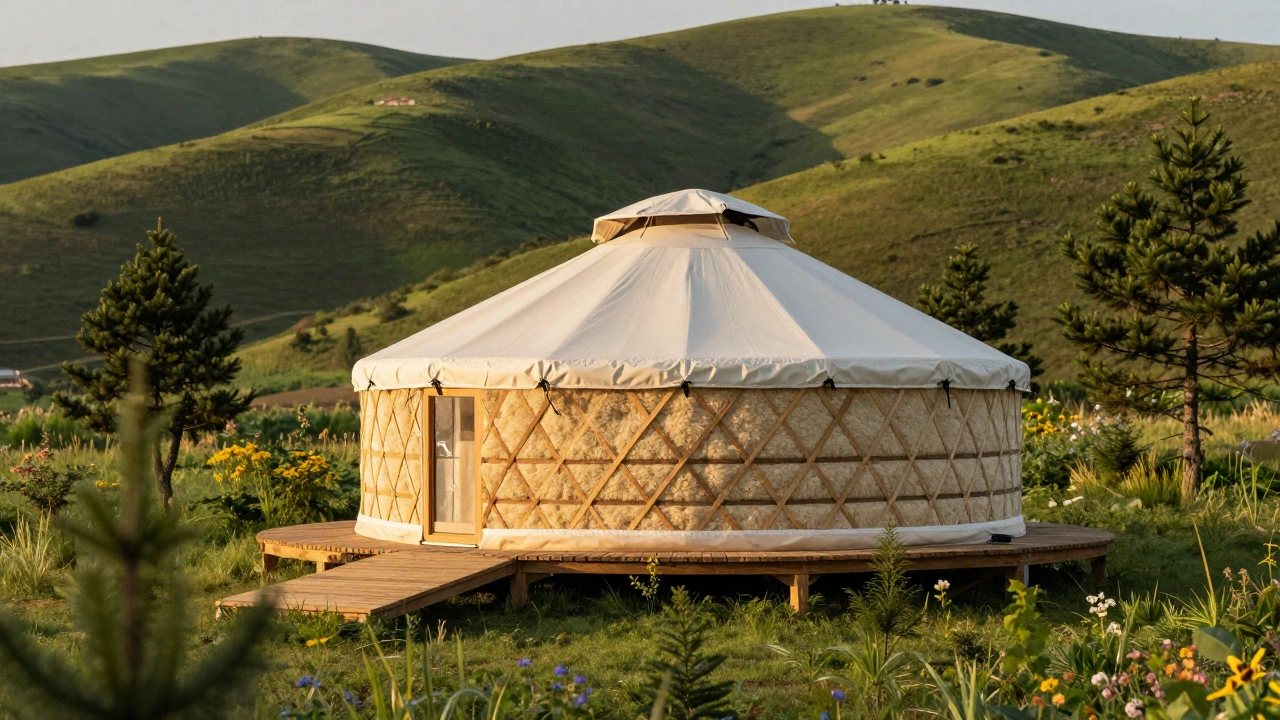
The core argument for yurts being sustainable lies in their construction materials compared to brick-and-mortar hotels. A traditional hotel room requires tons of cement, steel reinforcement, and processed bricks, all heavy industries that pump out massive amounts of carbon dioxide. In contrast, a standard luxury yurt uses lightweight timber frames wrapped in heavy-duty canvas or felt.
Cedar wood is the most common choice for the lattice walls. It is naturally resistant to rot and insects without needing toxic chemical treatments. If a supplier sources this wood from Forest Stewardship Council certified forests, the carbon impact stays low because the trees absorb carbon while growing. Unlike treated lumber which may leach chemicals into soil over decades, cedar breaks down harmlessly at the end of its life cycle.
Roof coverings also matter. Modern manufacturers use weather-resistant fabrics that last twenty years or more. Ten years ago, many operators threw away old covers every three seasons due to mold or tearing. Now, UV-stabilized acrylics handle rain and sun without degrading quickly. This durability means you produce less waste over time. You do not need to replace the shell every winter, keeping landfill contribution to a minimum.
Thermal Efficiency: The Circle Wins
Shape affects temperature retention. Think about the surface area of a circle versus a square building with the same floor space. A circular design has less skin exposed to the cold air relative to its internal volume. In the winter, a yurt keeps heat in better than a rectangular cabin. This means you burn less fuel to warm the space.
In 2025 and 2026, most high-end glamping yurts come insulated. You find sheep’s wool insulation between layers of canvas or rigid foam panels attached internally. Wool is particularly interesting because it breathes; it absorbs moisture from your breath without getting damp like synthetic fleece. This prevents mold growth, which often ruins indoor air quality in cheaper setups.
Heating systems have shifted too. Old wooden stoves were inefficient and smoky. Modern pellet heaters run on biomass and offer precise temperature control. Some sites connect yurts to ground source heat pumps. This technology taps geothermal energy underground, using almost zero fossil fuels during operation. While the initial setup costs money, the running costs drop significantly compared to gas boilers in fixed cottages.
Footprint and Ground Protection
Permanent buildings dig foundations deep into the earth. They disrupt drainage lines, kill root systems underfoot, and change the natural contour of the land permanently. When a business goes bankrupt, those concrete pads remain forever as scars on the landscape. Yurts sit on platforms, often raised slightly above the grass to avoid water pooling.
This "light touch" approach allows nature to regenerate quickly if the business closes. Remove the platform, pull the pegs, and the grass grows back. Soil compaction remains localized. During my recent inspections of rural properties in Munster, I saw how gravel paths around yurts allowed water to seep through rather than creating runoff channels that wash topsoil into rivers. Permeable surfaces are vital for biodiversity, supporting local beetles, worms, and native plants.
| Feature | Traditional Stone Cabin | Eco-Friendly Yurt |
|---|---|---|
| Foundation Type | Concrete slab or deep piles | Screw piles or gravel pad |
| Demolition Risk | High (concrete waste) | Low (biodegradable materials) |
| Heat Retention | Excellent (thermal mass) | Very Good (insulated circle) |
| Carbon Footprint (Build) | High | Low |
| Movability | None | Relocatable |
The Hidden Costs: Transport and Logistics
We must talk about the downside honestly. While the structure itself is green, moving it there creates emissions. A fully kitted-out luxury yurt weighs several tonnes. Shipping a complete unit via truck from a manufacturer in China or even from another country in Europe generates a significant carbon debt.
If you import a yacht-quality structure from overseas every two years to keep up trends, the environmental benefit vanishes. The best option is finding suppliers who manufacture locally. Many companies now build these structures in Britain, Ireland, and Continental Europe, drastically cutting the shipping miles. Always check where the fabric and wood originate before booking.
Guest travel also adds to the footprint. A yurt in the middle of a remote forest might require a drive in a gas-guzzling SUV to reach, negating the savings made by staying in a tent-like structure. Look for locations near bus routes or train stations. If you fly half the world to see a "green" yurt, the math does not work out.
Waste Management and Utilities
A truly sustainable experience handles human waste responsibly. Standard septic tanks can leak nutrients into groundwater, causing algal blooms in nearby lakes. The gold standard today is the composting toilet. These units separate urine from solid waste, breaking down matter with no smell and no water usage. The resulting humus eventually becomes fertilizer for local non-food crops.
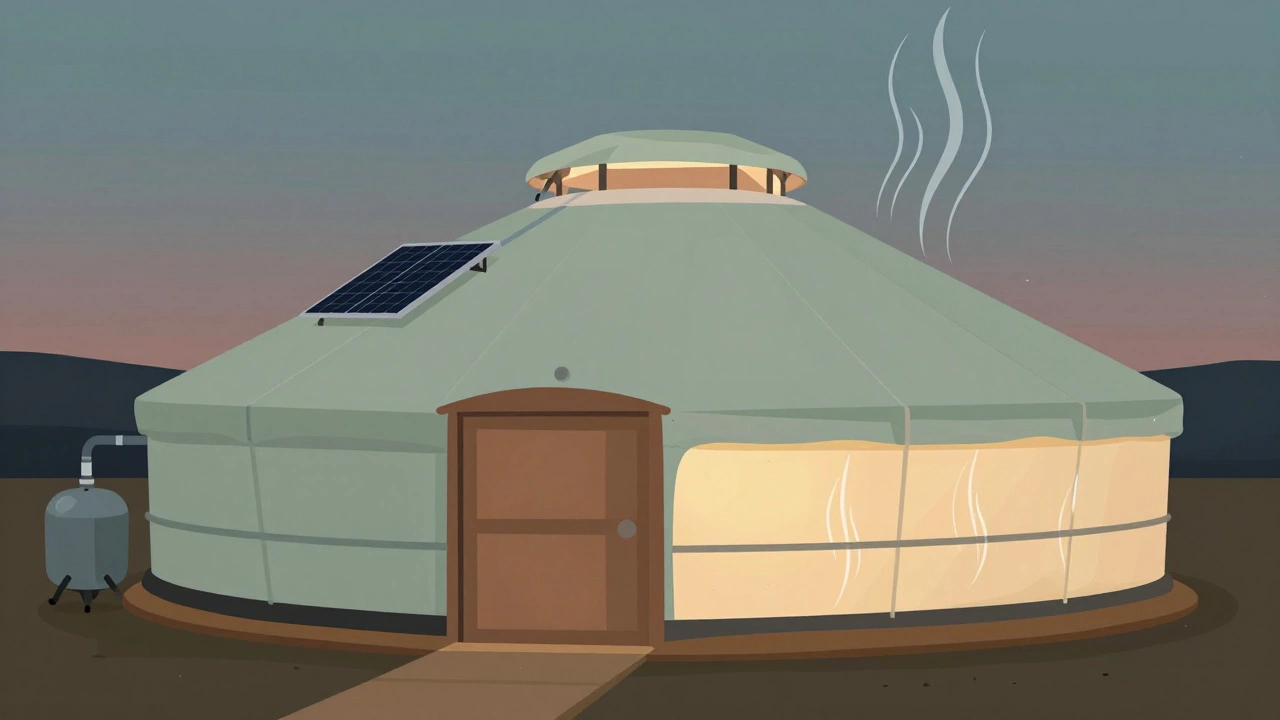
Water systems are evolving. Many forward-thinking sites install rainwater harvesting tanks on the roof ridge. Gravity feeds the showers and taps, reducing strain on public mains. For those off-grid, greywater filtration systems treat water after washing hands or dishes before returning it to the garden beds. It closes the loop so resources are recycled rather than lost down the drain.
Energy independence is another big factor. Grid connections tie yurts to fossil-fuel-heavy national supplies. Standalone solar arrays paired with lithium-ion batteries store daytime sun for evening lights and charging ports. Even heating can sometimes run on battery storage if efficient enough. You eliminate the need for diesel generators that used to rattle nearby campsites at night.
Spotting Greenwashing
Not every "eco-yurt" is genuine. Marketing teams love the term 'green' without doing the work. Some owners throw a few recycling bins outside and call it a day. Others paint their exterior canvas green to signal nature connection. You need to dig deeper. Does the website explicitly mention renewable energy sources? Are there photos of the composting system or water treatment filters?
Ask about the heating source. If a listing promises a cozy fire but does not specify the stove type, assume it burns treated logs or coal. Ask if the bedding is organic cotton or synthetic polyester. Polyester sheds microplastics when washed; cotton is natural and biodegradable. Small details reveal the operator's commitment to actual sustainability over buzzwords.
Finding the Real Deal in 2026
By late 2026, regulation is tightening regarding tourism claims. Several governments have introduced standards to prevent false green advertising. Before you book, look for third-party certifications. The Green Key or similar environmental labels are hard to earn and harder to fake. They require regular audits of energy usage, waste sorting, and local sourcing.
Reading reviews helps too. Guests often mention things owners forget to list. You might read comments about noisy generators or leaking taps. If multiple guests complain about waste collection issues, the management is probably cutting corners. Prioritize places that publish annual impact reports showing exactly how much electricity they saved or how much plastic they diverted from landfills.
Conclusion on Sustainability
The verdict is clear. A yurt has the physical tools to be an eco-friendly choice far superior to traditional stone cottages. It takes less energy to build, disturbs the ground less, and uses fewer toxic materials. However, the owner determines the outcome. Poor management can ruin a great concept just as easily as a good one improves it. Choose your stay wisely, inspect the operations, and support businesses that prove their worth beyond the marketing brochure. Your vote with your wallet pushes the entire industry toward greener practices.
Are yurts warmer than tipis?
Yes, generally. The dome shape holds heat better due to less surface area exposure compared to a conical tipi. Most yurts are designed with thicker insulation layers specifically for year-round comfort.
Can yurts be connected to the grid?
Absolutely. While many operate off-grid with solar, connecting to local electrical grids is easy and common. This ensures reliable power for appliances without relying solely on battery storage capacity.
Do yurts use less water than cabins?
Often, yes. Many eco-yurts implement low-flow fixtures and rainwater catchment systems. Without central plumbing requirements, owners tend to install more efficient water conservation technologies by default.
What happens to a yurt when it gets old?
Unlike concrete, the materials decompose safely. Wood frames can be reused or chipped for mulch. Fabric roofs are recyclable or repurposed for other uses, preventing them from ending up in a dump.
Is glamping really more sustainable than camping?
It depends on the specific setup. Camping with a personal tent has low infrastructure impact but glamping yurts offer centralized waste management which can be managed better by professionals than individual campers.