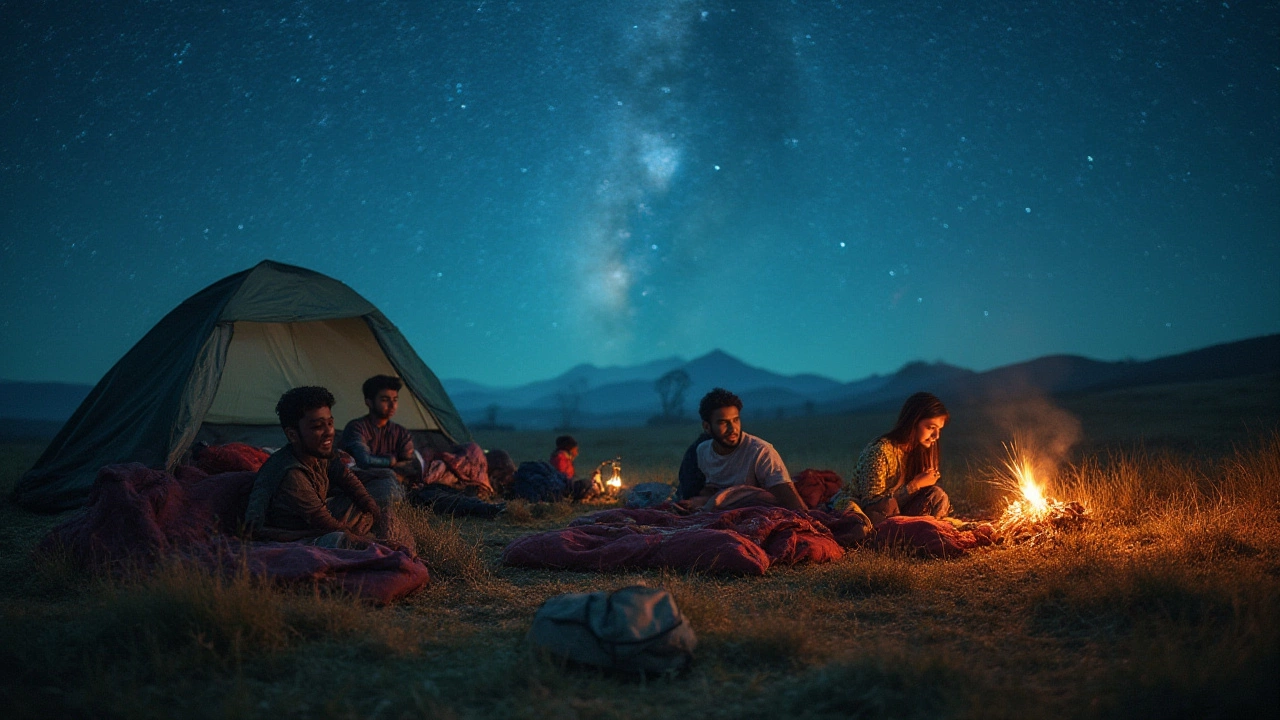
Cowboy Camping: The Ultimate Guide to Sleeping Under the Stars
Discover cowboy camping—sleeping outside with no tent. Learn the essentials, get safety tips, and see if this back-to-basics adventure is for you.
Read MoreWhen you hear wild camping, sleeping outdoors in remote areas without designated campsites, facilities, or services. Also known as backcountry camping, it’s not just about pitching a tent—it’s about self-reliance, respect for nature, and knowing exactly what you’re getting into. Unlike glamping or resort stays, wild camping doesn’t come with hot showers, Wi-Fi, or housekeeping. You carry everything in, pack out everything out, and sleep where the trees meet the sky.
This isn’t just for thrill-seekers. People do it to escape noise, reconnect with silence, or test their limits. But it’s not legal everywhere. In India, wild camping is allowed in many forested and mountainous regions—like the Himalayas, Western Ghats, or parts of Rajasthan—but only if you avoid protected wildlife zones, private land, or temple grounds. Local rules vary, and rangers don’t always patrol. That means your responsibility is your only safety net.
What you need? A durable tent, a sleeping bag rated for cold nights, clean water (or a filter), non-perishable food, a headlamp, and a way to start a fire if allowed. No one’s coming to check on you. If you get lost, sick, or caught in rain, you fix it yourself. That’s why so many people start with short overnight trips near known trails before heading deeper.
There’s a quiet truth here: wild camping doesn’t need fancy gear. It needs awareness. You’re not conquering nature—you’re borrowing space. That means leaving no trace. No plastic. No food scraps. No burned-out fire rings. Even your toilet paper has to be packed out. Some travelers carry biodegradable soap and dig a 6-inch cathole far from water. Others use portable pee bottles. It’s not glamorous, but it’s honest.
And it’s not always about solitude. Many do it with friends, sharing the weight, the laughs, the silence. You learn who stays calm when the rain hits, who remembers the matches, who can make coffee taste good after a cold night. These trips reveal things about people you never notice in a hotel room.
There are places in India where wild camping feels like stepping into another world—remote valleys in Uttarakhand, hidden lakes in Sikkim, dunes in Ladakh. But you won’t find these spots on Instagram. You find them by talking to locals, reading old travel forums, or asking park rangers who’ve seen it all.
You’ll also find that wild camping isn’t just a trip—it’s a mindset. It teaches you how little you actually need. How quiet the night really is. How bright the stars look when there’s no city glow. And how much stronger you feel the next morning, not because you slept well, but because you chose to be there, on your own terms.
Below, you’ll find real stories, practical tips, and hard truths from people who’ve done it—sometimes right, sometimes wrong. No fluff. No marketing. Just what works, what doesn’t, and why it matters.
Discover cowboy camping—sleeping outside with no tent. Learn the essentials, get safety tips, and see if this back-to-basics adventure is for you.
Read More