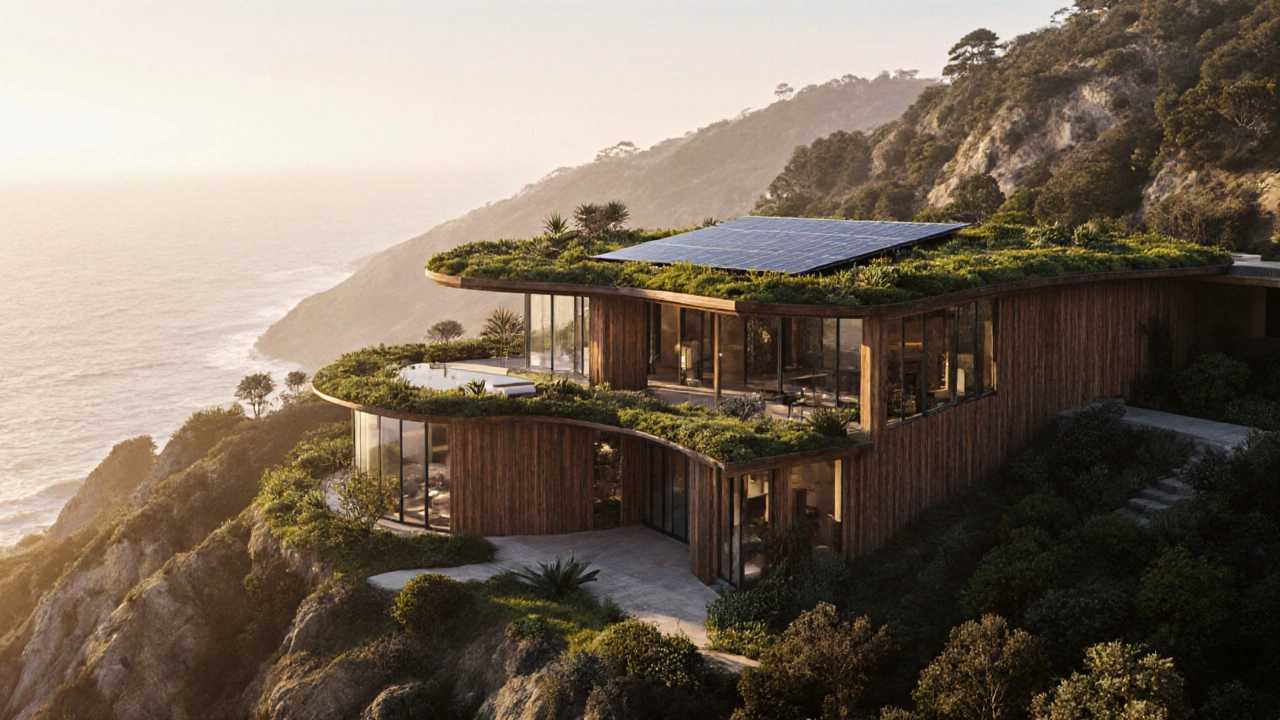
What Is the Most Expensive Eco-Friendly House?
The most expensive eco-friendly house in the world costs $37 million and generates more energy than it uses. Discover what makes it so costly-and whether sustainable luxury is worth the price.
Read MoreWhen you hear sustainable luxury home, a high-end residence designed to minimize environmental impact while maximizing comfort and beauty. Also known as green luxury home, it’s not a contradiction—it’s the future of quiet, thoughtful living. This isn’t about solar panels stuck on a mansion’s roof. It’s about a home that generates its own power, cleans its own water, grows its own food, and still feels like a sanctuary. The $1 billion eco-friendly cottage in British Columbia isn’t a fantasy—it’s proof that luxury and responsibility can walk side by side.
What makes a eco-friendly cottage, a small, energy-efficient dwelling built with natural or recycled materials and designed to blend into its surroundings. Also known as green cottage, it different from a regular cabin? It’s not just the insulation or the rainwater system. It’s the mindset. The owner doesn’t just turn off lights—they chose materials that won’t poison the air. They didn’t just buy local wood—they sourced it from a forest managed to last 100 more years. These homes last. A tiny house can live 30 to 50 years with care. So can a luxury eco-home, if it’s built right. And that’s the point: true luxury doesn’t wear out. It endures.
Then there’s the net-zero mansion, a large home that produces as much energy as it uses over a year, often through solar, geothermal, and smart design. Also known as carbon-neutral home, it sounds like science fiction, but it’s real. These homes don’t just avoid waste—they give back. They heat with the earth, cool with the wind, and light with the sun. And yes, they’re being built in places like India, where Woodland Hotel’s retreats are designed to feel like part of the forest, not separate from it. You don’t need a billion-dollar price tag to get the same principles: passive cooling, local stone, composting toilets, and windows that open to the breeze, not the AC.
The myth is that green means sacrificing comfort. It doesn’t. It means choosing better. A green home, any residence built or retrofitted to reduce environmental impact through energy efficiency, water conservation, and non-toxic materials. Also known as eco home, it can have heated floors, deep soaking tubs, and private decks with mountain views. The difference? The water heating it came from the sun. The wood under your feet was harvested without clear-cutting. The paint on the walls doesn’t give you a headache. This isn’t about guilt. It’s about pride. Pride in a home that doesn’t just shelter you—it respects the land that holds it.
What you’ll find in these posts isn’t theory. It’s real talk. From the hidden costs of so-called eco-friendly houses to the truth about what makes a luxury stay truly sustainable, these stories cut through the noise. You’ll learn how a $75 glamping night can still be green, why tipping housekeeping at a resort matters more than you think, and how a $1 billion cottage proves luxury doesn’t have to mean waste. Whether you’re planning a weekend escape or thinking about building your own retreat, this isn’t just about where you stay—it’s about how you live.
The most expensive eco-friendly house in the world costs $37 million and generates more energy than it uses. Discover what makes it so costly-and whether sustainable luxury is worth the price.
Read More