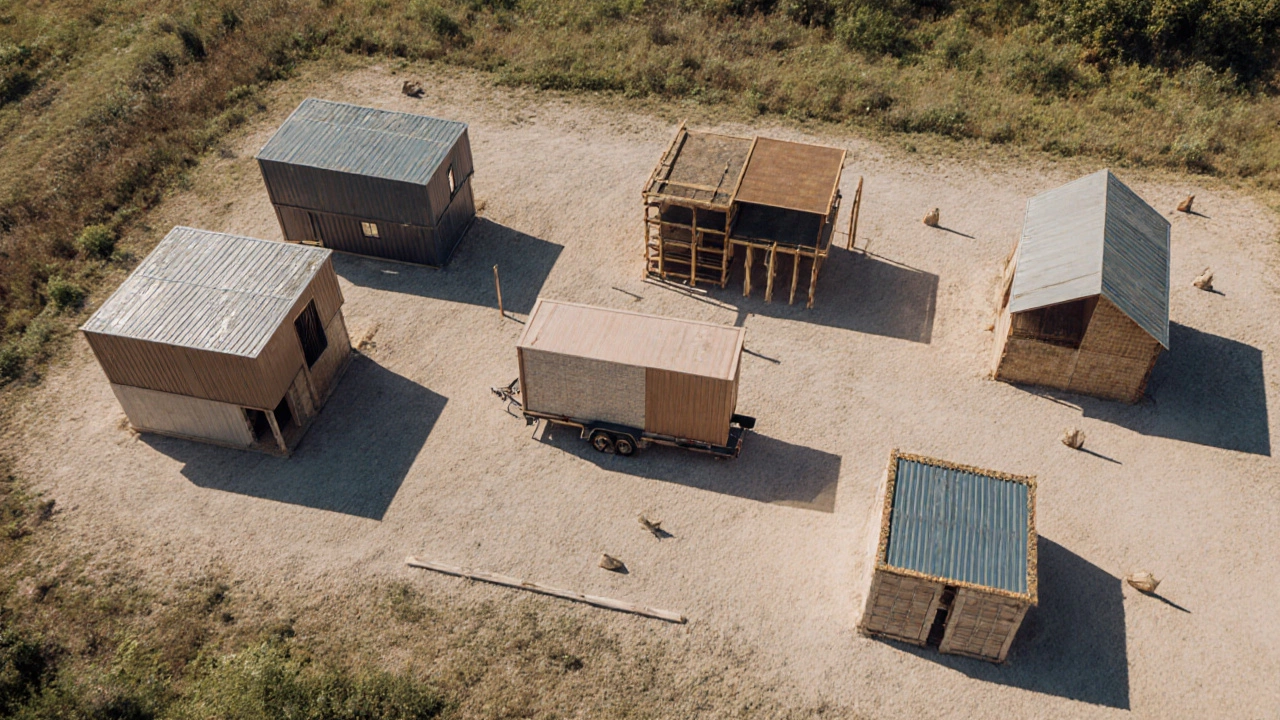
Easiest Types of Houses to Build - Quick Guide
Discover which house type offers the fastest, simplest build-prefab, modular, tiny, pole‑barn, container or earthbag. Get clear comparisons, cost tips, and a step‑by‑step roadmap.
Read MoreWhen you think of a pole barn home, a type of residential structure built using vertical poles embedded directly into the ground to support walls and roof. Also known as post frame building, it’s not just a barn repurposed for living—it’s a smart, growing alternative to traditional stick-built houses. Unlike conventional homes that rely on basements and complex framing, pole barn homes use fewer materials, go up faster, and handle extreme weather better. They’re the go-to choice for people who want space without the price tag, and durability without the hassle.
What makes a pole barn home different isn’t just how it’s built—it’s what it enables. You get open floor plans without load-bearing walls, easy customization for workshops or guest spaces, and insulation that actually works in cold winters and hot summers. Many people use them as full-time homes, especially in rural areas where land is cheap and zoning is flexible. Others build them as weekend getaways, blending rustic charm with modern comfort. The same structure that holds hay in a farm can hold a living room, kitchen, and bedroom just as well—sometimes better.
It’s not magic, but it feels like it. A pole barn home doesn’t need fancy finishes to feel like home. You can go with exposed beams and reclaimed wood, or add drywall, central heat, and high-end appliances. It’s the framework that’s simple, not the lifestyle. And that’s why more people are choosing them—not because they can’t afford a traditional house, but because they don’t want to pay for things they don’t need. Think of it as the opposite of McMansions: less square footage waste, more real value.
Related concepts like rustic cabin, a small, often wooden dwelling designed for retreat or seasonal use, typically in natural settings and affordable home, a residence built with cost-efficiency in mind without sacrificing safety or livability often overlap with pole barn homes. But where a cabin might be cozy and small, a pole barn home can be 2,000 square feet or more. And while "affordable home" can mean anything from a tiny house to a modular unit, pole barn construction gives you that affordability with room to grow—literally. You can start with one bedroom and add a loft, garage, or studio later without tearing anything down.
People who live in pole barn homes often talk about freedom—not just from debt, but from the noise of traditional homebuilding. No foundation pouring. No complex permits. No waiting months for materials. Just clear land, a few poles, and a plan. And if you’ve ever looked at glamping cottages or vacation cabins and thought, "I wish I could live like this year-round," you’re not alone. Many of those same features—open space, natural light, connection to the outdoors—are built into pole barn homes by default.
What you’ll find in the posts below aren’t just guides on how to build one. They’re stories of real people who traded expensive mortgages for quiet mornings on a porch, who turned a barn into a nursery, who saved thousands and still ended up with a home that lasts longer than most houses built today. You’ll see how climate, materials, and design choices affect longevity. You’ll learn why some pole barn homes last 50 years with almost no maintenance, while others start leaking after a decade. And you’ll understand why this isn’t just a trend—it’s a practical shift in how we think about shelter.
Discover which house type offers the fastest, simplest build-prefab, modular, tiny, pole‑barn, container or earthbag. Get clear comparisons, cost tips, and a step‑by‑step roadmap.
Read More