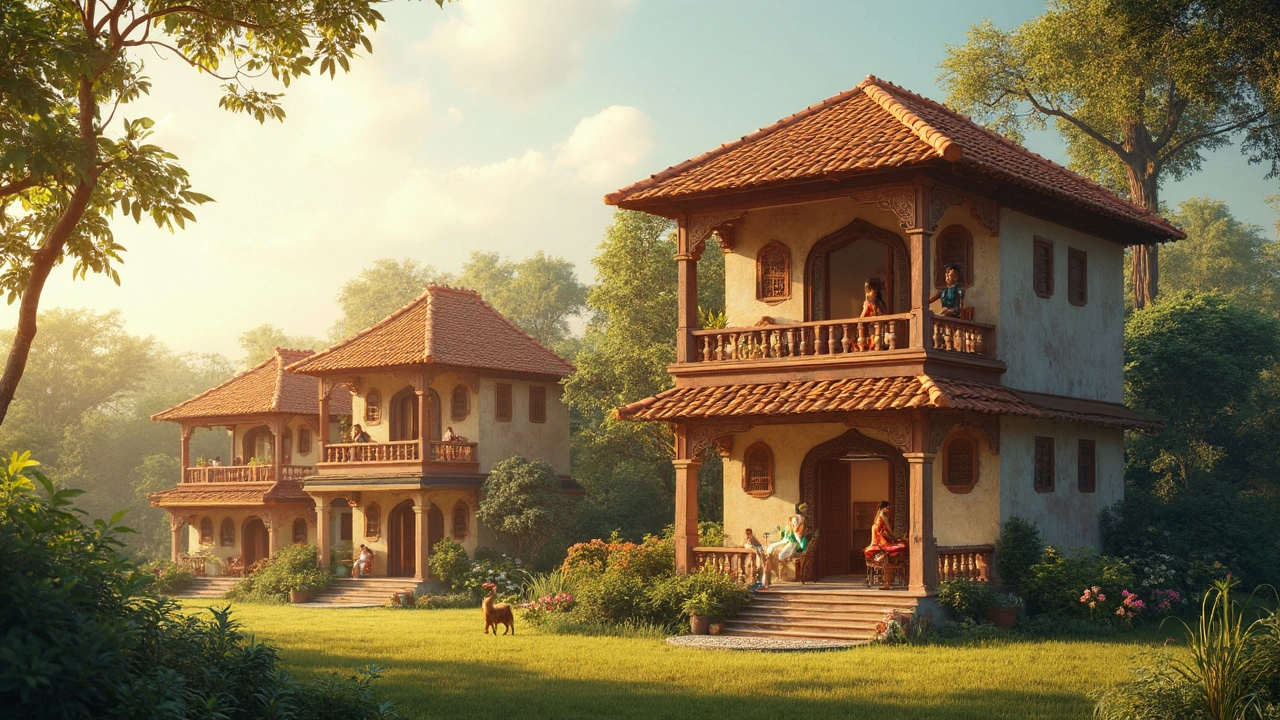
Rural Cottage Design: Simple, Sustainable, and Built for Real Life
When you think of a rural cottage design, a small, grounded home built with natural materials and a quiet connection to the land. Also known as rustic home design, it’s not about fancy finishes—it’s about lasting comfort, low upkeep, and feeling at peace with the outdoors. This isn’t just a style. It’s a way of living that’s gaining real traction, especially as people trade crowded cities for slower, simpler spaces.
What makes a good rural cottage? It starts with the basics: thick walls to hold heat, windows that catch morning light, and materials you can source locally—wood, stone, clay. These aren’t just aesthetic choices. They’re survival tools. A well-built cottage in the hills of Uttarakhand or the forests of Himachal can last decades without AC or fancy insulation. Compare that to a concrete box that cracks in the rain and costs a fortune to cool. The best rural cottages don’t fight nature—they work with it. That’s why eco-friendly cottages, homes designed to use less energy, water, and waste. Also known as sustainable cottages, they’re not a trend—they’re the future of quiet living. Many of the cottages you’ll find in India’s countryside already follow this model, built by local hands using generations of knowledge.
And it’s not just about the structure. The whole experience matters. A rural cottage isn’t meant to be a hotel room with a view. It’s meant to be a place where you wake up to birds, cook over a wood stove, and leave your phone behind. That’s why cabin getaway, a short-term stay in a small, remote home focused on peace and nature. Also known as rustic retreat, it’s become a popular alternative to packed resorts. You’ll find posts here that dig into real costs, hidden perks, and what actually makes these places worth it—like whether a $75-a-night cabin beats a $500 resort stay when you care about silence, not spa treatments.
People often assume rural design means outdated or basic. But the truth? Some of the most innovative homes today are inspired by these simple forms. Think solar panels tucked under a thatched roof. Rainwater systems hidden in stone gutters. Composting toilets that blend into the garden. These aren’t sci-fi gadgets—they’re smart, quiet upgrades that make the cottage work better without breaking its soul. And that’s the magic: you don’t need to sacrifice comfort to live lightly.
What you’ll find in this collection isn’t a list of pretty pictures. It’s real talk about what works—like how to pick a cottage that doesn’t leak in the monsoon, why some "eco-friendly" labels are just marketing, and when a cabin actually saves you money over a hotel. You’ll see how a $1 billion net-zero home shares DNA with a humble hillside cottage, and why tipping housekeeping at a luxury glamping site has nothing to do with the design of the walls around you.
Whether you’re planning a weekend escape, thinking of buying land, or just tired of noise and screens, rural cottage design offers something rare: authenticity. It’s not about looking like a magazine spread. It’s about feeling like you belong—somewhere quiet, somewhere real. Below, you’ll find stories from people who’ve lived it, saved money doing it, and learned the hard way what not to do. No fluff. Just what matters.