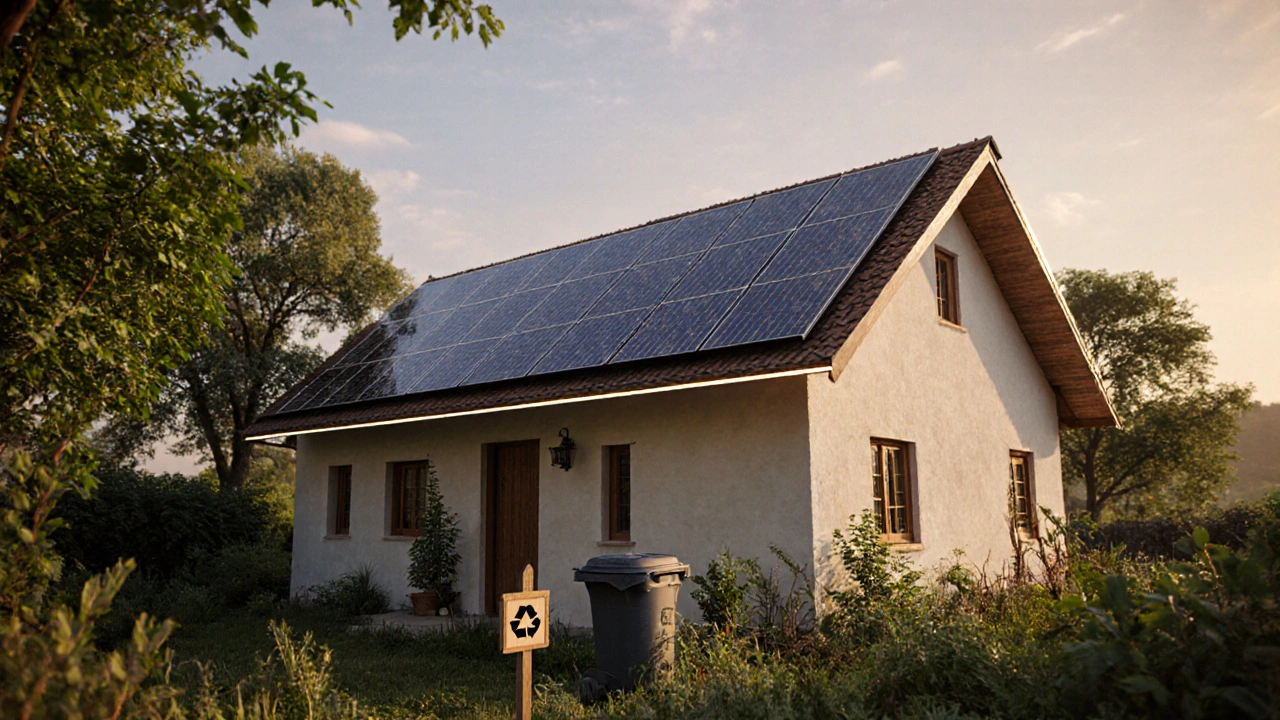
How to Make Your Airbnb Eco‑Friendly: Practical Tips for Sustainable Cottages
Learn how to make your Airbnb cottage eco‑friendly with actionable steps on energy, water, waste, cleaning, guest communication and certification.
Read MoreWhen you book an environmentally friendly Airbnb, a lodging option designed to minimize environmental impact through energy efficiency, waste reduction, and sustainable materials. Also known as green accommodation, it’s not just about recycling bins and LED bulbs—it’s about how the whole space works with nature, not against it. Many places call themselves eco-friendly, but real ones use solar power, collect rainwater, avoid single-use plastics, and source local, organic materials. You’ll find these in quiet forests, mountain valleys, and coastal edges across India—and they’re not just for hippies. Families, couples, and solo travelers are choosing them because they feel better, cost less over time, and leave less of a footprint.
What makes a stay truly sustainable? It’s not one thing. It’s the combination. Take eco-friendly cottages, small, often off-grid homes built with natural or recycled materials and designed for low energy use. They’re not big, but they’re smart. Some generate more power than they use, like the $37 million net-zero mansion that produces its own electricity and water. Others, like the $1 billion eco-cottage in British Columbia, grow food on-site and treat wastewater naturally. These aren’t just luxury showpieces—they prove that sustainability and comfort go hand in hand. Then there’s sustainable tourism, travel that supports local communities, protects ecosystems, and avoids over-tourism. It’s why some Airbnb hosts in India partner with nearby farmers, use handwoven linens, and offer bike rentals instead of car rentals. It’s why you won’t find plastic water bottles, but instead refillable ceramic jugs. And it’s why staying in one of these places doesn’t just feel good—it does good.
Not every green listing is created equal. Some just slap a leaf on their photo. Real ones show you the details: solar panel output, composting system, local material certifications, water-saving fixtures. They don’t hide the cost—they explain why it’s worth it. And they’re not just about the building. They’re about the experience: quiet mornings without noise pollution, walks through untouched woods, meals made from ingredients picked that morning. That’s the difference between a marketing label and a real environmentally friendly Airbnb. Below, you’ll find real stories, real prices, and real insights into what works, what doesn’t, and how to spot the ones that actually walk the talk.
Learn how to make your Airbnb cottage eco‑friendly with actionable steps on energy, water, waste, cleaning, guest communication and certification.
Read More