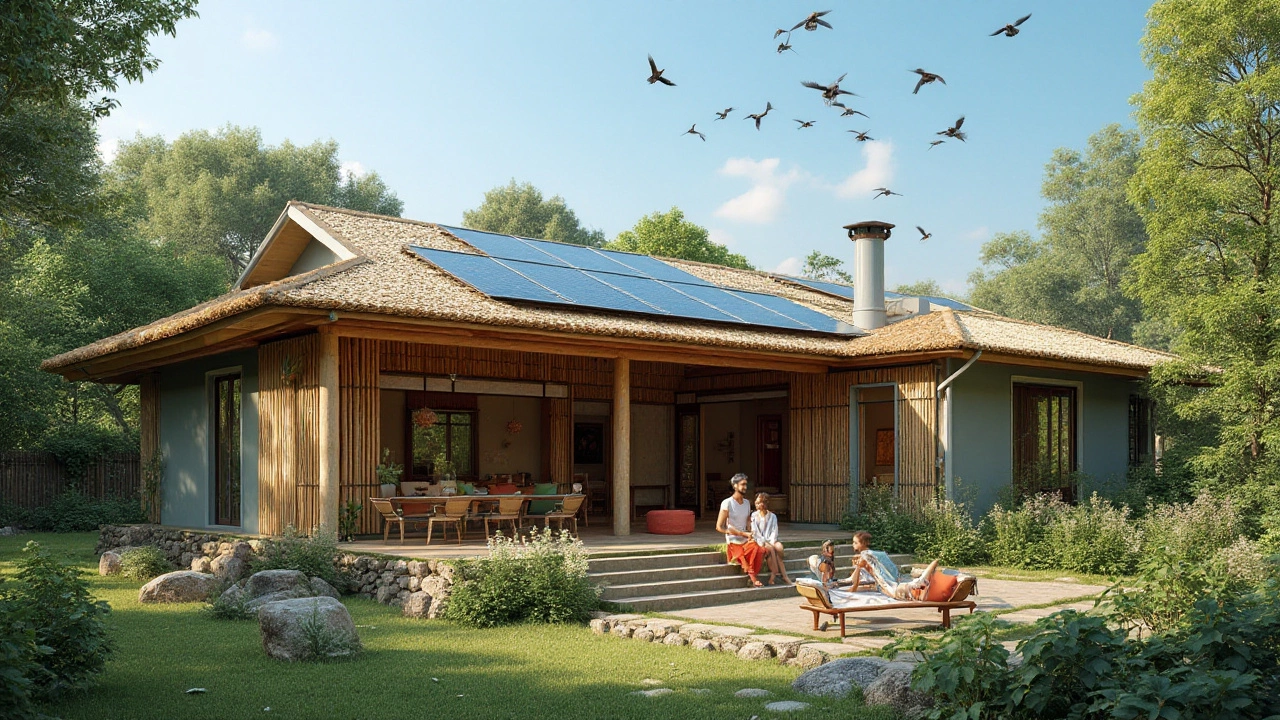
Environment-Friendly Housing: Real Costs, Benefits, and What Makes It Last
When we talk about environment-friendly housing, homes designed to reduce environmental impact through energy efficiency, sustainable materials, and low-waste construction. Also known as green homes, these are no longer just for eco-enthusiasts—they’re becoming the smart choice for anyone who wants lower bills, better air quality, and a home that lasts. You don’t need a $1 billion net-zero mansion to make a difference. Even a modest eco-friendly cottage, a small, energy-efficient home built with natural or recycled materials can cut your utility costs by half and last 30 to 50 years with basic care.
What makes these homes different isn’t just solar panels or rainwater tanks—it’s how they’re built from the ground up. A sustainable cottage, a compact, low-impact dwelling often designed for off-grid living or minimal resource use might use reclaimed wood, natural insulation like sheep’s wool, and passive solar design to stay warm in winter and cool in summer. These aren’t gimmicks—they’re practical choices that reduce dependence on fossil fuels and cut down on maintenance. The most expensive net-zero mansion, a luxury home that produces more energy than it consumes over a year might cost millions, but the core principles—good insulation, efficient windows, smart appliances—are the same ones that make a $100,000 cottage smarter than a $500,000 standard house.
People think green means expensive, but the real cost is in ignoring it. A home that uses 70% less electricity doesn’t just help the planet—it saves you hundreds every month. And when it comes time to sell, homes with real sustainability features—like certified energy ratings or solar systems—sell faster and for more money. You don’t need to go all-in on a luxury eco-home to benefit. Whether you’re renting an Airbnb, buying a cabin, or building from scratch, small changes add up. The posts below show you exactly what works: how to make your space greener without breaking the bank, why some "eco-friendly" labels are misleading, and which features actually deliver long-term value. You’ll see real examples, real prices, and real results—not hype.