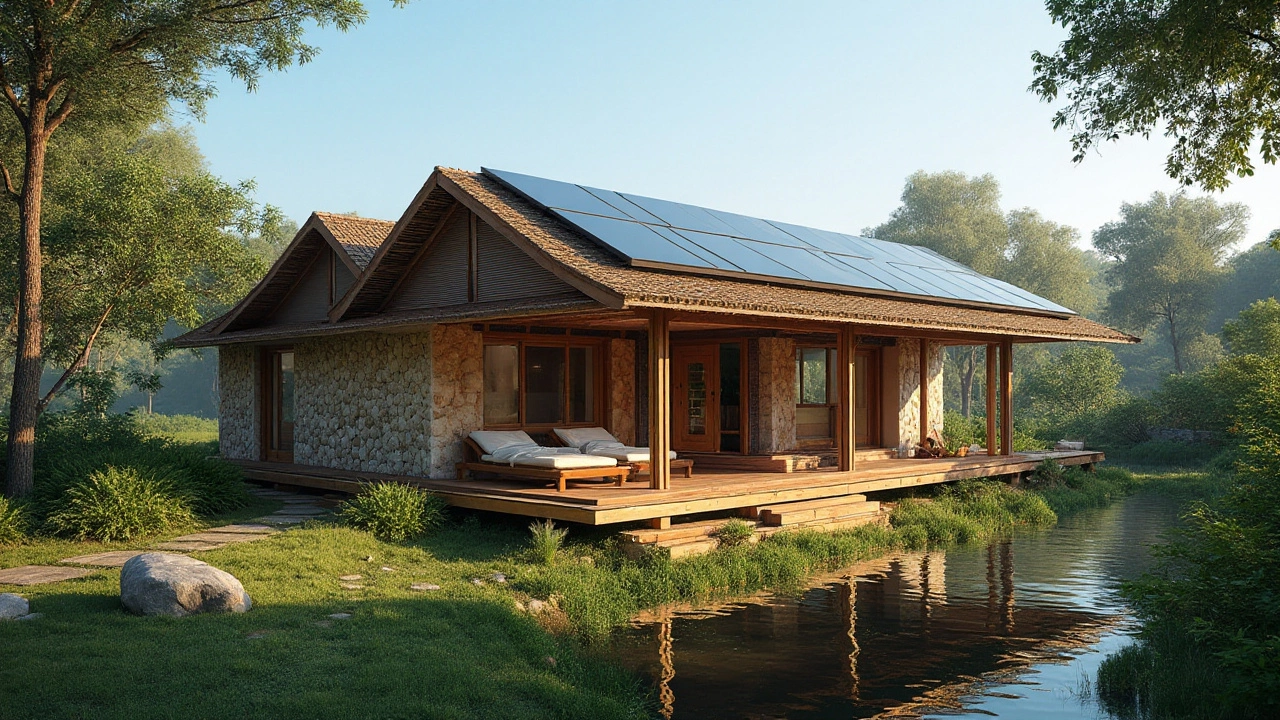
Billionaire Homes: Inside the World’s Most Expensive Eco-Friendly Cottages
When you hear billionaire homes, luxury residences owned by the world’s wealthiest individuals, often defined by extreme privacy, sustainability, and self-reliance. Also known as ultra-luxury eco-estates, these aren’t just mansions with gold faucets—they’re engineered to live off-grid, generate their own power, and even feed their owners without touching the outside world. Think of them not as status symbols, but as survival pods for the 1%—built to last centuries, not decades.
What makes a eco-friendly cottage, a small, energy-efficient home designed to minimize environmental impact while maximizing comfort and independence. Also known as net-zero home, it produces as much energy as it consumes worth a billion dollars? It’s not the marble floors or the private helipad. It’s the fact that it grows its own food in vertical farms, harvests rainwater from its roof, filters it through natural systems, and powers everything with solar glass that doubles as windows. One such home in British Columbia doesn’t just reduce its carbon footprint—it reverses it. That’s the real luxury now: not taking from the planet, but giving back to it.
These aren’t fantasy projects. Real people live in them. And they’re not just hiding from the world—they’re redefining what comfort means. A luxury sustainable home, a high-end residence built with renewable materials, zero-emission systems, and intelligent automation to reduce environmental harm. Also known as green mansion, it blends high design with deep ecology doesn’t need a staff of ten to run. It needs smart sensors, thermal mass walls, and passive solar design. The most expensive ones even include underground food storage that keeps produce fresh for months without electricity. No fridge. No grid. Just nature, engineered.
And here’s the twist: most billionaire homes aren’t in Monaco or Malibu. They’re tucked into remote forests, mountain ridges, or coastal cliffs where privacy is free and the air is clean. That’s why they often look like cabins. But inside? They’re more like sci-fi labs. You’ll find AI that adjusts lighting based on your mood, toilets that turn waste into fertilizer, and walls that breathe—literally—filtering air without filters. This isn’t about showing off. It’s about building something that outlives you, your children, and maybe even your grandchildren.
If you’ve ever wondered why someone would spend a billion dollars on a house instead of a yacht or a jet, the answer is simple: control. Control over energy. Control over water. Control over what goes in and out of your life. These homes are the ultimate escape—not from stress, but from systems. From supply chains. From politics. From noise. And yes, from the idea that luxury has to cost the earth.
What you’ll find below are real stories from the edge of sustainable luxury: the $37 million net-zero mansion that powers a small town, the cottage that feeds 12 people year-round with rooftop gardens, and the one that cost a billion not because it’s big, but because it’s completely independent. These aren’t just houses. They’re blueprints for a future most of us will live in—whether we can afford it or not.