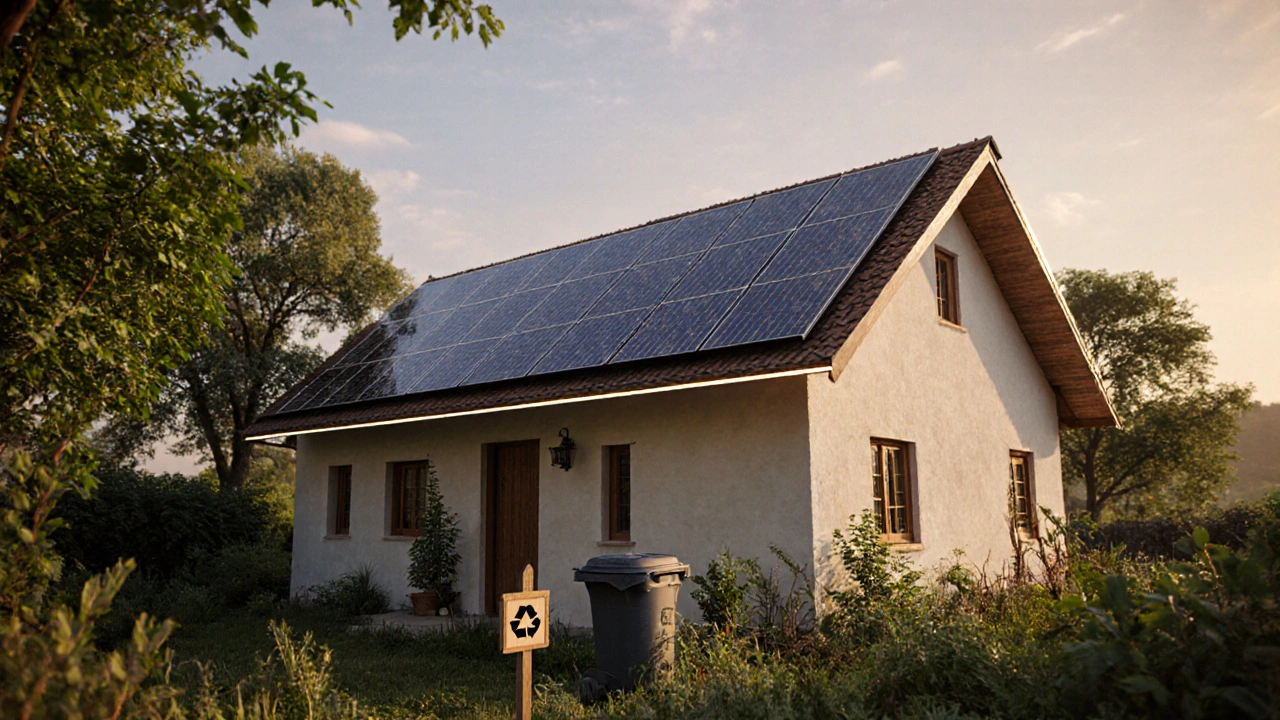
How to Make Your Airbnb Eco‑Friendly: Practical Tips for Sustainable Cottages
Learn how to make your Airbnb cottage eco‑friendly with actionable steps on energy, water, waste, cleaning, guest communication and certification.
Read MoreWhen you search for an Airbnb eco-friendly, a short-term rental that minimizes environmental impact through energy efficiency, sustainable materials, and responsible operations. Also known as green lodging, it’s not just about having a recycling bin—it’s about designing a stay that gives back to the environment instead of taking from it. Many listings call themselves eco-friendly, but few actually meet the standard. True eco-friendly stays use solar power, rainwater harvesting, composting systems, and locally sourced building materials. They don’t just avoid harm—they actively reduce it.
Related to this are eco-friendly cottages, small, often off-grid homes built with reclaimed wood, natural insulation, and passive heating designs. These aren’t just cute cabins—they’re engineered to use 70% less energy than a standard hotel room. Then there’s net-zero homes, properties that generate as much energy as they consume, often through rooftop solar panels and smart energy storage. These are the gold standard, and they’re showing up more often on Airbnb, especially in places like the Himalayas, Kerala, and the Western Ghats, where Woodland Hotel’s own cottages are designed to blend with nature, not dominate it.
What makes an Airbnb eco-friendly isn’t just the tech—it’s the mindset. Do they turn off lights automatically? Do they use refillable soap dispensers instead of single-use plastics? Do they partner with local farmers for breakfast? These small choices add up. A study by the Global Sustainable Tourism Council found that travelers who pick verified green stays reduce their carbon footprint by nearly 40% compared to those who don’t. And it’s not just about saving the planet—it’s about getting a better experience. Eco-friendly stays are quieter, cleaner, and often more connected to the land around them. You’re not just renting a room; you’re stepping into a living system that works with nature, not against it.
Some of the most impressive eco-friendly listings aren’t fancy—they’re simple. A wooden cabin with a wood stove, a composting toilet, and a solar-powered lantern. No AC, no pool, no minibar. Just fresh air, silence, and the smell of pine. These are the places where you unplug—not just your phone, but your habits. And they’re growing fast. In India, travelers are asking for these stays not as a trend, but as a necessity. The same people who book luxury resorts are now asking: "Does this place run on solar?" "Is the water filtered naturally?" "Do you grow your own food?"
Below, you’ll find real-world examples of what works—and what doesn’t. From a $37 million net-zero mansion to a $75-a-night cottage that runs on rainwater and solar, you’ll see the full range. You’ll learn how to spot greenwashing, what to ask before booking, and why the most sustainable stays often cost less than you think. This isn’t about perfection. It’s about progress. And if you’re looking for a getaway that feels good in every way, you’re in the right place.
Learn how to make your Airbnb cottage eco‑friendly with actionable steps on energy, water, waste, cleaning, guest communication and certification.
Read More